
Recommerce

What is Recommerce?

Recommerce, also known as reverse commerce, is usually where pre-owned goods are resold to buyers who will then recycle, repair, reuse, or resell them. Consider eBay or even Amazon – many of the products you see here are pre-owned items being sold off, perhaps at a lower price, as an alternative option to brand new ones.

Generally C2C (consumer to consumer), Recommerce is an example of sustainable commerce and the circular economy, where fewer products need to be manufactured or scrapped which is, of course, better for the environment.

What products are commonly sold via Recommerce?

Popular Recommerce products include:

  • Books
  • CDs/DVDs
  • Apparel/Footwear/Accessories
  • Smartphones
  • Tablets
  • Notebook computers
  • Consumer electronics
  • Jewelry
  • Furniture

These products tend to be either timeless, in the case of movies, music, and books, or still worthy of use despite being older, in the case of many consumer electronics, furniture, etc.

After all, do you really need a brand new phone at full price when you can buy a pre-owned one that is a year old and will still be fine for years?

How about upcycled products and downcycled products?

These, too, are a form of Recommerce. Whereas pre-owned products can be resold (perhaps after merely being cleaned or repaired) which is a form of recycling, up and down cycling are where new products are made from old ones.

Upcycled products are made from other existing products and, combined, they create a new equal or more valuable product. An example of this would be creating new glass bottles from old ones or using them to create ornaments or vases.

Downcycled products are also made from pre-owned products, but they are less valuable. Examples would be used office paper being pulped and turned into cardboard, or shoe soles being shredded and the rubber pellets being pressed into rubber matting. Depending on the material and process it may only be possible to downcycle products into lower and lower value products until such time as they must be sent to landfill or incinerated.

Is Recommerce growing?

Yes, it’s all around us in thrift stores and the aforementioned online platforms like eBay. Reselling ‘stuff’ isn’t a new concept, but it’s growing:

Research firm Cowen now predicts recommerce (including resale, rental and subscription models) will account for 14% of the apparel, footwear and accessories market by 2024, up from about 7% in 2020. Resale platform ThredUp suggests that apparel resale alone will be a $64 billion market by 2024. (source)

Is this really any surprise these days where consumers are becoming more concerned with sustainable products? Purchasing perfectly serviceable pre-owned products is a more sustainable choice than buying new, and easier on the wallet, too.

Will ‘right to repair’ have an effect?

The gathering pace of ‘right to repair’ legislation around the world may also serve to spur on Recommerce sales, as consumers and third parties are increasingly provided with free reign to repair products over time. This is where manufacturers design their products to be more easily repairable by most people through using more common parts, for example, which is quite the change over past practices where many products were designed specifically not to be able to be repaired other than by the manufacturer themselves.

Manufacturers may find this troublesome in terms of IP protection and potentially lower sales (as products can last longer), but it could see more products hitting the Recommerce markets as they no longer need to be scrapped if they go wrong, even in the case of older models which are no longer produced or supported by manufacturers (as in theory they can be repaired with fairly common tools and parts).

Are larger companies paying attention to Recommerce?

Yes, here are some examples:

Apple

If we take Apple as an example, they provide a trade-in service for most new products. Let’s say you want to buy this new model iPhone, you’re able to trade in your existing phone for credit towards the new phone as you can see here:

You, the consumer, get a new phone, but your old phone is either recycled or refurbished and resold by Apple which feeds into a more circular or sustainable economy.

IKEA

It’s been possible to purchase discounted returned furniture at IKEA for some time in their warehouse, but they’ve recently launched a buy-back scheme where they will purchase assembled IKEA furniture that is in good condition back from customers in return for store credit.

Patagonia

Outdoor clothing brand, Patagonia, are well-known for their focus on sustainability and the environment. Not only do they give 1% of all sales to environmental groups who are working to improve the planet, but they also provide clear instructions on how to repair their clothing in order to lengthen its lifespan and also accept old items for repurposing or recycling through their stores.

The auto trade

Furthermore, trade-ins have been commonplace in the used-auto industry for decades, where it’s almost standard practice for a garage to offer you a value for your current vehicle against the one you want to purchase.

Is Recommerce strictly only for products?

Not at all. Buildings and structures are often being repurposed for use in different ways. This has been particularly evident post-COVID, where large buildings such as factories or nightclubs have been turned into exhibition spaces, for example.

Nonetheless, where Recommerce will touch most people’s lives is in the C2C sales space where pre-owned products change hands in a more sustainable form of shopping.

Plastics Recycling Numbers

Which Plastics Are Recyclable?

The plastics recycling numbers categorize the different plastics from numbers 1 to 7. Each number or plastic identification code (PIC) corresponds to a different type of plastic, each with its own properties and level of recyclability.

  • #1: PET (Polyethylene Terephthalate)
  • #2: HDPE (High-Density Polyethylene)
  • #3: PVC (Polyvinyl Chloride)
  • #4: LDPE (Low-Density Polyethylene)
  • #5: PP (Polypropylene)
  • #6: PS (Polystyrene)
  • #7: Other Plastics, such as ABS (Acrylonitrile Butadiene Styrene), AS/SAN (Styrene Acrylonitrile) (AS/SAN), PC (Polycarbonate), PLA (Polyactic Acid).

7 Plastic Identification Codes

plastics recycling numbers

Each PIC number corresponds to a different type of plastic and how recyclable they are:

  1. Polyethylene terephthalate (PET, PETE) – Known for single-use drinks bottles. Almost always recycled at the kerbside.
  2. High-density polyethylene (HDPE) – Known for tough bottles, such as shampoo and detergent containers. Increasingly collected at the kerbside.
  3. Polyvinyl chloride (PVC) – Known for pipes, tubes, vinyl flooring. Not easily recycled.
  4. Low-density polyethylene (LDPE) – Known for plastic films, carrier bags, and soft plastic padding. Occasionally collected at the kerbside, but not commonly
  5. Polypropylene (PP) – Known for bottle caps and food containers, Increasingly collected at the kerbside.
  6. Polystyrene (PS) – Known for styrofoam and single-use food utensils. Not easily recycled.
  7. Other (often polycarbonate or ABS) – Can include many types of plastics that are often not easily recycled. Known for bioplastics, juice and sauce bottles, reusable water bottles, plastic cups and plates, and more.

In general, the lower numbers are more readily recycled and those accepted at the kerbside are the most recyclable as it’s easy for the consumer to take positive action.

For instance, PET (1) is used in single-use beverage bottles which are easily recycled and accepted by most municipal kerbside recycling schemes. This can’t be said for other types of plastic, like PS or the various types with PIC 7. These are only usually accepted by specialist recycling centers, so many consumers will put them in the garbage and they’ll be sent to landfills.

What can we learn from the PIC numbers?

Both consumers and manufacturers can learn a lot from the plastics recycling numbers. As well as guiding how recyclable they are, the PICs provide the following information about the plastic:

  • Recyclability – 1,2, 4, and 5 are the most commonly recycled plastics
  • Toxic chemicals – 1,3, 6, and 7 may contain harmful chemicals like BPAs and phthalates
  • Likelihood of leaching chemicals – 3 is well-known for leaching phthalates
  • Overall safety – 2, 4, and 5 are the safest for use in terms of chemicals and leaching

Manufacturers can also consider the above dealing with plastics and packaging because savvier consumers will have an eye on the types of plastics you’re using for packaging and may look unfavorably on less recyclable types being used.

Read more about plastics here

We’ve got a few plastics resources that you will enjoy. Hit the images to read them:

What Does ‘Eco-Friendly’ Mean?

According to the Cambridge English dictionary: Eco-friendly products have been designed to do the least possible damage to the environment.

In the context of manufacturing, eco friendly could apply to:

  • Materials
  • Packaging
  • Products
  • Production processes
  • Company initiatives to reduce environmental impact, such as renewable energy usage

Remember that eco friendly does not mean that a product or item is 100% green, it may simply be less harmful to the environment than another option.

An example of eco friendly packaging

Let’s look at Coke’s PlantBottle as an example. This is a plastic drinks bottle made partly from bioPET, a type of polyethylene terephthalate that uses sugarcane residue instead of oil as its raw material. It can be recycled along with oil-based PET, however, if not recycled it would still pollute the environment and degrade very slowly in landfill like its oil-based counterpart.

Therefore we can recognise bioPET as being ‘eco-friendly,’ as it uses plant-based raw materials instead of fossil fuels and can be widely recycled using the current recycling infrastructure, but it is still able to harm the environment because if it is not recycled it will behave in the same way as other plastics.

An example of an eco friendly  company

IKEA, Swedish home furnishing giant, plans to become a circular business by 2030.

They have taken measures to reduce their environmental impact such as:

  • Repairing and repacking products that were damaged in transit rather than disposing of them
  • Donating or reselling returned items
  • Only selling LED bulbs
  • Ending single-use plastic use
  • Using solar panels on stores to increase renewable energy usage
  • Opening their own wind farms to provide renewable energy

While IKEA’s somewhat ‘throwaway’ furnishings can’t be described as having no negative impact on the environment, as a company they are taking steps to reduce energy usage, decrease their carbon footprint, and reduce waste (amongst other things); all eco-friendly activities.

Read our free whitepaper on bioplastics

Get your copy of our free bioplastics whitepaper by hitting the button below (no registration required).

Oil Based Plastic Alternatives: Key Types of Bioplastics [Whitepaper]

Sustainable Manufacturing

Sustainable manufacturing is where we manufacture products while focusing on reducing our impact on the environment as much as possible by reducing energy usage and use of natural resources.

sustainable manufacturingIn a manufacturing sense, recyclable, biodegradable, and compostable materials will be favoured over less eco-friendly options for components, products, and packaging. Efficient production processes and factory setup also have a part to play, certainly in energy usage and reduction of scrap and waste.
From an environmental standpoint, to be sustainable is to cause little or no damage to the environment and therefore be able to go on for a long time. This is why solar energy, for example, is sustainable – it is naturally occurring in sunlight and doesn’t require the burning of fossil fuels to create.

Does sustainable manufacturing make good business sense?

Today’s consumers are increasingly more aware of their favoured brands’ impact on the environment, in fact a Unilever report suggests that ‘a third of consumers (33%) are now choosing to buy from brands they believe are doing social or environmental good.’

Therefore becoming a sustainable manufacturer, or taking steps to increase sustainability, does make sense today.

Sustainable manufacturers can expect to:

  • Reduce cost and waste through the 4Rs: Reduce, Re-use, Recycle, and Review/Refuse
  • Attract new consumers who are interested in sustainable products
  • Enhance your company’s reputation as being a legitimate ‘green’ player
  • Create a foundation for future success as global demand for environmentally-friendly products increases
  • Be better placed to cope with new regulations driving companies towards greener solutions

Read our free whitepaper on bioplastics

Get your copy of our free bioplastics whitepaper by hitting the button below (no registration required).

Oil Based Plastic Alternatives: Key Types of Bioplastics [Whitepaper]

What does compostable mean in relation to manufacturing and packaging materials?

Compostable materials can be used as a form of compost after they have decayed according to the Cambridge English dictionary. To be specific, compost is ‘decaying plant material that is added to soil to improve its quality.’

To be clear,  in a regulatory sense, compostable and biodegradable are seen as being equivalent.

Given that they naturally break down into water, oxygen, and biological material, we can see how attractive compostable materials would be as production materials or, perhaps more likely, packaging as they can not only fulfil their initial use but also benefit the environment afterwards by becoming compost.

Which bioplastics are compostable?

PLA (polylactic acid) and CPLA (crystallised polylactic acid) are the two common compostable bioplastics which are made from plant starches in the form of glucose which is formed into polymers.

PHA is another compostable polymer which is made by converting food waste using bacteria.

What items and products are generally compostable?

Compostable bioplastic items created using the above polymers include many food applications as they are non-toxic and can handle up to 100°F temperatures:

  • Shopping bags
  • Single-use cups and lids
  • Single-use cutlery
  • Straws
  • Food packaging, such as takeout boxes

A bonus is that if they do contain food residues it will not affect their ability to be composted!

How can I recognize compostable labels?

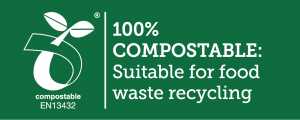
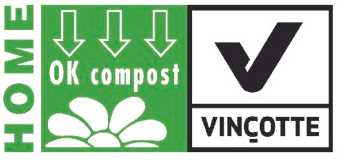
Not all compostable items can be composted at home (such as in your garden composter). If this is the case, you may see logos like these for industrial composting of food waste and compostable packaging etc:

industrially compostable label
home compostable label

If they can be composted at home in your garden, you may see this:

garden compostable label

There may be others specific to your local area, so watch out for those!

What is industrial composting?

Assuming that a compostable bioplastic is completely eco-friendly is a little dangerous. If they are not composted properly, they will end up in landfill along with normal trash which is absolutely not green!

Many of these items require industrial composting which takes place in large municipal industrial composting facilities where food and garden waste, compostable bioplastics, paper, and wood are mixed, processed, and left in piles where after approximately 3-6 months they will have formed nourishing compost.

If it is available and can be achieved successfully it is a very green solution:

Industrial composting produces more than just high quality compost for soil remediation. It also produces jobs, a greener environment, enhanced food security, less waste, and less truck traffic hauling garbage. (Source)


However, if you do not have access to industrial composting it’s important that compostable bioplastics are not added to regular recycling as they will taint the batch and lead to all of the recycling heading to landfill or incineration.

Is there a standard for compostability?

Yes it’s the same standard as used for biodegrability, ISO 17088:2012 or Standards for Compostability BS EN 13432:2000 was developed in the year 2000 to help packaging users adhere to the European Parliament and Council Directive 94/62/EC of 20 December 1994 on packaging and packaging waste and outlines the ‘requirements for packaging recoverable through composting and biodegradation.’

Key BS EN 13432 tests and Pass / Fail criteria are:

  • Disintegration – the packaging sample is mixed with organic waste and maintained under test scale composting conditions for 12 weeks after which time no more than 10 % of material fragments are allowed be larger than 2 mm.
  • Biodegradability – a measure of the actual metabolic, microbial conversion, under composting conditions, of the packaging sample into water, carbon dioxide and new cell biomass. Within a maximum of 6 months, biodegradation of the test sample must generate an amount of carbon dioxide that is at least 90 % as much as the carbon dioxide given off from the control / reference material.
  • Absence of any negative effect on the composting process.
  • Low levels of heavy metals (Potentially Toxic Elements) and no adverse effect of the quality of compost produced. Upper limits, in mg/kg of dry sample, are: zinc 150, copper 50, nickel 25, cadmium 0.5, lead 50, mercury 0.5, chromium 50, molybdenum 1, selenium 0.75, arsenic 5 and fluoride 100.
  • The composted packaging material must not have adverse effect on the bulk density, pH, salinity (electrical conductivity), volatile solids, total nitrogen, total phosphorus, total magnesium, total potassium and ammonium nitrogen characteristics of the compost. (Source)

Read our free whitepaper on bioplastics

Get your copy of our free bioplastics whitepaper by hitting the button below (no registration required).

Oil Based Plastic Alternatives: Key Types of Bioplastics [Whitepaper]

What does biodegradable mean in the context of manufacturing?

What does biodegradable mean for today’s manufacturers? Let’s start by defining biodegradable.

According to the Cambridge English dictionary, biodegradable materials are ‘able to decay naturally and in a way that is not harmful.’ This is usually with the help of micro-organisms such as bacteria or fungi which will feed on the material and break it down harmlessly.

To be clear,  in a regulatory sense, biodegradable and compostable are seen as being equivalent.

There are 2 areas to consider whether using these less harmful materials would be possible for your business:

Packaging

The ability to decay naturally makes biodegradable materials attractive for product packaging in particular. The environmental effects of product packaging make grim reading. For instance, by 2025, there will be 1 tonne of plastic for every 3 tonnes of fish in the ocean.

Cardboard is the best-known biodegradable packaging material as it is plant-based and will degrade naturally if not combined with plastics or certain additives.

However, certain bioplastics are biodegradable or compostable, too, such as plant starch-based PLA which is often used in packaging, shopping bags, and other single-use applications.

Products

Bioplastics aren’t known for toughness and so usually aren’t used to make products that have a long life expectancy, like consumer electronics for example. This is changing, though, as electrical giant Electrolux showed by building a refrigerator where 80% of the visible plastics were bioplastics. Until the supply and cost improves, however, manufacturers will be better served by exploring bioplastics as a source of packaging.

One area where biodegradable production materials are used to make full products is in single-use foodware such as cups, cutlery, plates, and cartons. These may be made from a bioplastic, bamboo fiber blend, or cardboard.

Is there a standard for biodegradability when using plastics?

Yes, in regard to bioplastics the standards ISO 17088:2012 Specifications for compostable plastics or BS EN 13432 are used to:

Identify correctly plastics, and products made from plastics, which will disintegrate and biodegrade satisfactorily under composting conditions and will not leave any persistent or toxic residues.

 
The four following aspects are addressed:

  1. biodegradation;
  2. disintegration during composting;
  3. negative effects on the composting process and facility;
  4. negative effects on the quality of the resulting compost, including the presence of high levels of regulated metals and other harmful components.

Read our free whitepaper on bioplastics as alternatives to harmful oil-based plastics

Bioplastics have a really important role to play if we are to avoid that sobering statistic about ocean plastic becoming reality.

This whitepaper explores the rising interest in bioplastics and their common types and applications, sepcifically for manufacturers who are interested in becoming more eco friendly.

Get the whitepaper

What Items Are Recyclable?

Understanding what items are recyclable is key knowledge for manufacturers seeking to become ‘greener.’ The choice between a material that is not easily recycled and one that is more eco-friendly takes on extra significance today when consumers are more environmentally-conscious than ever before.

Defining recycling

Recycling is where materials are collected and processed into new products or materials that would otherwise be disposed of in landfill or incinerated. Recycling, therefore, has numerous environmental and economical benefits.

Recycling’s environmental benefits

According to the USA’s EPA:

  • Recycling one ton of office paper can save the energy equivalent of consuming 322 gallons of gasoline.
  • Recycling just one ton of aluminum cans conserves more than 152 million Btu, the equivalent of 1,024 gallons of gasoline or 21 barrels of oil consumed.
  • Plastic bottles are the most recycled plastic product in the United States as of 2015, according to our most recent reportRecycling just 10 plastic bottles saves enough energy to power a laptop for more than 25 hours.

It makes sense that reusing materials instead of creating more ‘virgin’ materials is environmentally beneficial (the same can be said for compostable materials, too), but what items are recyclable?

Commonly recyclable items

Many consumers are already familiar with what items can be recycled through their local authorities’ kerbside schemes. These will usually take:

  • Paper and cardboard
  • Glass
  • Tins and foil
  • Certain plastics (specifically bottles)

Household refuse sites will commonly take the following for recycling:

  • Used motor and cooking oils
  • Tires
  • Batteries
  • Larger metal items
  • Many types of plastics
  • Used electronics
  • Certain hazardous wastes (such as cleaning products or paints)

More about recyclable plastics

Many consumers and companies have declared war on plastics, especially those which are harmful or cannot be easily recycled. So understanding which plastics are ‘better’ is very much a part of the public consciousness.

This video explains the types of plastics and just how recyclable they are or are not:


Recycling certifications

There are numerous standards for recycling. One of the better-known initiatives is WEEE (Waste from Electrical and Electronic Equipment) which focuses on the encouragement of electronic devices which are able to be recycled more easily.

There are an enormous number of standards for many recyclable materials such as wood, plastics, metals, cars, and more. Search them here.

Read our free whitepaper on bioplastics as alternatives to harmful oil-based plastics

Bioplastics have a really important role to play if we are to avoid that sobering statistic about ocean plastic becoming reality.

This whitepaper explores the rising interest in bioplastics and their common types and applications, sepcifically for manufacturers who are interested in becoming more eco friendly.

Get the whitepaper