Plastic, Silicone, Steel, and Others: Updated China Raw Materials Costs (late July ’24)

Here’s the monthly update from Sofeast’s sourcing team, tracking the costs of commonly used raw materials from China for the past year to help you understand where the market is right now. If you or your supplier are purchasing materials from China for your products, the cost changes you see here impact your bottom line!

Here’s the up-to-date material cost data from China for you as of late July 2024 and the price evolution over the past twelve months – this month zinc alloy, PVC, and lithium batteries all dropped by several percentage points of note.

Here you can see the individual cost evolution per material over the past year, including the weekly and monthly changes for July 2024 with costs in CNY:
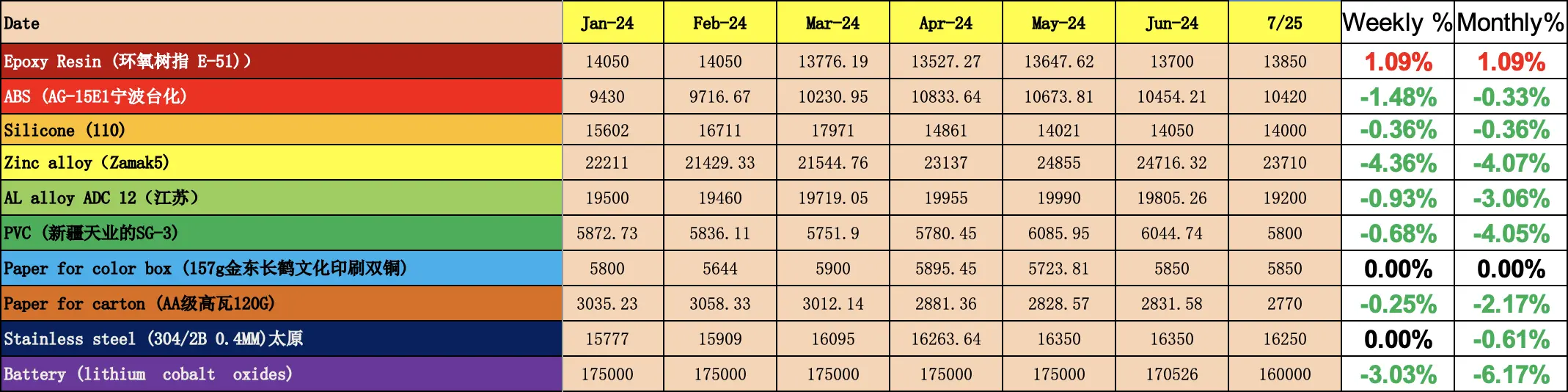
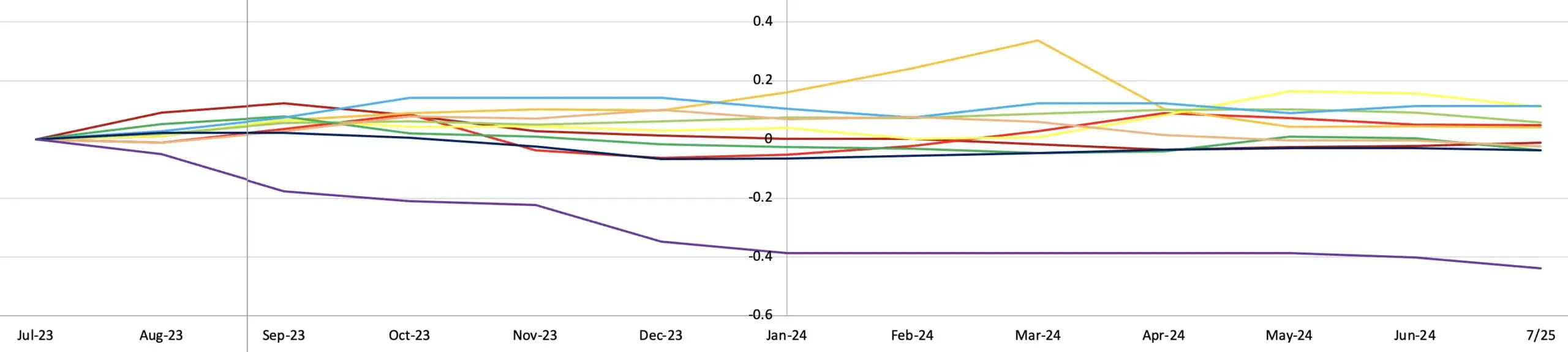
2024 china raw material cost changes

china raw materials chart

Here is what our market analysts attribute these changes to during this past month:

Epoxy Resin E-51 increased by 1.09%

Epoxy resin prices and profits varied due to supply issues and cautious demand.

Key Factors Affecting Market Price Changes:

  • Upstream Products: Prices increased overall because of tightening supply supporting higher prices.
  • Intermediate Products: Slight price increase due to supply constraints and cost pressures.
  • Downstream Products: Limited price changes due to flat demand from end-users and cautious purchasing behavior in the market.

Market Forces at Play:

• Supply-side pressure driving prices up in the upstream segment.
• Cost push-through affecting intermediate products.
• Demand stagnation in downstream markets.
• Overall market sentiment: cautious.


ABS (AG-15E1) decreased by 0.33%

The ABS plastic market is facing lower costs, less production, and weak demand, adjusting to tough conditions which could affect prices and future output.

Key Factors Affecting Market Price Changes:

  • Cost: Upstream raw material prices have slightly decreased which has led to a continued easing of cost pressures on ABS production.
  • Supply: Normal supply levels in most distribution areas and manufacturers have slightly reduced output this week.
  • Demand: Downstream demand is weak.

Market Forces at Play:

  • Cost pressures: Decreasing raw material costs are providing some relief to manufacturers which could potentially lead to more competitive pricing.
  • Supply-side adjustments: Manufacturers are adapting to market conditions by slightly reducing output which might be an attempt to balance supply with weak demand.
  • Demand weakness:Lack of strong demand from downstream industries is a significant factor and could be putting downward pressure on prices.


Silicone Rubber (110) decreased by 0.36%

Silicone prices might drop soon due to high production, rising inventories, and weak demand, with manufacturers trying to balance the market.

Key Factors Affecting Market Price Changes:

  • Supply: Monomer production is operating at over 80% capacity. Inventory levels are increasing, suggesting potential oversupply.
  • Market Sentiment: Downstream buyers are not actively purchasing and this lack of activity is impacting buying patterns and overall market mentality.
  • Demand and Production: Silicone rubber and silicone oil markets are in their off-season so some companies are reducing production due to low demand.

Trend Prediction:

  • Short-term outlook: The domestic DMC (Dimethyl Carbonate) market lacks significant news or developments. There is a risk of partial price declines in the short term. Overall price stability is expected but with downside risks.

Market Forces at Play:

  • Supply-demand imbalance: High production rates vs. weak downstream demand are increasing inventory pressure.
  • Seasonal factors: Current off-season for key silicone products affecting overall demand.
  • Production adjustments: Some manufacturers reduce output to manage oversupply.


Zinc Alloy decreased by 4.07%

Zinc alloy supply is down because of maintenance, while demand is weak. Futures prices impact the market, which remains cautious with subdued activity expected.

Key Factors Affecting Current Market Price Changes:

  • Supply: Increased smelter maintenance activities may lead to a potential reduction in spot supply and declining supply pressure.
  • Demand: Currently in the off-season with weak operational demand.
  • Market Sentiment: Falling futures prices and a generally declining market sentiment.
  • Cost: Low processing fees and cost factors provide some price support.

Trend Prediction:

  • Short-term outlook: Upward trend in futures prices during night trading. The spot market may show some recovery during the day. Market participants closely watch futures trends.
  • Market activity: Expected general level of purchasing. Market turnover atmosphere likely to remain quiet.
  • Spot prices: Intraday spot prices are expected to fluctuate.

Market Forces at Play:

  • Supply-side adjustments: Maintenance activities reduce immediate supply which could potentially support prices.
  • Seasonal demand weakness: Off-season affects overall demand and contributes to market quietness.
  • Futures market influence: Significant impact on market sentiment and spot price expectations.
  • Cost factors: Low processing fees provide a floor for prices.


Aluminum Alloy (ADC 12) decreased by 3.06%

Aluminum alloy prices are falling due to weak demand and economic issues. Buyers are cautious, indicating continued price drops in the near term.

Key Factors Affecting Current Market Price Trends:

  • Macroeconomic Influences:
    • Bearish overall economic performance
    • Weak manufacturing data from Europe and the U.S.
    • U.S. political situation creating economic uncertainty
    • Limited positive measures from domestic meetings in China
    • Interest rate cuts by major banks showing limited impact
    • Insufficient market confidence
    • General decline in non-ferrous metal markets
  • Supply-side Factors:
    • No significant disruptions in supply
    • Social inventory remains high compared to the same period last year
  • Demand-side Factors:
    • Clear off-season characteristics
    • Lack of buying interest from downstream manufacturers despite price declines
    • Varied demand across sectors:
    – Cable industry: Relatively strong demand
    – Real estate: Declining construction starts
    – Automotive: Cooling production and sales
    – Photovoltaic modules: Increasing finished product inventory
    – Exports: Cooling trend

Market Forces at Play:

  • Macroeconomic pressures: Global economic uncertainties weighing on market sentiment and limited effectiveness of domestic economic measures.
  • Supply-demand imbalance: High inventory levels and weak seasonal demand across multiple sectors.
  • Sector-specific challenges: Real estate and automotive slowdowns are particularly impactful.
  • Export market weakness: Cooling exports add to demand-side pressures.


PVC (SG-3) decreased by 4.05%

PVC prices might keep falling due to increasing production and weak demand, with small fluctuations expected in the market.

Market Outlook for the near future:

  • General Trends: Continued weakness in market fundamentals and an overall weak market atmosphere are expected.
  • Price Prediction: The PVC powder market is likely to experience slight downward fluctuations.

Supply-side Factors:

  • Production Recovery: Several manufacturers are resuming operations.
  • Some facilities are starting maintenance, though.
  • Overall Production Capacity: Despite the new maintenance, the industry’s overall starting load rate is expected to increase.

Market Forces at Play:

  • Supply increase: Net increase in production capacity despite some maintenance which could put downward pressure on prices.
  • Weak demand: Implied by the “continued weakness” in market fundamentals contributing to the overall weak market atmosphere.
  • Balance between production recovery and new maintenance: Complex supply dynamics that could lead to market fluctuations.


Paper for cartons decreased by 2.17%

The paper carton market is weak but preparing for a peak season. Mixed pricing strategies and stable raw material costs may support prices despite current trends.

Key Factors Affecting the Market:

  1. Paper Mill Pricing Policies:
    • Varied price adjustments across different locations and specifications:
    – Dongguan base: Price changes for some corrugated specifications
    – Liner Board: Price reductions for certain specifications
    – Tianjin and Shenyang bases: Price decreases
    – Some small and medium-sized paper mills: Narrow range price adjustments
  2. Downstream Demand:
    • Packaging factory orders are generally weak
    • Low enthusiasm for base paper procurement
    • Limited overall market turnover
  3. Waste Paper Market:
    • Average price of waste yellow board paper increased by 0.21% to 1,444 yuan/ton
    • Low recycling quantity at packaging stations
    • Limited market supply of waste yellow paperboard
  4. Seasonal Factors:
    • Approaching peak demand season in Q4
    • Paper mills showing increased interest in stocking up
  5. Recycled Fiber Pulp:
    • Prices in Southeast Asia remained stable

Market Forces at Play:

  • Supply-side adjustments: Mixed pricing strategies by paper mills and some major companies raising purchase prices for raw materials.
  • Demand weakness: Current low demand from packaging factories and anticipation of upcoming peak season.
  • Raw material dynamics: Increasing waste paper prices providing some cost support and stable recycled fiber pulp prices in Southeast Asia.


Stainless Steel – Decreased by 0.61%

Stainless steel prices are under pressure due to weak demand and low cost support, with possible further declines expected.

Key Market Factors:

  • Inventory Levels: Recent market inventory has been partially digested.
  • Supply: Short-term support from maintenance activities continues and supply pressure may be somewhat alleviated.
  • Demand: Off-season consumption impact persists and demand-side pressure remains significant.
  • Sales Pressure: Increasing pressure at month-end.
  • Cost Support: Continues to be weak.

Market Forces at Play:

  • Supply-side factors: Maintenance activities providing some market support and reduced inventory levels potentially stabilizing prices.
  • Demand-side challenges: Seasonal weakness in consumption and end-of-month sales targets creating additional pressure.
  • Cost considerations: Weak cost support suggesting limited upward price potential.

Market Outlook:

  • The stainless steel market is likely to continue operating under pressure next week and market prices may weaken to some extent.


Battery (Lithium Cobalt Oxides) Decreased by 6.17%

Iron phosphate for lithium batteries is stable but slightly weak, with balanced supply and demand. Stable raw material costs support prices, though low-cost supply may push them down.

Key Market Factors:

  • Raw Material Costs: Temporarily stable this week and providing consistent cost support.
  • Supply and Demand: The downstream replenishment rhythm is stable. Iron phosphate producers lack motivation to change production due to cost pressures and continued weak supply and demand in the sector.
  • Spot Market: Increased low-cost supply within the current price range.

Market Forces at Play:

  • Cost stability: Stable raw material prices maintain consistent production costs.
  • Weak fundamentals: Ongoing weakness in supply and demand dynamics.
  • Production decisions: Manufacturers are not adjusting production due to stable costs.
  • Spot market dynamics: Increase in low-cost supply potentially putting downward pressure on prices.


How to combat rising costs?

Explore cost-reducing tips in this post: Rising Raw Material Prices: What Strategy To Follow? (6 Approaches).

What to do if your Chinese supplier suddenly tells you that material costs have risen: How To Cooperate With Your Chinese Supplier, Part 16: Bad News from China, Raw Material Prices Just Increased!

If your supplier just isn’t working out, maybe sourcing a new supplier will help you find one who can offer you better prices and more. If so, there’s no need to fear switching from your current supplier to a new one if you’re prepared: How To Switch To A Newer, Better Chinese Manufacturer? [eBook].


We hope this is helpful. Our mission at Sofeast is to help importers have transparency in their supply chain and to give them more control. And this information is critical to have some visibility into your manufacturer’s costing.

By the way, you can always contact us if you have any questions about whether a manufacturer’s quote is reasonable.

Prototyping and Testing FAQs: How many Iterations needed and what Tests to be Safe & Compliant? [Podcast]

Join Renaud and Adrian as they talk about the intricacies of prototyping and testing during new product development. They discuss 2 common FAQs from customers:

  1. How many prototype iterations will be needed?
  2. What are the essential tests for ensuring product safety and compliance?

Renaud explains how different product complexities affect the prototyping cycle and highlights the importance of simulations in advanced industries like aerospace. He also emphasizes the need for thorough documentation and clear communication with manufacturers to streamline the development process.

Furthermore, the episode explores the various types of tests required to validate a product’s safety and compliance, distinguishing between simple consumer products and highly regulated industries like medical devices and automotive parts. Listeners will gain valuable insights into best practices for preparing to work with manufacturers and ensuring their products meet regulatory standards.


Listen to the episode here 👇

Listen: to the podcast episode

Watch: on Youtube


Episode sections

  • 00:00 – Introduction and greetings.
  • 00:40 – Exploring Prototyping and Testing.
  • 05:59 – Considerations for Product Development.
  • 15:36 – Factors Influencing Number of Iterations.
  • 18:30 – Preparing for Working with Manufacturers.
  • 22:58 – Importance of Documentation and Clarity.
  • 25:52 – Ensuring Safety and Compliance.
  • 37:46 – Awareness of Industry Regulations.
  • 42:31 – Conclusion and Next Steps.


Related content…


Listen, rate, & subscribe to the ‘China Manufacturing Decoded’ podcast on your favorite provider

More episodes are coming, so remember to rate us and subscribe! You can find us on:

If you enjoyed this episode, don’t forget to give us a 5* rating and share it with your network if you enjoy listening!

Manufacturing in China Update July 2024: FDI Down & Made In China 2025 [Video]

Our CEO, Renaud, recently appeared on The Legal Lunch Byte from American law firm and Asian manufacturing law experts Harris Sliwoski LLP (the creators of the China Law Blog).

Here’s the video:


Let’s quickly summarize the content…

Made In China 2025

What are the effects of the previous Trump administration’s policies on the Chinese economy, particularly the ‘Made In China 2025‘ plans?

Large Chinese corporations like Huawei, ZTE, BYD (which now holds the mantle of the world’s largest EV maker), and so on, are still thriving despite pressures from the USA and the ‘Trump tariffs’ (which were also expanded by Biden in May 2024). EVs, batteries, robotics, etc, are all growing well, despite the Chinese economy not being at its most dynamic. Basically, the industries targeted back in 2015 by MIC ’25 have remained strong thanks to the promised government support.


Foreign Direct Investment

Are more foreign companies investing in China these days, acquiring assets, doing more contract-related work, etc, or is there more talk of moving out of China?

FDI has gone down quite dramatically, manifested in lower investment in manufacturing capacity, with money being spent on sourcing safely (with enforceable contracts etc) instead.

Some American companies are looking for China alternatives, but this is not simple for anything more complex than the most simple products. For example, relatively complex electronic devices almost certainly can’t be made without using some Chinese components, even if they’re assembled elsewhere. SMEs will struggle to find local components and materials in, say, Vietnam…the largest companies may be able to set up local supply chains more easily, though. In Apple’s case, this has started to happen in countries like India, so perhaps in 5-10 years, there will be a mature pool of component suppliers that can rival the supply chain on offer in China.

The Growing Importance of Software in Electronic Product Manufacturing [Podcast]

In this episode of China Manufacturing Decoded, Adrian and Renaud discuss the evolving role of software in developing and manufacturing electronic products. They explore how software has become a significant source of competitive advantage, often surpassing hardware in importance.

Using examples from smartphones to cars, they illustrate how software drives innovation, user experience, and brand differentiation. The discussion also highlights the strategic shift from hardware-centric to software-centric designs, inspired by insights from Richard Rumelt’s book, “Good Strategy, Bad Strategy.”

Whether you’re a manufacturer or a tech enthusiast, this episode offers valuable perspectives on the critical balance between hardware and software in today’s electronic products.


Listen to the episode here 👇

Listen: to the podcast episode

Watch: on Youtube


Episode sections

  • 00:00 – Introduction to the Importance of Software in Electronic Products.
  • 05:38 – Evolution of Chip Design at Intel.
  • 10:14 – Transition from Vertical to Horizontal Structure in Computers.
  • 13:19 – Challenges and Expenses of Hardware Modifications.
  • 15:24 – Advantages of Software Updates over Hardware Changes.
  • 19:19 – Increasing Importance of Software in the Automotive Industry.
  • 22:48 – Utilizing Software for Differentiation in Products.
  • 26:06 – Building Brand Recognition through Software Interaction.
  • 26:55 – Wrapping up.


Related content…


Listen, rate, & subscribe to the ‘China Manufacturing Decoded’ podcast on your favorite provider

More episodes are coming, so remember to rate us and subscribe! You can find us on:

If you enjoyed this episode, don’t forget to give us a 5* rating and share it with your network if you enjoy listening!

New China Lithium Battery Manufacturing Standard Incoming: Key Points for Foreign Importers

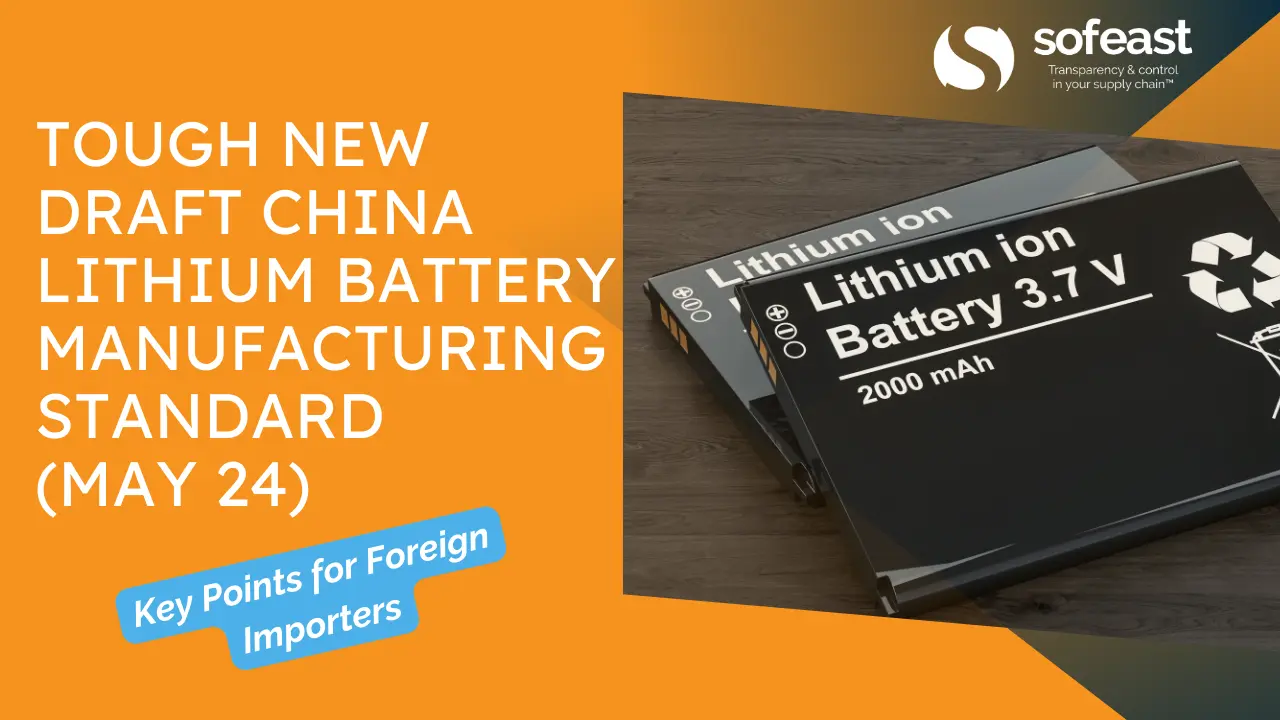
As of May 2024, plans are in motion to introduce an updated China Lithium Battery Manufacturing Standard which puts a lot more emphasis on environmental protection, safety, and improving product quality and manufacturing processes.

The standard is still a draft regulation, but this is what we know and how it may affect your suppliers.

Continue reading “New China Lithium Battery Manufacturing Standard Incoming: Key Points for Foreign Importers”

Prototyping Essentials: The 5 Key Uses of Prototyping Equipment [Podcast]

Join us as we delve into the five main uses of prototyping equipment, including 3D printers, CNC milling, and more. Our host, Renaud, is joined by Paul Adams, head of the new product development team, to explore why prototyping is crucial for design houses, manufacturing companies, and product developers alike.

In this episode, we break down the distinctions between prototyping and production equipment and discuss the importance of having in-house prototyping tools.

We cover five key uses of prototyping equipment, including:

  • Creating functional prototypes to validate concepts and improve design.
  • Developing visually appealing prototypes to enhance user experience and aesthetics.
  • Combining look-like and work-like prototypes for comprehensive testing.
  • Conducting stress testing to ensure reliability and compliance.
  • Utilizing bridge production runs to meet early demand and maintain trust.

We also touch on how prototyping equipment can be used to create production tooling, such as jigs and fixtures, to streamline the manufacturing process. Tune in to gain valuable insights into the world of prototyping and how it can benefit your product development journey.

Don’t miss out on this informative discussion that will help you understand the nuances of prototyping and its vital role in bringing new products to market efficiently and effectively.


Listen to the episode here 👇

Listen: to the podcast episode

Watch: on Youtube


Episode sections

  • 00:00 – Greetings and introduction.
  • 13:26 – The Importance of Functional Prototypes.
  • 18:29 – Designing Look-Like Prototypes.
  • 32:02 – Stress Testing Prototypes.
  • 43:45 – Bridge Production Run Overview.
  • 44:43 – Utilizing Prototyping Equipment for Production Tooling.
  • 52:00 – Wrapping up.


Related content…


Listen, rate, & subscribe to the ‘China Manufacturing Decoded’ podcast on your favorite provider

More episodes are coming, so remember to rate us and subscribe! You can find us on:

If you enjoyed this episode, don’t forget to give us a 5* rating and share it with your network if you enjoy listening!

A Sourcing Agent Copied Your Product! | Disputes With Chinese Suppliers Q&A (Volume 25)

Working with a sourcing agent in China can be great for overseas importers as you get to tap into their knowledge of local markets and their established relationships with (hopefully) suitable suppliers, as well as saving the time and effort which can be better spent on building your business of trying to deal with suppliers with an unfamiliar language and culture.

However, working with a sourcing agent isn’t without its risks, and this case demonstrates that an agent who appears trustworthy can suddenly go rogue with very damaging consequences for your business…

Continue reading “A Sourcing Agent Copied Your Product! | Disputes With Chinese Suppliers Q&A (Volume 25)”

Selecting the Right Factory Audit for Your Needs [Podcast]

Join hosts Renaud and Adrian as they discuss the ins and outs of factory audits and how to select the right one based on your specific requirements.

In this episode, Renaud shares insights from his recent experiences and highlights the latest developments at Sofeast Group, including the expansion of their plastic injection molding facility.

The main focus of the discussion is on different types of factory audits such as the initial factory evaluation, quality system audits, social compliance audits, and environmental system audits. They explain what each audit entails, why they are important, and how to choose the most appropriate audit for your situation.

Whether you are sourcing a new supplier or ensuring compliance with existing partners, this episode offers valuable guidance to help you make informed decisions and manage risks effectively. Tune in for expert advice and practical tips to enhance your manufacturing processes in Asia.


Listen to the episode here 👇

Listen: to the podcast episode

Watch: on Youtube


Episode sections

  • 00:00 – Greetings and discussing the expansion of our plastic injection molding facility.
  • 02:32 – Selecting the Right Factory Audit.
  • 09:38 – Diverse Approaches to Environmental Audits.
  • 14:14 – Focus on Quality System Audits.
  • 16:56 – Social Compliance Audits and Risks.
  • 22:21 – Initial Factory Evaluation vs. Quality System Audit
  • 25:58 – Factors Beyond Quality Systems in Supplier Selection.
  • 27:37 – Dealing with Factories that Restrict Access
  • 34:59 – Factory audits as part of the new product development toolkit
  • 36:36 – Wrapping up.


Related content…


Listen, rate, & subscribe to the ‘China Manufacturing Decoded’ podcast on your favorite provider

More episodes are coming, so remember to rate us and subscribe! You can find us on:

If you enjoyed this episode, don’t forget to give us a 5* rating and share it with your network if you enjoy listening!

Analysis of EU Food Contact Product Incidents 2023-24 [Research]

Food contact materials are sometimes subject to rigorous checks in the EU because market surveillance authorities want to ensure that the population is not exposed to harmful chemicals and other dangers when storing or consuming food and beverages. This is fair enough given the sensitive nature of these products!

We wanted to find out what problems were commonly found in food contact materials and products so we researched incidents in the EU among food contact materials using the Rapid Alert System for Food and Feed (RASFF) for 6 months from late 2023 to around April 2024. The findings provide some helpful insights about which products did not comply with safety regulations if you’re an importer of food contact products.


[ez-toc]


What kind of food contact products are being imported into the EU?

food contact materials

There are a huge number of different types of food contact products, but to give you an idea, here’s a non-exhaustive list of those included in our research:

  • Silicone cookware and tools (plates, etc)
  • Baby bottle teats
  • Cutlery and kitchen tools
  • Bamboo fiber products
  • Pizza boxes
  • Melamine kitchenware
  • PP boxes and bottles
  • Dried goods packaging
  • Ceramics
  • Paper plates
  • Napkins
  • Nylon gloves


What hazardous substances were found, and in which products?

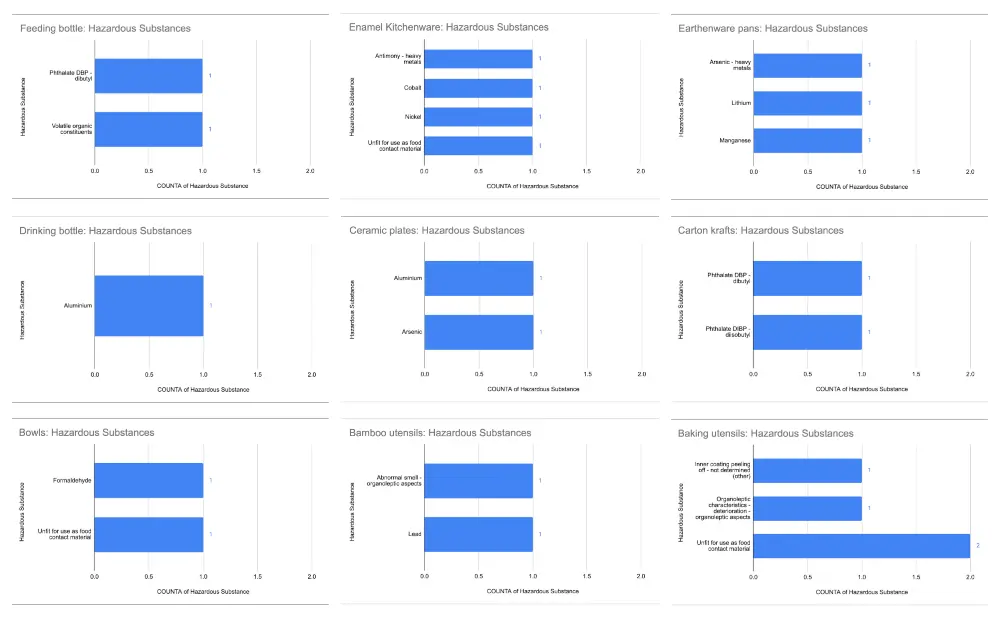
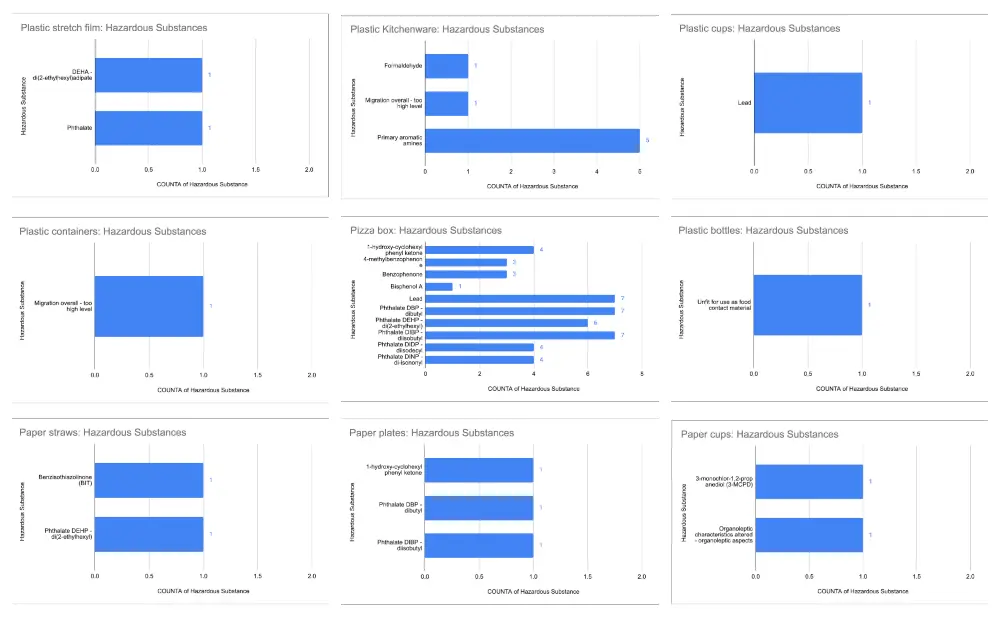
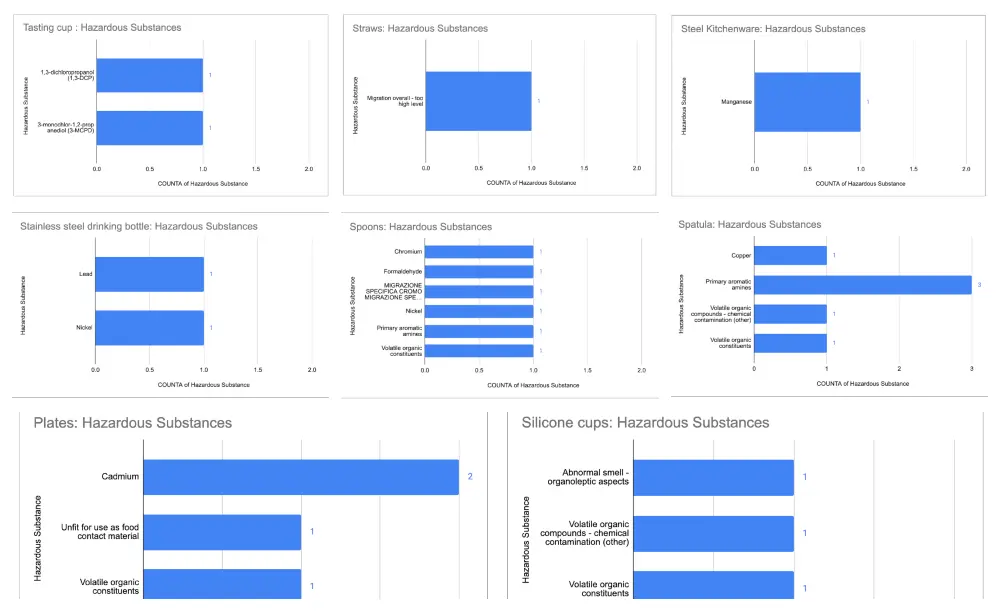
We categorized the products and listed the hazardous substances found. Typically these would be hazardous substances such as those restricted by REACH, RoHS, and POP tests, for example. Use this information to see what kinds of substances you should be vigilant for if you are also importing that type of product into the EU.

food contact materials hazardous substances eu 2023 1food contact materials hazardous substances eu 2023 3food contact materials hazardous substances eu 2023 4

Let’s break down some of the substances found and why they’re harmful:

  • Lead: Proven to cause severe neurological damage and cognitive impairment, especially in children.
  • Cadmium: Causes kidney damage and bone fractures, and is a known carcinogen.
  • Aluminum: Linked to neurotoxicity and diseases like Alzheimer’s.
  • Lithium: Affects the nervous system and kidneys.
  • Cobalt: Causes respiratory issues and skin dermatitis, and may be carcinogenic.
  • Manganese: Causes neurological problems, including Parkinson-like symptoms.
  • Phthalates: Disrupt endocrine functions, and can cause reproductive and developmental issues.
  • Aromatic amines: Known carcinogens that can cause bladder cancer and other diseases.
  • BPAs: Cause hormonal imbalances and an increased risk of reproductive disorders, cancers, and other health issues.
  • VOCs: Responsible for respiratory problems and skin irritation, and can cause liver and kidney damage or cancers.

Reading these examples, you can now see why weeding out food contact products with these issues is important for market surveillance authorities. Worryingly, pizza boxes, plastic containers, and kitchen utensils were found to include harmful substances in many cases.


Where did the problem products come from?

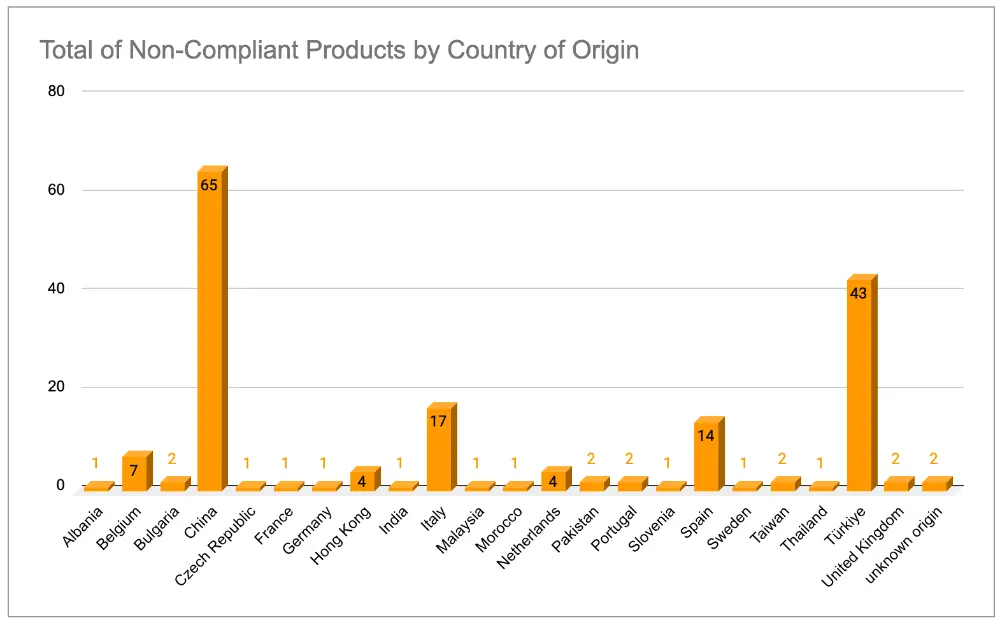
In the period researched of approximately 6 months between late 2023 and spring 2024, the problem products flagged for being non-compliant largely came from China and Turkey, with Spain and Italy further behind.

hazardous food contact products countries of origin 2023 2024

This perhaps won’t come as much of a surprise, but it serves as a reminder to be extra vigilant when purchasing from China and Turkey.


What actions were taken on the non-compliant products?

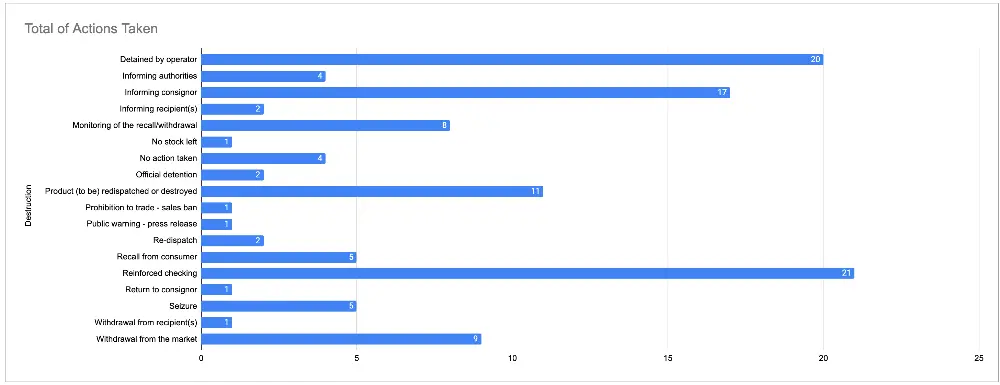
The authorities took various actions, ranging from nothing at all to destroying the offending products.

actions taken on hazardous food contact materials

Reinforced checking, informing the consignor, and detaining them are the most common actions, but withdrawal from the market and destruction were also commonly taken.


What are the related regulations/directives?

These products fall under the EU food contact regulation framework.

However, this is not sufficient, as the EU countries haven’t fully harmonized their requirements. A product to be sold in 10 EU countries has to satisfy the regulatory requirements of those 10 countries…


General advice to reduce such risks

We know that China and Turkey are hotspots for non-compliance on this topic, so it’s a must-do to ensure that suppliers understand what you cannot accept, and that you are arranging product testing. Make sure you work with suppliers who are aware of the regulations. Perhaps they can show you proof that they have made compliant products in the past?

Food contact material products can be checked by market surveillance authorities, especially as some children’s products like feeding bottles are included in this category. Sometimes an NGO also picks some products and has them tested, if they are digging around your brand for trouble…

Hazardous substances will commonly be found in regular REACH, RoHS, and POP testing, but the authorized limit may not be the same. So, as an importer you may wisely choose to do a bit of research and then get the products tested to some of those standards in a lab before shipping them to the EU.

Even if your supplier runs their own lab tests and provides you with a report, unless they’re proven to be capable and trustworthy beyond doubt you should run your own laboratory tests, at least initially.


Disclaimer

We at Sofeast are not lawyers. What we wrote above is based only on our understanding of the regulatory requirements. We do not present this information as a basis for you to make decisions, and we do not accept any liability if you do so. Please consult a lawyer before taking action.