

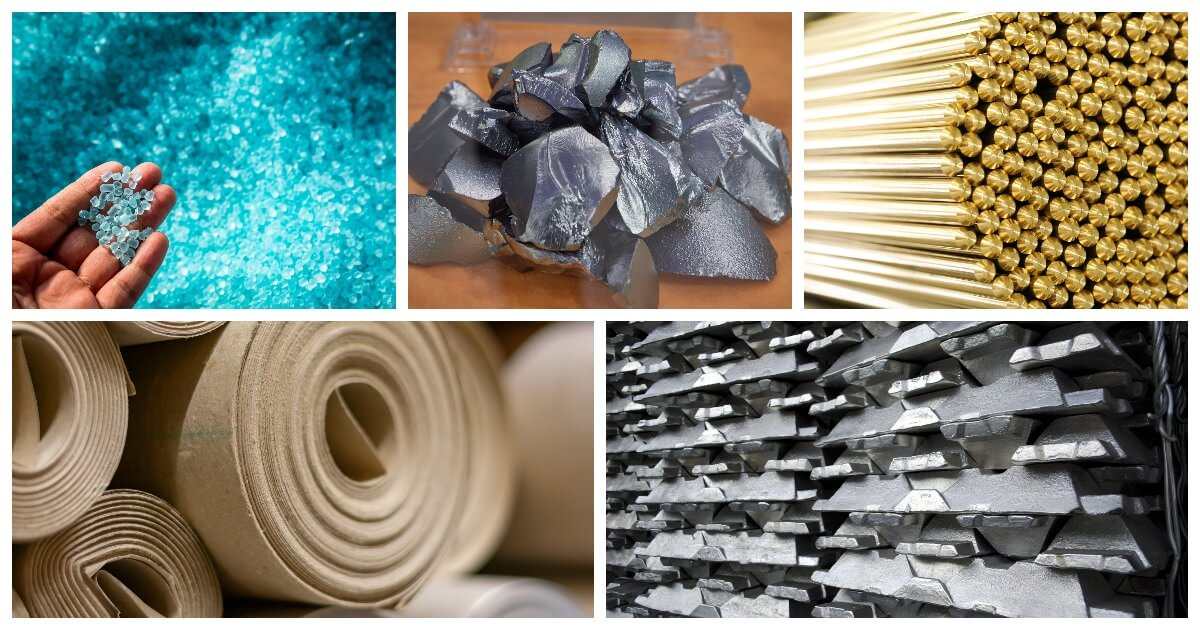
 Here’s the monthly update from Sofeast’s sourcing team who has been tracking the costs of commonly used raw materials from China for the past year to help you understand where the market is right now. If you or your supplier are purchasing materials from China for your products the cost changes that you see here do have an impact on your bottom line!
Here’s the up-to-date material cost data from China for you as of late January 2024 and the price evolution over the past twelve months:
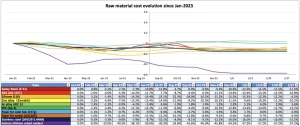
Here you can see the individual cost evolution per material over the past year, including the weekly and monthly change for January 2024:

Here is what our market analysts attribute these changes to during this past month:
Epoxy Resin (E-51) – decreased 1.09%
Both bisphenol A (BPA) and epichlorohydrin, key raw materials, are experiencing stable conditions. BPA supply is smooth, while epichlorohydrin remains readily available due to its smaller size. Consequently, the overall cost support performance is relatively unchanged. New offers from resin manufacturers are primarily stable, reflecting the current market equilibrium.
Looking at supply, the liquid resin factory delivered early orders promptly within a week. Their on-load capacity remained stable, while smaller factories experienced a slight decrease in production load, leading to a marginally lower overall liquid on-load. Some solid resin plants underwent shutdowns within the week, but the remaining plants maintained stable load levels, resulting in a minor decrease in solid load.
Demand-wise, as the year draws to a close, the downstream market exhibits a flat trend. Stockpiling is challenging due to the uncertain market outlook. Therefore, demand remains primarily focused on replenishing existing stock, with occasional large orders reported at lower transaction prices.
ABS AG-15E1 – increased 2.98%
Domestic ABS market prices witnessed a slight upward trend. The mainstream reference price for domestic material now ranges from 9,600 to 10,600 yuan per ton. Compared to last Thursday, low-end prices increased by 100 yuan per ton, while high-end prices rose by 50 yuan per ton. This price hike can be attributed to the ongoing rise in upstream styrene prices, which has put significant pressure on ABS production costs. Recognizing this need for cost relief, manufacturers have demonstrated a stronger willingness to support higher prices. As a result, the majority of transactions between traders are occurring at these elevated levels.
Silicone (110) – increased 10.74%
The domestic 110 raw rubber market experienced a price surge this week, with the gap between leading enterprises and other producers narrowing. Driven by a rebound in raw material costs and additional debt, leading companies initiated price hikes over the weekend, accumulating to a total increase of 1,300 yuan/ton. While most domestic producers followed suit this week, the price difference with leading enterprises has shrunk to 300 yuan/ton. This highlights the competitive advantage of spot supply offered by some, leading to increased orders for lower-priced firms.
The price increase has restored profitability in raw rubber production, boosting manufacturing enthusiasm. Consequently, downstream rubber prices also rose this week, accompanied by better order flow. However, a limited impact on this week’s prices is predicted due to sufficient raw material stockpiles held by most manufacturers earlier.
Zinc alloy (Zamak5) – increased 1.44%
The market activity initially exhibited an up-and-down pattern, reflecting the proximity of the holidays. Early in the week, traders prioritized clearing their inventory, leading to lower prices. This attracted downstream buyers who stocked up on goods. However, the price volatility later discouraged further stockpiling from jade tour organizers.
AL alloy ADC 12 – increased 1.26%
Four Key Factors Driving the Current Spot Aluminum Price Trend
Several key factors are influencing the current trend of spot aluminum prices:
- Macroeconomic Strength: Positive economic data from the US manufacturing sector and other indicators, coupled with optimistic domestic policy expectations and the central bank’s RRR reductions, have generated a bullish sentiment in the nonferrous market, including aluminum. Additionally, concerns about potential disruptions to the Russian aluminum supply have further fueled this optimism.
- Tight Supply: While aluminum smelters maintain high production levels, the proportion of ingots and social inventory remains low, indicating a tight market supply. This limited supply continues to support aluminum prices.
- Varied Demand: Demand performance has been mixed this week. While some small and medium-sized processing plants in South China have entered holiday periods, reducing market readiness, demand in East and Central China remains stable, providing some support for aluminum prices.
- Stable Costs: Pre-baked anode and electricity prices remained stable this week, while alumina prices saw a slight increase. However, current profit margins are considered substantial, and these cost fluctuations have minimal impact on aluminum prices.
In summary, the combination of supportive macro news, a tight supply side, and stable costs, with some variations in demand, has contributed to a narrow upward trend in spot aluminum prices.
PVC (SG-3) – decreased 0.54%
The PVC powder market saw minimal fluctuations this week, characterized by weak domestic trade activity and an uptick in exports. As of January 25th, the average price of domestic calcium carbide PVC powder SG-5 reached 5613 yuan/ton, representing a slight increase of 0.09% (5 yuan/ton) compared to the previous week. However, this increase was smaller than the one observed the prior week, suggesting a potential moderation in price trends.
This week witnessed some downstream product companies entering holiday periods, leading to a decline in their enthusiasm for spot purchases. This, combined with the recent price increase in PVC powder, contributed to a subdued overall atmosphere in domestic spot trading.
Paper for color box (157g) – decreased 3.33%
The price increase narrowed further this week. Contributing factors included some downstream product companies entering holiday periods, leading to a decline in spot purchase enthusiasm.
Paper for carton (AA120G) – decreased 2.47%
Paper prices are poised for near-term stability due to a confluence of factors:
Supply: While a local upstream paper mill undergoes scheduled maintenance, causing a slight reduction in supply, the impact is anticipated to be temporary and localized.
Demand: Downstream packaging plants maintain consistent order patterns, providing a solid foundation for market stability.
Market Sentiment: Larger paper mills plan to implement price increases on February 1st. This has prompted a cautious wait-and-see approach from most downstream businesses, although some remain bullish.
Overall, these factors suggest a market environment conducive to price stability rather than significant fluctuations shortly.
Stainless steel (304/2B 0.4MM) – increased 0.65%
Stainless steel futures experienced a surprising surge during the reporting period, with the price center of gravity shifting upwards and bolstering the spot market sentiment. This positive momentum was further fueled by the release of RRR news, leading to heightened optimism and a temporary rise in enthusiasm in the spot market. However, this short-lived warming period quickly gave way to renewed silence, limiting the space for further price adjustments. As the weekend approached, a wait-and-see attitude dominated the market, and insufficient trading power resulted in flat trading activity.
Battery (lithium cobalt oxides) – decreased 5.89%
The national lithium cobalt acid market is experiencing a period of weakness, characterized by subdued activity and low prices.
How to combat the rising costs?
Explore cost-reducing tips in this post: Rising Raw Material Prices: What Strategy To Follow? (6 Approaches).
What to do if your Chinese supplier suddenly tells you that material costs have risen: How To Cooperate With Your Chinese Supplier, Part 16: Bad News from China, Raw Material Prices Just Increased!
If your supplier just isn’t working out, maybe sourcing a new supplier will help you find one who can offer you better prices and more. If so, there’s no need to fear switching from your current supplier to a new one if you’re prepared: How To Switch To A Newer, Better Chinese Manufacturer? [eBook].
We hope this is helpful. Our mission at Sofeast is to help importers have transparency in their supply chain and to give them more control. And this information is critical to have some visibility into your manufacturer’s costing.
By the way, you can always contact us if you have any questions about whether a manufacturer’s quote is reasonable.
![Impact of Yemen’s Houthis On Global Shipping in Jan ’24 [Bonus Podcast]](https://artbyraksha.sofeast.com/wp-content/uploads/2024/01/Impact-of-Yemens-Houthis-On-Global-Shipping-in-Jan-24-.jpg)




![Cost Vs Quality – How Manufacturers Can Find A Balance [Podcast]](https://artbyraksha.sofeast.com/wp-content/uploads/2024/01/Cost-Vs-Quality-–-How-Manufacturers-Can-Find-A-Balance.webp)
![7 Key NPI Tasks To Do Before You Take Your Product Into Production [Podcast]](https://artbyraksha.sofeast.com/wp-content/uploads/2024/01/7-Key-NPI-Tasks-To-Do-Before-You-Take-Your-Product-Into-Production-Podcast.webp)