

It has been said that shipping a container internationally from China to the West could take “30 different companies and 100 people exchanging information about the transport at least 200 times in the process.” (Source) But is this truly the case and, if not, how does international shipping work?
How does international shipping work? Let’s find out…
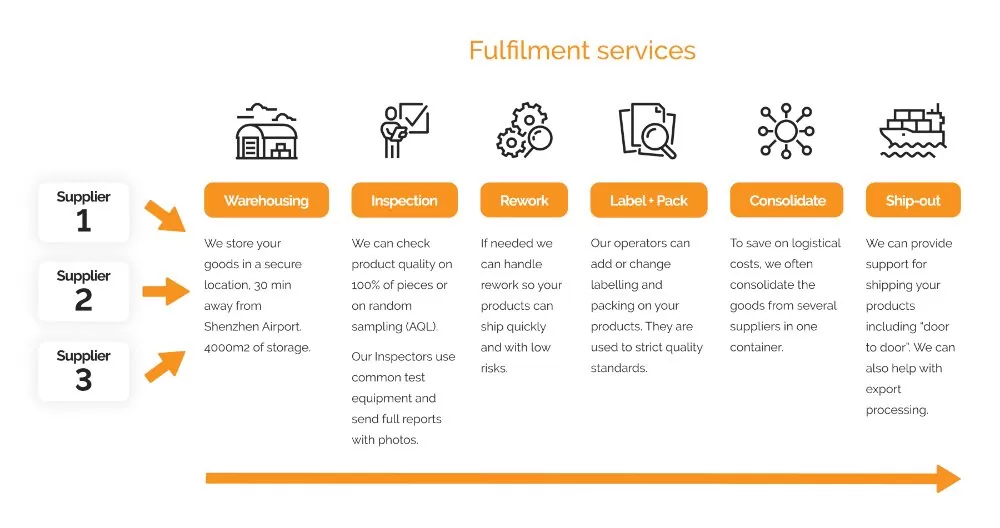
When we talk about international shipping, in this case, we’re focusing on container shipping by the ocean (although air, rail, and road freight may also be used across borders, too). Containers will be filled at the factory or warehouse, transported to the docks, loaded onto a ship, transported to the port in the destination country, and then unloaded and transported overland to their final destination. This is commonly how the TV, laptop, phone, or chair in your office probably arrived in your country from China or wherever else it was made.
What are shipping containers?
Standard shipping containers are metal boxes capable of being stacked and holding a large number of goods securely.

There are several sizes (the most common being 20ft, 40ft, and 40ftHQ) and they even come in refrigerated and insulated forms for when the goods inside need additional protection from the environment during transit.
The international shipping process
When importers ask ‘how does international shipping work’ they often want to understand the process in steps to get the container from A to B. We’ll break it down here for you:
- A freight forwarder or booking agent takes your booking: The shipping process starts when you or your freight forwarder* or booking agent books space for your shipment on a container vessel. The booking will include information about your shipment’s origin, destination, and how many containers need to be shipped.
- The shipping line confirms the booking: The shipping line or carrier you have opted to use will confirm that the booking is in place electronically for speed and efficiency to the consignee, that’s either you or your forwarder/agent.
- Delivery from the consignee is coordinated: You or your forwarder/agent will coordinate with the supplier of the goods (consignee) to make sure that they are aware of the timescales to work to. They may also need to arrange transport from the factory (or warehouse) to the port by truck and manage the documents.
- The container/s are loaded: Once the products are ready they are loaded into the containers at the source (probably a factory or warehouse). They are sealed and given unique ID numbers so they can be identified and (hopefully) traced.
- Overland transportation to the port: The products are now transported by truck or train to the port of origin.
- Goods received by the terminal operator: On arrival, the containers are inspected, weighed, and the shipping and booking documentation is checked by the shipping terminal operator.
- The ship is loaded: Once cleared to proceed, the containers are loaded onto the ship by container cranes.
- Transit over the water: The ship sails across the ocean to the port of destination. From China to the West this typically takes 4-8 weeks.
- Preparing for the arrival of the goods: Several days before the ship is due in port, the customs broker prepares the documents ready for customs clearance (these are available in digital form online). The forwarder/agent will also arrange inland transportation (drayage) by truck or train if they haven’t already done so.
- Container/s unloaded from the ship: Once again, container cranes, unload the containers from the ship and they’re stacked in order in the port.
- Goods clear customs and are picked up by the inland transporter: Once through customs where contains may or may not be opened and checked by customs officials, the containers are loaded onto trucks or trains for inland transportation from the port to the final destination.
- The goods are delivered: Upon arrival at their final destination, the containers are unloaded from the truck and inspected to confirm that they contain the correct items and have not been tampered with. If the consignee is satisfied, the goods are released to them.
*Note: in the USA people often use the acronym ‘NVOCC’ (Non-Vessel Operating Common Carrier), which is similar to a freight forwarder but does not have its own warehouse space. The process they follow is largely similar.
What parties are involved in international shipping?
If we look back at the initial quote, are there 30 companies and 100 people involved in getting containers across the ocean? Perhaps not. There are, however, several companies involved, including:
- Shipping lines: They operate container ships. You may deal directly with them, but many importers use a third party to make bookings.
- Freight forwarders, booking agents, or NVOCCs: These businesses are intermediaries between customers and shipping lines. They will book cargo, manage the shipping process, and may store goods if/when needed,
- Terminal operators: Manage the container ports and loading/unloading process.
- Customs brokers: They manage the customs clearance process, ensuring that the goods arriving in the destination country comply with relevant regulations and clear customs smoothly.
- Inland haulage companies: These are truck and train companies that pick up and transport the containers to and from the ports and then on to the final destination.
How about incoterms?
Incoterms is short for ‘International Commercial Terms’ and were formulated to clearly communicate the tasks, costs, and risks associated with the global or international transportation and delivery of goods. Learn more about incoterms here.
A supplier will state which incoterms they are providing within a product quotation so you as a buyer fully understand the terms under which your products have been quoted. As you can see from the graphic below, the incoterms agreed do have an effect on international shipping because the parties responsible for activities such as booking the shipment may vary.
(Note: some people have pointed out that FCA is a better fit for today’s shipping process than FOB. FOB is still widely used, which is the reason why we mention it in this graph.)
Conclusion
Hopefully, now you have answers to the question: how does international shipping work?
It’s unlikely to involve thirty companies and hundreds of staff, however, it’s still a fairly complex process that needs an experienced hand to manage correctly.
If you are one of our existing customers and need help shipping your products, please let your Sofeast project manager know about your needs.
P.S. Further reading…
You may also like to read these resources, too:
- HS and HTS Codes – these codes categorize your products and will be included in the booking information. They will have an impact on import duties, so you should choose carefully to minimize your financial exposure.
- Demurrage vs Detention – fees that may be charged if your container needs to be stored at the port for longer than agreed before or after shipping or if the container is not returned to the shipping company when expected.