Product inspection findings are the issues, defects, and nonconformities discovered during inspections of finished goods, components, packaging, or production lots before shipment.
This infographic shows common examples of product inspection findings that importers may see in an inspection report, from visual defects and workmanship issues to packaging problems and more serious quality risks. Use it to better understand what inspectors look for, how findings are usually reported, and why clear acceptance criteria are so important before production starts.
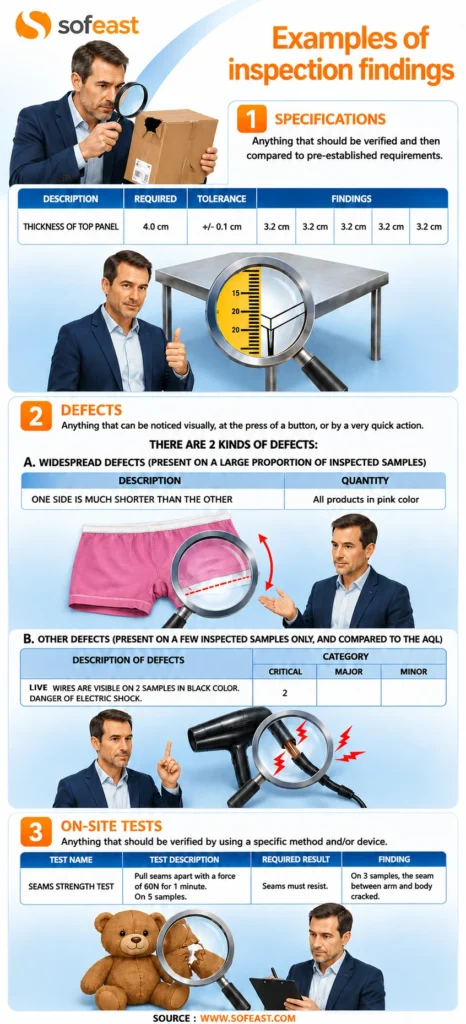
Inspections are a necessary solution for importers who are eager to improve product quality coming from their Chinese suppliers. In order to prepare, importers can use this infographic to understand what kinds of inspection findings they’re likely to encounter.
Sofeast offers a full range of product inspections to make importers’ lives easier. Our quality technicians will usually go to your supplier’s factory or facility to conduct the following inspections.
We have written a lot of blog posts on quality inspections, take a look!
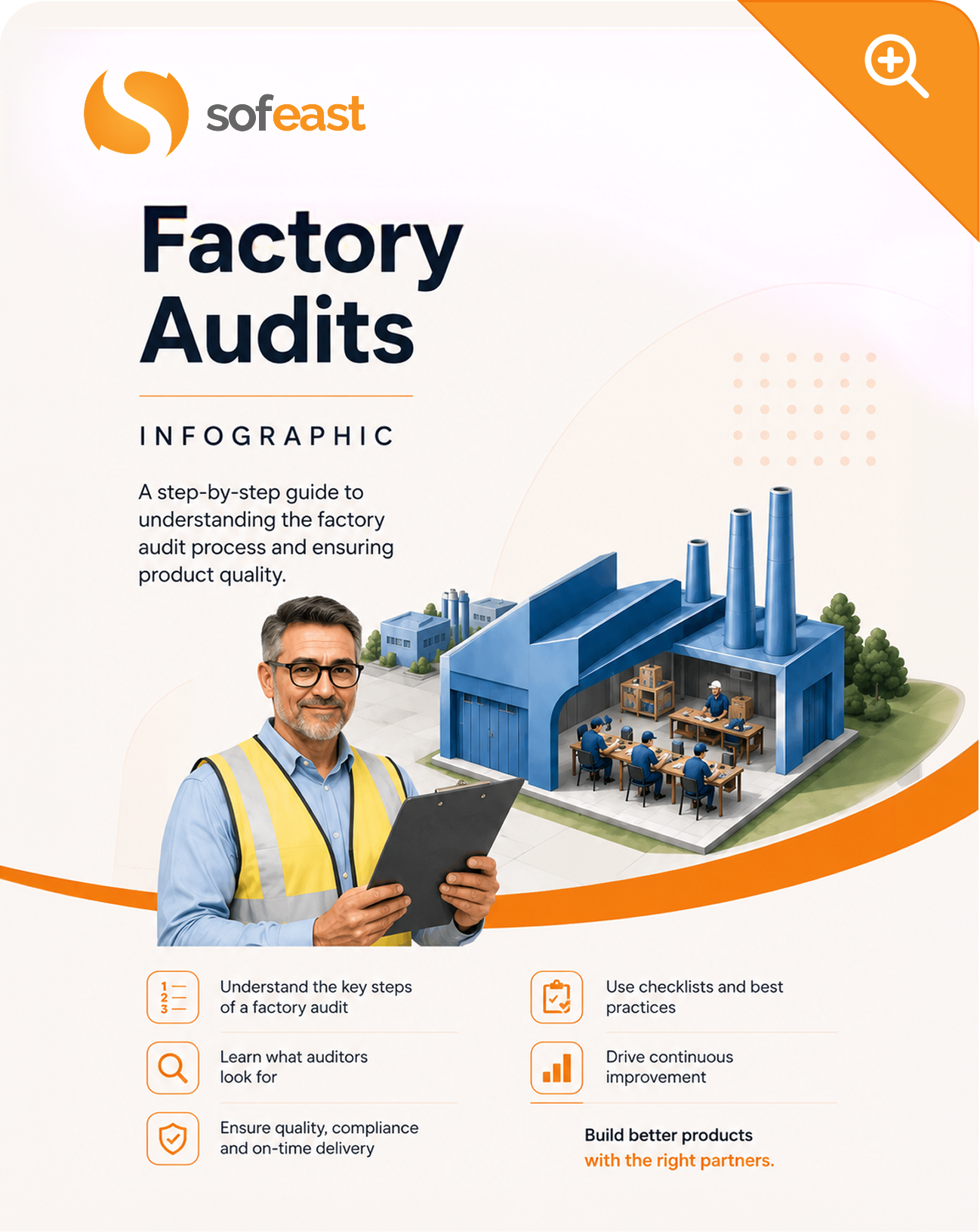
Before you commit to working with a factory in China, it is worth checking what is really happening on site. A factory audit helps you understand whether a supplier has the systems, capacity, controls, and compliance standards needed to manufacture your product reliably.
This infographic explains how factory audits work, what auditors usually check, and why they are an important step for importers who want to reduce quality, cost, delivery, and supplier risks before production starts.
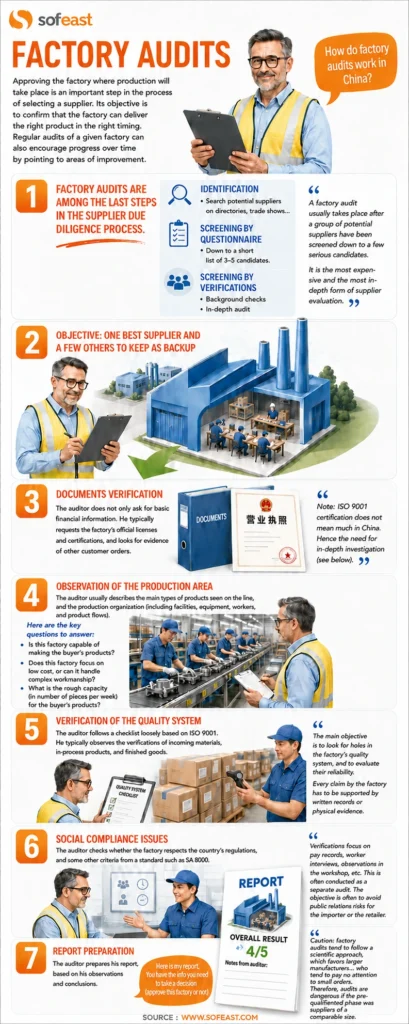
Importers from China should consider these audits as an essential step towards obtaining the right quality, cost, and delivery times. You deserve the best possible manufacturing partner, and audits will help assure that.
Typically, you can choose from the following factory audits. You can also request to discuss them with us and get a quotation.
Read more about audits in our blog posts here: Hiring a Consultant to Prepare a Factory Audit, here: Factory Audits and Product Inspections: Similarities and Differences, and here: ISO 9000 audits for your China suppliers

Let’s take a closer look at final random inspections
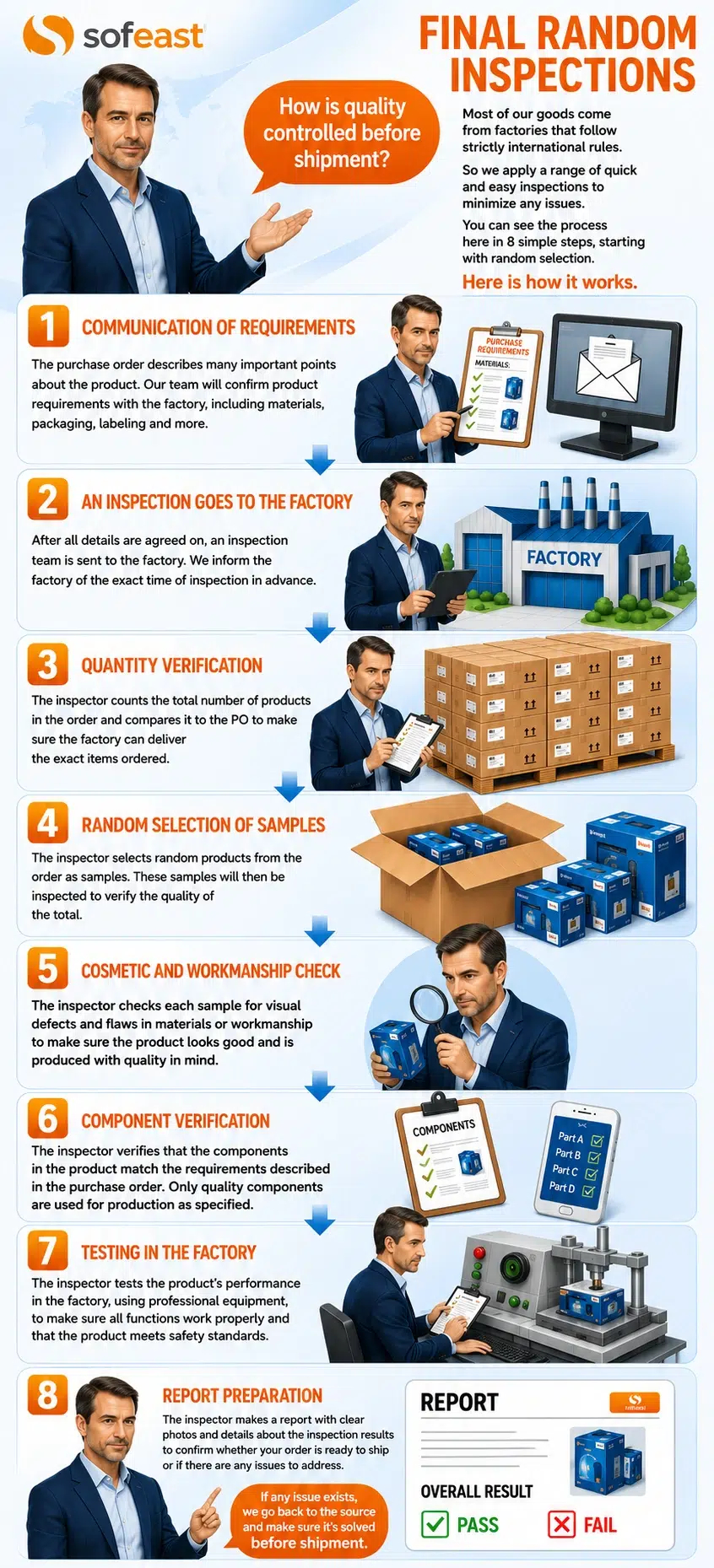
A final random inspection is also known as a ‘pre-shipment inspection.’ This is one of the last product inspections to take place before your order is shipped out from your supplier.
When Sofeast performs these for our clients, our quality technician visits your supplier and confirms the quantity and average quality of a production batch before it is shipped out.
They will count the cartons and pull out samples to check on a random basis, and, based on their feedback, you will be in a position to accept or reject the batch based on its quality.
Sofeast can perform your FRI! Hit the button below to speak to us about your needs and get a quotation:
Get pricing and book your FRI
For even more information on final random inspections (FRI) read our blog post here: Final random inspection: a guide for importers
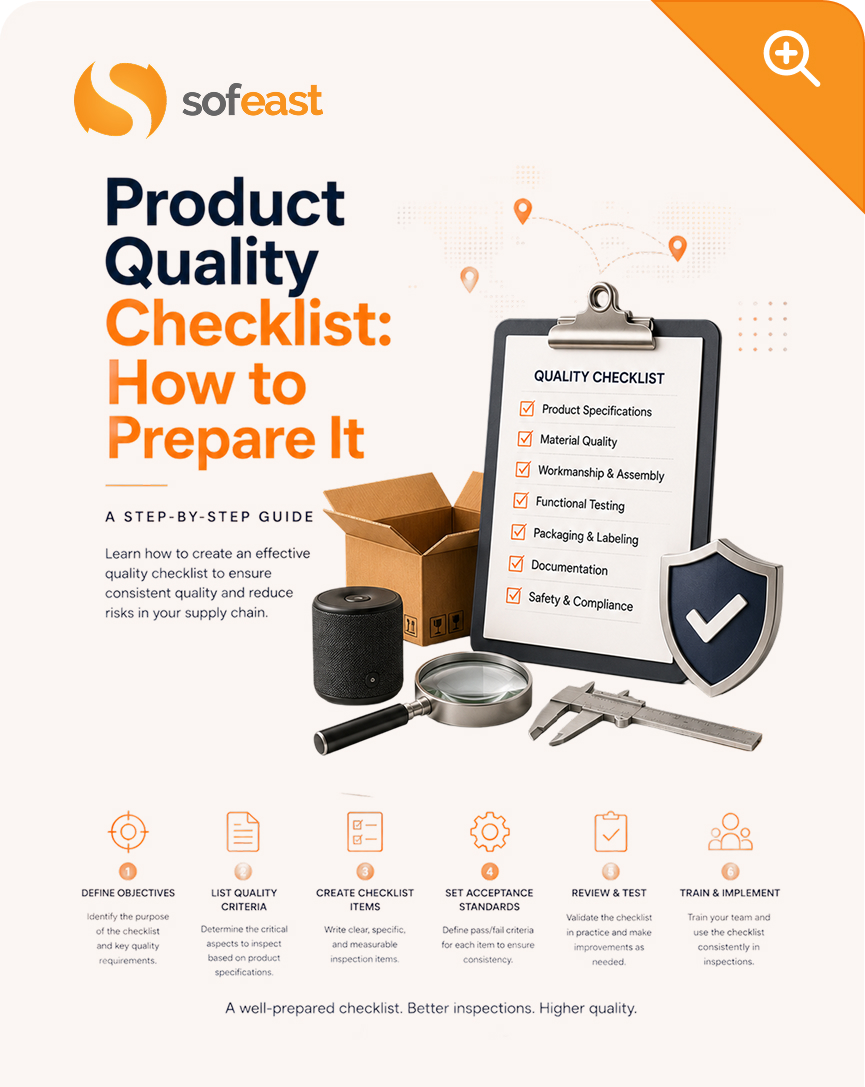
In this infographic, we outline how to prepare your own product quality checklist.
Importers will find this useful because having a pre-defined inspection checklist helps to make your requirements crystal clear for both your supplier and quality inspectors. There’s less room for production corner-cutting, mistakes, and for the quality inspections to miss key issues.

Don’t leave quality inspections in the hands of your supplier!
Importers who outsource their production to suppliers in Asia can have a hard time with quality assurance because they’re simply not there to keep tight control.
This is why Sofeast has a dedicated quality assurance team who provide you with QA solutions which assure that your supplier is maintaining your expected level of quality. We’re also able to consult you and develop a product quality checklist if needed.
You can choose from any of these solutions to suit your needs:
You may also like our consolidated close production monitoring program which is custom-made for importers and includes the consulting, product inspections, and follow-up most importers need to have a robust quality assurance strategy, but at a more affordable cost.