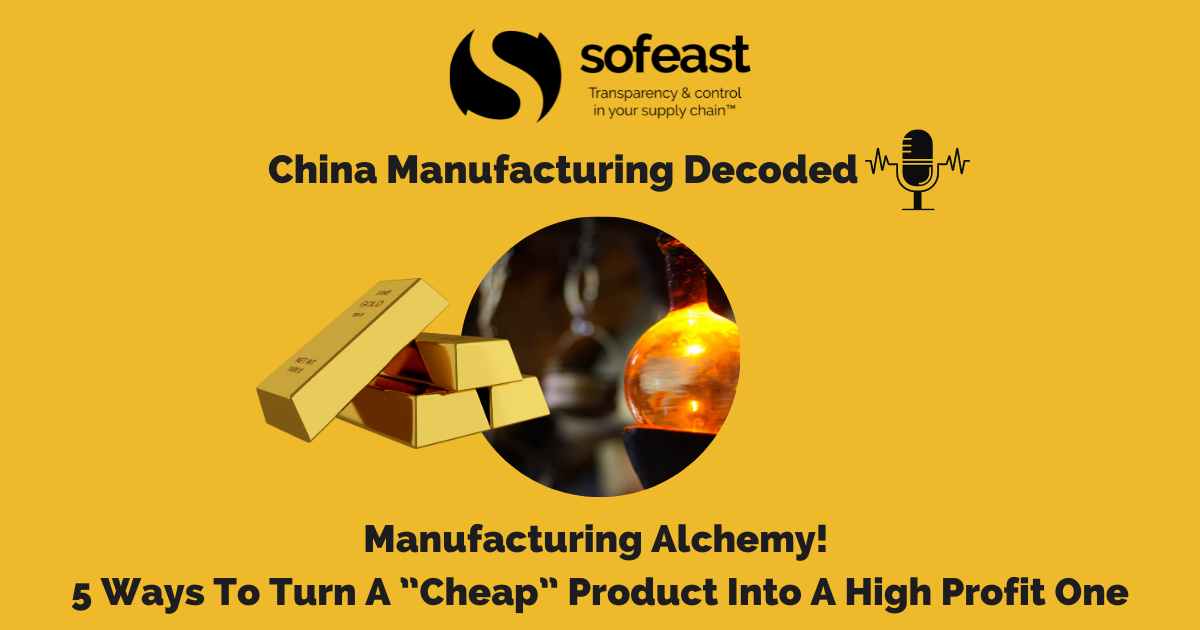
Manufacturing Alchemy! 5 Ways To Turn A ”Cheap” Product Into A High Profit One

Manufacturing Alchemy! 5 Ways To Turn A ”Cheap” Product Into A High Profit OneSofeast’s head of New Product Development, Andrew Amirnovin, is back with Adrian from the team. They’re talking about manufacturing alchemy: taking a cheap product and converting it into a high-profit one! How can importers do this? Andrew shares 5 ways to boost your profits here.


Listen to the episode here 👇

Listen: to the podcast episode

Watch: on Youtube


Episode sections

  • 00:00 – Greetings and introducing today’s topic.
  • 03:06 – Sell expensive or low-cost products?
  • 08:11 – 1. Add value to the product.
  • 16:23 – 2. Target a Niche Market.
  • 19:50 – 3. Improve the packaging.
  • 25:10 – 4. Upsell and Cross-sell.
  • 30:03 – 5. Invest in marketing.
  • 33:53 – Wrap-up.


Related content…


Listen, rate, & subscribe to the ‘China Manufacturing Decoded’ podcast on your favorite provider

More episodes are coming, so remember to rate us and subscribe! You can find us on:

If you enjoyed this episode, don’t forget to give us a 5* rating and share it with your network if you enjoy listening!

How To Source Rare Electronic Components?

How To Source Rare Electronic ComponentsThe microchip shortage the world has been experiencing since the Covid pandemic shows signs of easing now we’re in 2023, but the supply chain for certain components, especially some rare electronic components like certain chips, is still rocky.

So, with this in mind, let’s look at what happens if you’re trying to source and vet suppliers of rare electronic components like these today in China.

Continue reading “How To Source Rare Electronic Components?”

11 Questions to Answer when Sourcing Chinese Contract Manufacturers for Electronics

When sourcing a new contract manufacturer in China, what are the main questions buyers need to answer before agreeing to work together?

Renaud and Adrian cover 11 questions for buyers in this episode, especially those making electronic products (although much of this advice is relevant to many hard goods in general and suppliers in other Asian countries, too), in order to help you find a reliable and capable manufacturing partner.


Listen here!

Listen: to the podcast episode

Watch: on Youtube


Episode sections

  • 00:00 – Greetings & today’s topic: Sourcing a CM in China for manufacturing electronic products.
  • 02:10 – What is a contract manufacturer in comparison to other supplier types?
  • 06:55 – 1. What will your order quantity be? (This influences the type of CM that is suitable)
  • 09:43 – 2. Will you order a high-volume, low product mix setup, or the opposite?
  • 12:24 – 3. Do you have visibility and transparency over the supply chain?
  • 19:14 – 4. Will your Intellectual Property be protected, and how?
  • 20:48 – 5. Will they be helping to develop your product and make it compliant?
  • 23:51 – 6. What manufacturing processes does the CM have in-house?
  • 27:45 – 7. What is the CM’s QC capability?
  • 28:35 – 8. What kinds of tooling, fixtures, and jigs does the CM have for in-line testing?
  • 29:37 – 9. Who has liability for safety and compliance issues?
  • 31:00 – 10. What payment terms can they accept?
  • 32:01 – 11. What delivery terms do they provide (incoterms)?
  • 34:56 – Summary and wrapping up.


Related content…


Listen, rate, & subscribe to the ‘China Manufacturing Decoded’ podcast on your favorite provider

More episodes are coming, so remember to rate us and subscribe! You can find us on:

If you enjoyed this episode, don’t forget to give us a 5* rating and share it with your network if you enjoy listening!

10 Sourcing Tips & Hacks to help you Find the Right Suppliers in Asia

10 Sourcing Tips & Hacks to help you Find the Right Suppliers in AsiaWhat is the right supplier and how do you find them? Sit tight, because we’ve got a great video full of sourcing tips and hacks that will help you!

Continue reading “10 Sourcing Tips & Hacks to help you Find the Right Suppliers in Asia”

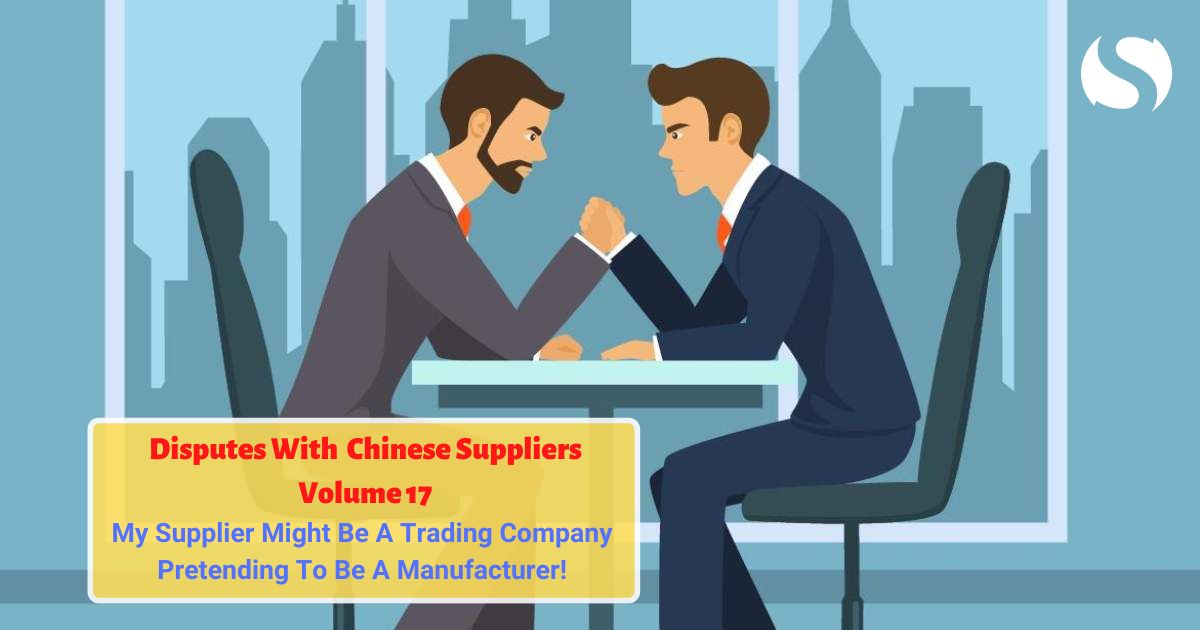
Is My Supplier A Trading Company Pretending To Be A Manufacturer? | Disputes With Chinese Suppliers Q&A (Volume 17)

Disputes With Chinese Suppliers Volume 17
I’ve written before about Chinese trading companies masquerading as legitimate manufacturers before on a number of occasions on my blog QualityInspection.org, and the threats they can pose to importers haven’t disappeared.

Here are some reasons why trading companies might be risky for you and a few actionable tips for what to do if you think your ‘Chinese manufacturer’ is, in fact, a trading company in disguise…

Continue reading “Is My Supplier A Trading Company Pretending To Be A Manufacturer? | Disputes With Chinese Suppliers Q&A (Volume 17)”

Silicone Production Processes, Properties, And Testing [Videos]

Silicone Production Processes, Properties, And Testing [Videos]Our senior engineer Paul Adams has put together a video playlist where he explores silicone production processes, properties, and the common testing importers do to assess this production material’s suitability for their products. If you use silicone in your products, these videos will be a helpful introduction to some of the key knowledge you need.

Continue reading “Silicone Production Processes, Properties, And Testing [Videos]”

Current Manufacturer Not Up To Scratch? Here’s How To Leave Them [Podcast]

Current Manufacturer Not Up To Scratch Here's How To Leave Them [Podcast]Let’s talk about what happens when you need to leave your current Chinese manufacturer and switch to a new one.

Why would this scenario occur, how do you manage the transition, and what activities do you need to do to have a successful and smooth* move from an old to a new supplier?
*(as possible as this is a tricky situation)

Sofeast’s CEO, Renaud, and Adrian from the team go through this and more so you no longer need to be worried about putting up with a supplier who just isn’t keeping up their side of the bargain!


Listen here!

Listen: What Happens If You Decide To Leave Your Chinese Supplier? 

Watch on Youtube


Episode sections

  • 00:00 – Greetings & Introduction
  • 01:47 – Why can starting the process to leave your Chinese supplier be tricky?
  • 06:29 – Reasons why you might decide to leave a supplier.
  • 19:49 – Why the difficulty of doing business with Chinese suppliers these days may force some businesses to move away from even good suppliers.
  • 21:26 – How to manage the process of moving production out of one factory in China to another?
  • 27:31 – How to onboard your new manufacturer?
  • 30:09 – What to do about your tooling?
  • 36:21 – Lying to a supplier to ease a move. Yes, or no?
  • 38:39 – What activities should we plan to do when transferring production from one supplier to a new one?
  • 40:57 – Wrapping up. 


Related content…

We’ve created some great resources on this topic – it’s highly recommended that you take a look 😉 👇


Listen, rate, & subscribe to the ‘China Manufacturing Decoded’ podcast on your favorite provider

There are more episodes to come, so remember to rate us and subscribe! You can find us on:

If you enjoyed this episode, don’t forget to give us a 5* rating and share it with your network if you enjoy listening!
DIY Sourcing from China Part 7: How To Develop Your Chinese Supplier? [Podcast]

How to develop your Chinese suppliers Sofeast CEO, Renaud, and Adrian from the team continue our mini-series of episodes about doing your own sourcing from China in this, our 7th part. By now, you’ve found and vetted a supplier and are working with them on production. There will doubt be positives and negatives, so the question is, how to improve the negatives?

Let’s say that quality sometimes needs to be better. Do you ditch the supplier and find a new one that can do a better job of quality, or do you work with the supplier to help them improve it?

Often, implementing a supplier development program to improve their results is much more effective than switching to a new supplier and starting from scratch, and in this episode, Renaud explains why this is, how to build your development program, and best practices to follow.


Listen here!

Listen: How to develop your Chinese suppliers? – Sourcing from China (7) 

Watch on Youtube


Episode sections

  • 00:00 – Greetings & Introduction
  • 02:20 – What is supplier development and is it overlooked by buyers?
  • Next, we’ll go into the 5 steps a supplier development program includes:
  • 08:36 – 1. Selecting suppliers with the right profile.
  • 12:43 – 2. Helping the supplier during product development and new productions.
  • 17:09 – How phases 1 & 2 are connected to being a hands-on buyer and building rapport with the supplier.
  • 18:44 – 3. Ensure your quality standard is met.
  • 27:34 – Proactive approaches. 4. Targeting low-hanging fruits (small projects for quick wins).
  • 33:05 – 5. Reorganizing manufacturing and/or supply chain processes.
  • 38:51 – Summarizing what a supplier development plan is.
  • 40:46 – When is supplier development worthwhile over switching suppliers and starting again?
  • 41:45 – Why we started our own contract manufacturing subsidiary to embody the best practices discussed here.
  • 43:21 – Wrapping up. 


Related content…


Listen, rate, & subscribe to the ‘China Manufacturing Decoded’ podcast on your favorite provider

There are more episodes to come, so remember to rate us and subscribe! You can find us on:

If you enjoyed this episode, don’t forget to give us a 5* rating and share it with your network if you enjoy listening!
DIY Sourcing from China Part 6: Should You Be A Hands-On Or Hands-Off Kind Of Buyer? [Podcast]

Should You Be A Hands-On Or Hands-Off Kind Of BuyerRenaud and Adrian talk about the different ways to follow up on production once you’re working with a Chinese supplier who’s developing and/or manufacturing your products.

You can either be hands-off or hands-on, and both have their positives and negatives as you’ll find out in this episode.

**Spoiler alert**

Most entrepreneurs and SMEs who’re developing a new product will really benefit from taking control and being more hands-on…don’t say we didn’t warn you! 👍 😉


Listen here!

Listen: ‘Hands-On’ Or ‘Hands-Off’ Buyer? – Sourcing from China (Part 6) 

Watch on Youtube


Episode sections

  • 00:00 – Greetings & quick mention of Covid in China
  • 01:42 – Introducing the topic: How closely to follow production?
  • 02:41 – What is a hands-off buyer?
  • 08:33 – Buyers who should be more hands-on, but aren’t, and the risks they face
  • 11:29 – What is the typical sourcing process for hands-off buyers?
  • 17:59 – What is a hands-on buyer?
  • 23:32 – Benefits of being hands-on.
  • 30:06 – Is there a risk of the supplier taking advantage of long-term customers who’re reliant on them?
  • 35:10 – Wrapping up. 


Related content…


Listen, rate, & subscribe to the ‘China Manufacturing Decoded’ podcast on your favorite provider

There are more episodes to come, so remember to rate us and subscribe! You can find us on:

If you enjoyed this episode, don’t forget to give us a 5* rating and share it with your network if you enjoy listening!

DIY Sourcing From China Part 1: Good Fit, Sourcing, Vetting, & Backups [Podcast]

DIY Sourcing From China Part 1: Good Fit, Sourcing, Vetting, & Backups [Podcast]

In this episode of the podcast: What are your 4 options when sourcing suppliers in China? [Podcast] we discussed that sourcing your own new suppliers in China was an option open to importers. So, let’s say you want to find your own suppliers, what do you need to do?

Our CEO Renaud goes into detail about the early stages of the sourcing process here, namely deciding what a ‘good fit’ supplier looks like for you, where to start the search, how to perform due diligence and check you’ve got the right supplier, and how to develop a backup supplier in case of issues later on.

Interested in finding a new supplier? Hit play below to learn how to handle it yourself!


Listen here!

Listen: Sourcing from China (Part 1): Identifying suppliers, verifying them, & cultivating ‘backups.’

Watch: Watch on YouTube


Episode sections

  • 00:00 Introduction. 
  • 02:23 –  How to identify ‘good fit’ suppliers for yourself and why there are no ‘good’ or ‘bad’ suppliers out there. 
  • 14:25 – A list of sourcing actions to take to find new suppliers. Finding a supplier who can be a reliable partner in the medium or long term is a process:
    15:13 – Identify what a good fit for your needs is (discussed earlier).
    19:35 – Start searching for suppliers.
    22:00 – Screening or vetting potential suppliers you’ve found.
    24:07 – Contacting the supplier/s. 
  • 29:04 – Get even more help with vetting new Chinese suppliers by listening to our podcast series about it: Vetting new suppliers in China series.
  • 29:40 – If you have found a good fit supplier, is a backup option from your shortlist strictly necessary & if so, how to develop one?
  • 40:01 – Wrapping up


Related content…


Listen, rate, & subscribe to the ‘China Manufacturing Decoded’ podcast on your favorite provider

There are more episodes to come, so remember to rate us and subscribe! You can find us on:

If you enjoyed this episode, don’t forget to give us a 5* rating and share it with your network if you enjoy listening!