What is a battery MSDS (material safety data sheet)?

A battery MSDS comes from the manufacturer and will provide buyers with the key safety information pertaining to their batteries which allows buyers to understand how to handle, care for, and deal with safety issues (such as a fire, for example).

Although a battery specification sheet may contain limited safety information, you can expect the MSDS to have an in-depth focus on battery safety and safe usage best practices, while including less technical information like the specification sheet.

What will a battery material safety data sheet include?

An MSDS for batteries will usually include the following sections:

  • Manufacturer identification and battery type (who made the battery and what type is it)
  • List of possible hazards (this would include items like: ‘possible fire risk’)
  • Battery composition (materials/ingredients – shows anything restricted or hazardous)
  • First-aid measures (what to do if the battery’s substances are inhaled, ingested, or make contact with skin or eyes)
  • Firefighting measures (how to deal with a fire caused by the battery)
  • Accidental release measures (what to do if the electrolytes leak from the battery)
  • Precautions for safe handling and storage 
  • Exposure controls and personal protection (what steps and equipment are required to safely be exposed to the hazardous chemicals/elements inside the battery)
  • Physical and chemical properties (battery shape, size, makeup, voltage, etc)
  • Stability and reactivity (what the user can expect from the battery over time and how chemically stable it is)
  • Toxicological information (how the ingredients may be toxic or harmful to the body)
  • Ecological information (potential environmental impacts of the battery)
  • Disposal considerations (how the battery should be safely disposed of)
  • Transport information (information about safe handling and what needs to be added to shipping documentation)
  • Regulatory information (which global regulations the battery adheres to, for example, the EU battery directive)
  • any other information deemed important for safety

What does a real battery MSDS look like?

If your supplier can’t provide an MSDS, gives you one which doesn’t seem to correspond with the battery you’re purchasing, or provides one that is not a PDF (and could therefore be doctored), these are warning signs that should be investigated.

The best way to be able to assess whether your supplier is providing you with a suitable material safety data sheet is to know exactly how they should be presented.

Here’s an example from Panasonic regarding an alkaline battery:

Packaging Damage

When conducting packaging reliability testing it’s helpful to use any damage found to assess where your packaging can be improved. Unfortunately, it may be very difficult to know exactly how your products will be loaded, transported, unloaded, warehoused, loaded again, etc. in advance.

The idea is to use the damage caused by the testing as a learning opportunity to tweak the packaging types and materials you’re using, or its design, in order to protect your products.

The same goes for post-sale feedback, for instance from retail stores stocking your products. If they report that they found damage on retail packaging upon opening the shipping cartons (hopefully there will be none at all, but if there is…), request images from them in order to investigate how it may have occurred.

Real examples of damage to packaging

Here are some real examples of damage to retail packaging and feedback on what caused it from a partner reliability testing laboratory.

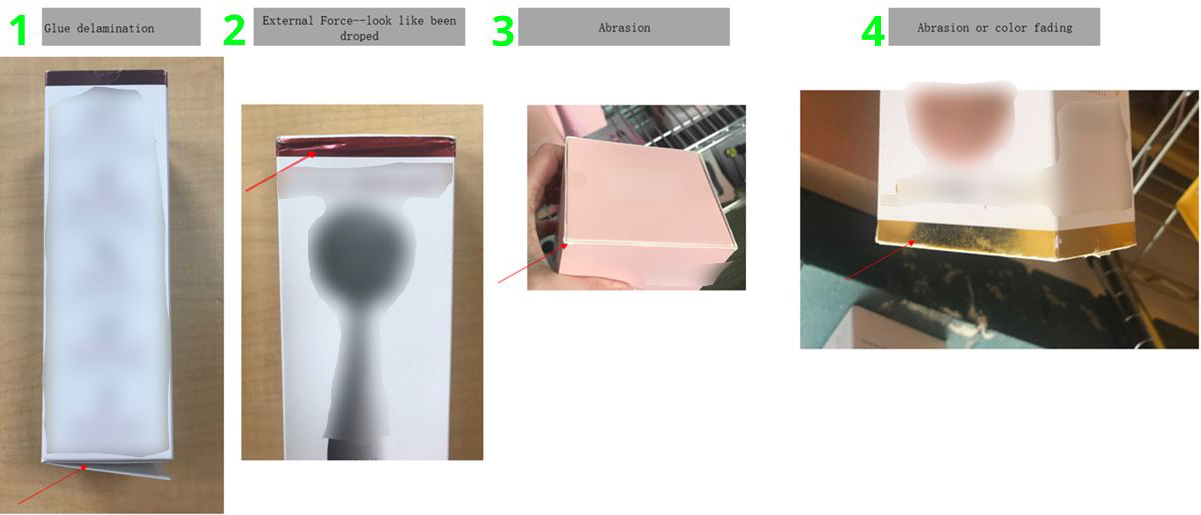
  1. This looks like glue delamination which is caused by a poor glueing process or incorrect opening by the end-user.
  2. Packaging deformation that usually occurs due to dropping after the sale or during transportation.
  3. Abrasion where the package has been rubbed against something, perhaps due to mishandling or mispacking.
  4. Abrasion and color fading, likely due to mishandling or mispacking, poor print choice, and/or exposure to the elements.
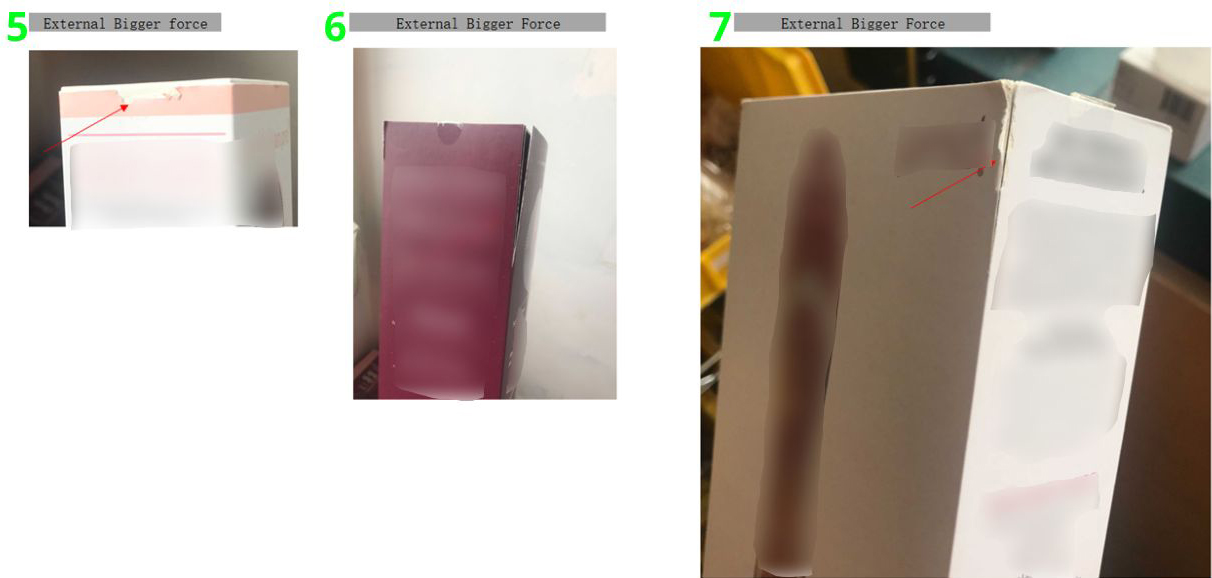
  5. A larger impact on the box either before or after the sale will cause this kind of damage and deformation to the packaging.
  6. Also a larger impact.
  7. Also a larger impact.

What tests can be done on packaging to assess its reliability?

We’ve created a number of pages which explain the common packaging reliability tests that importers should perform on packaging:

These tests are often based upon the ISTA series 2 guidelines.

How To Check Humidity In Wood And Cardboard

Humidity (moisture content) has an effect on packaging reliability, as the properties of both wooden pallets and boxes and cardboard cartons and retail packages are affected by humidity in different ways and too much could cause packaging damage.

Sofeast’s Quality Engineer, Helen, who has special expertise in packaging, provided the following information.

Is there an international standard of humidity range in wood or cardboard?

There is no international standard of humidity range and acceptable levels vary in different areas/countries. Usually, the most acceptable rate should be around 8%-12%, but in some countries/areas between 6%- 14% can also be accepted.

How does humidity affect cardboard cartons?

For cartons, if the moisture content is too low, the paper is too brittle, easy to break, and the folding resistance is poor. If the moisture content of the paper is too high, the cardboard is prone to curl, which will reduce its compression strength.

How does humidity affect wood?

For wood, if the moisture content is too low,  it is easy to get shrinkage, cracking, paints bursting, curl, deformation.  While if the moisture content is too high, it is easy to get discoloration,  swelling and cracking, mildew, worms, decay, etc.

Do we need to check the humidity of individual products, too?

Sure, this may be appropriate if the products are either prone to attracting humidity or could be damaged by it.

For example, electronic products are vulnerable to humidity and it could damage them or cause them to malfunction. On the other hand, apparel and footwear may attract humidity and be damaged or soiled by mildew, for instance.

Therefore, by checking the humidity of such items before shipping it’s possible to ascertain whether the packaging you have selected is providing enough protection from humidity, and, if it’s found wanting, actions can be taken to improve protection, such as adding a plastic wrap or including sachets of silica gel desiccant.

What tools can be used to check humidity?

A handheld moisture meter (here is an example) is usually adequate for this purpose. These battery-operated devices have a digital display and when their metallic prongs are placed onto the surface being tested they will provide a readout in % of humidity. As per the above percentages, when shipping from our fulfilment center, for example, our inspectors will use such a tool on cartons and packages.

Here you can see some images of an inspector using a moisture meter on common materials including wood, cardboard, and a sports shoe!


How to find out the cost of sending small packages from China to customers around the world?

We created an easy-to-use small package shipping rates calculator which provides you with costs and shipping times to a range of countries, such as the USA, Germany, the UK, etc, from China.