Plastic, Silicone, Steel, and Others: Updated China Raw Materials Costs (late Apr ’26)

Sofeast’s team continues to monitor the cost evolution of key raw materials in China, helping importers and manufacturers stay informed.

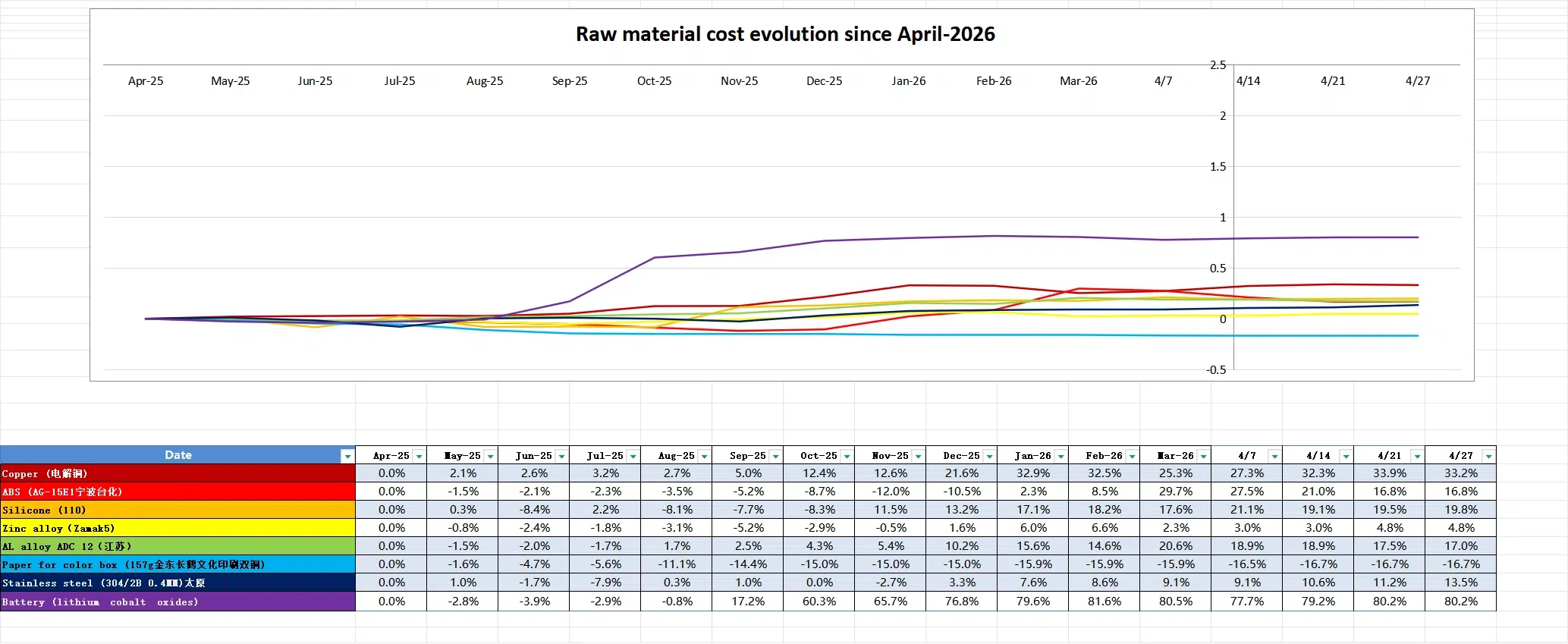
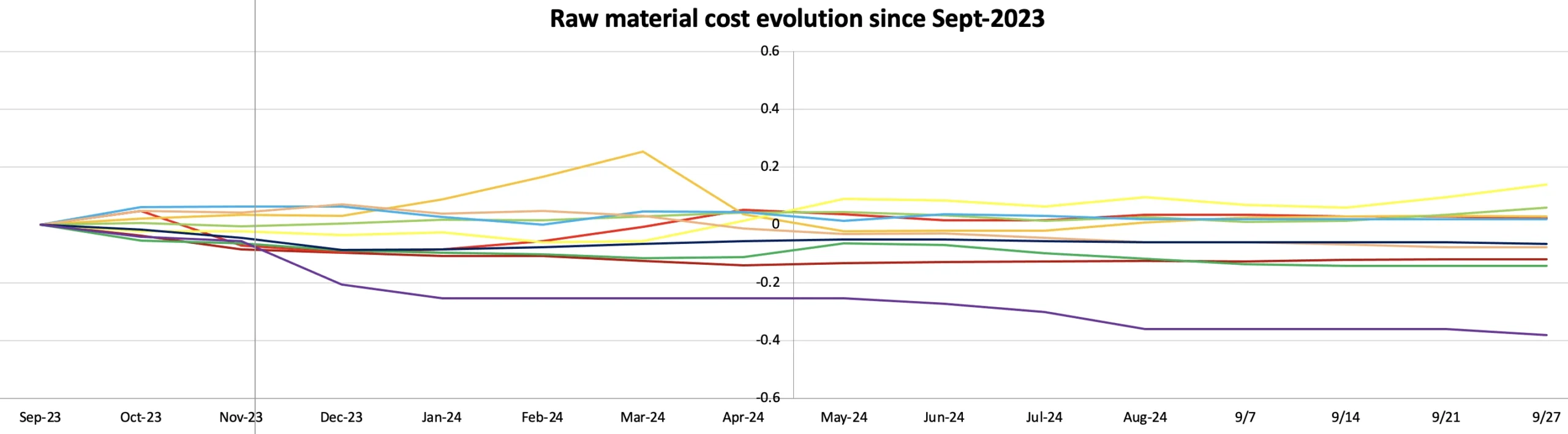
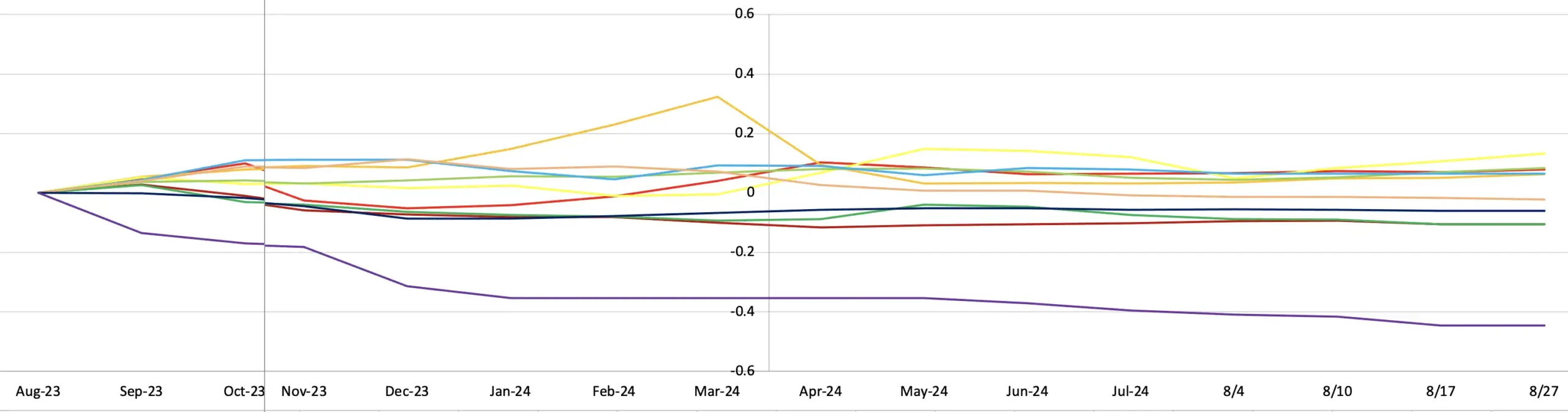
This latest update from the market analysts we work with reflects changes (RMB costs and %) over the past year through Apr 27, 2026. (Click the charts to expand them)

china raw material cost evolution apr 26
china raw material cost change apr 25 to 26 in rmb

Monthly China Raw Material Cost Changes – April 2026

Copper (电解铜) – Monthly Change: +6.33%

Spot copper prices increased moderately this month, with fluctuations narrowing.

  • Drivers
    Macroeconomic factors and stable supply fundamentals supported the price increase.
  • Outlook (next week)
    Prices are expected to continue rising slightly, with sensitivity to broader economic and geopolitical developments.

ABS (AG-15E1 宁波台化) – Monthly Change: -9.98%

ABS prices fell significantly this month, and market activity was slow.

  • Drivers
    Weak demand from small- and medium-sized downstream enterprises weighed on prices. Inventory pressures on the seller side were mild, limiting upward support.
  • Outlook (next week)
    With ample supply and risk-averse sentiment, ABS prices are likely to remain weak.

Silicone (110) – Monthly Change: +1.90%

Domestic 110 raw rubber prices stayed stable with a gentle upward trend.

  • Drivers
    Earlier inventory drawdowns triggered some downstream replenishment. Pre-sale orders at monomer factories increased, while DMC raw material supply remains tight. Overall cost pressure on silicone is still noticeable.
  • Outlook (next week)
    Prices are expected to hold steady with a modest upward trend.

Zinc Alloy (Zamak 5) – Monthly Change: +2.44%

Electrolytic zinc prices rose this month, pushing zinc alloy prices higher.

  • Drivers
    Tightening supply supported price increases.
  • Outlook (next week)
    Market participants will monitor developments in the Middle East and domestic policies. Prices may continue to trend upward.

Aluminum Alloy (ADC 12, Jiangsu) – Monthly Change: -2.99%

Aluminum prices declined slightly this month.

  • Drivers
    Volatile trading patterns led to alternating upward and downward movements.
  • Outlook (next week)
    Prices are expected to remain within the current fluctuation range as macro and industry factors stabilize.

Paper for Color Box (157 g, Double-Coated) – Monthly Change: -1.02%

Double copper paper prices fell slightly this month.

  • Drivers
    Production lines operated at low capacity, distributors’ orders remained modest, and price reductions were used to attract business. Import pulp prices provided limited support.
  • Outlook (next week)
    Supply is stable, but weak demand suggests prices may continue trending downward slightly.

Stainless Steel (304/2B 0.4 mm, Taiyuan) – Monthly Change: +4.02%

Stainless steel futures moved sideways, while spot prices increased moderately.

  • Drivers
    Geopolitical fluctuations and cost pressures supported spot prices.
  • Outlook (next week)
    Prices are expected to remain stable, though rising supply may limit further gains.

Battery Materials (Lithium Cobalt Oxides) – Monthly Change: -0.17%

Cathode and precursor materials showed minimal change this month, with lithium carbonate slightly up.

  • Drivers
    Market volatility continues, influenced by production quotas in Indonesia, sulfur prices, and overall supply-demand trends in the battery sector.
  • Outlook (next month’s orders)
    Prices are expected to remain largely stable, with slight fluctuations possible depending on raw material availability.

How to combat rising costs?

Explore cost-reducing tips in this post: Rising Raw Material Prices: What Strategy To Follow? (6 Approaches).

What to do if your Chinese supplier suddenly tells you that material costs have risen: How To Cooperate With Your Chinese Supplier, Part 16: Bad News from China, Raw Material Prices Just Increased!

If your supplier just isn’t working out, maybe sourcing a new supplier will help you find one who can offer you better prices and more. If so, there’s no need to fear switching from your current supplier to a new one if you’re prepared: How To Switch To A Newer, Better Chinese Manufacturer? [eBook].


We hope this is helpful. Our mission at Sofeast is to provide importers with transparency in their supply chain and to give them greater control. And this information is crucial for gaining visibility into your manufacturer’s costing.

By the way, you can always contact us if you have any questions about whether a manufacturer’s quote is reasonable or not.

Plastic, Silicone, Steel, and Others: Updated China Raw Materials Costs (late Jan ’26)

Sofeast’s team continues to monitor the cost evolution of key raw materials in China, helping importers and manufacturers stay informed. This latest update from the market analysts we work with reflects changes (RMB costs and %) over the past year through Jan 26, 2026. (Click the charts to expand them)

china raw material cost evolution jan 26

china raw material cost change jan 25 to 26 in rmb

Monthly China Raw Material Cost Changes – January 2026

Epoxy Resin (E-51) +3.48% monthly change

This week, the epoxy resin market showed a clear upward trend, with prices strengthening gradually.

  • Drivers
    Cost support increased across the chain, while downstream buyers stepped in for replenishment. This combination lifted market confidence and pushed transaction prices higher.
  • Outlook (next week)
    Domestic epoxy resin prices are expected to edge up slightly, supported by costs and restocking demand, though gains are likely to remain moderate.

ABS (AG-15E1) +6.45% monthly change

This week, ABS prices showed noticeable differentiation across the market. Early trading was weak, but transaction activity improved toward the end of the period.

  • Drivers
    Upstream costs fluctuated but trended higher overall. At the same time, differences in available spot resources led to mild price dispersion across regions and suppliers.
  • Outlook (next week)
    With cost support remaining elevated, ABS prices are expected to stay firm, although price differences between suppliers may persist.

Silicone (110) +3.47% monthly change

This week, domestic 110 silicone rubber prices remained broadly stable.

  • Drivers
    Both buyers and sellers focused on fulfilling existing orders and managing inventories. Producers mainly delivered pre-sold volumes, keeping overall inventory levels under control. Cost support from upstream raw materials remains strong.
  • Outlook (next week)
    DMC prices are expected to stay stable and gradually strengthen, providing solid cost support. Silicone rubber prices are likely to remain firm with limited volatility.

Zinc Alloy (Zamak 5) +5.63% monthly change

This week, electrolytic zinc prices fell from earlier highs before rebounding, resulting in a higher average level overall.

  • Drivers
    Tariff developments in Europe and the United States increased macro uncertainty and triggered risk-averse sentiment, limiting aggressive buying despite supply-side support.
  • Outlook (next week)
    With macro conditions still evolving, market sentiment remains cautious. Zinc alloy prices are likely to fluctuate within a narrow range.

Aluminum Alloy (ADC 12, Jiangsu) +6.66% monthly change

This week, aluminum prices declined first, and then recovered slightly within a narrow band.

  • Drivers
    Market sentiment became more volatile as bulls and bears competed. After prices pulled back, limited buying support led to a modest rebound.
  • Outlook (next week)
    Both upward and downward forces remain present. Aluminum prices are expected to stay range-bound with ongoing short-term fluctuations.

Paper for Color Box (157g double-coated) -1.01% monthly change

This week, the coated paper market continued its downward trend.

  • Drivers
    Some production lines were shut temporarily, and cost expectations turned bearish. As publishing orders near completion and supply increases with resumed production, inventory pressure has grown. Distributors are also showing a stronger willingness to sell at lower prices to recover cash.
  • Outlook (next week)
    With ample supply and no clear demand recovery, the market center may continue to shift downward in the near term.

Stainless Steel (304/2B 0.4 mm, Taiyuan) +8.62% monthly change

This week, stainless steel prices rose sharply, driven primarily by futures market momentum.

  • Drivers
    A strong futures market created a bullish atmosphere, lifting spot prices and improving sentiment among traders and mills.
  • Outlook (next week)
    After reaching elevated levels, caution is expected to increase. Prices may consolidate at higher levels, with relatively strong but more measured trading.

Battery Material (Lithium Cobalt Oxides) +4.98% monthly change

This week, precursor prices increased, lithium salts moved higher, and ternary material prices largely followed the upward trend.

  • Drivers
    Downstream demand in January has not fully recovered, and some automotive manufacturers are entering holiday periods in February. Cobalt salt exports from Congo remain limited, while domestic cobalt recovery continues to improve.
  • Outlook (next month’s orders)
    Attention will shift toward export volumes and post-holiday demand recovery. The processing environment remains stable, suggesting a firm but selective pricing outlook for battery materials.

How to combat rising costs?

Explore cost-reducing tips in this post: Rising Raw Material Prices: What Strategy To Follow? (6 Approaches).

What to do if your Chinese supplier suddenly tells you that material costs have risen: How To Cooperate With Your Chinese Supplier, Part 16: Bad News from China, Raw Material Prices Just Increased!

If your supplier just isn’t working out, maybe sourcing a new supplier will help you find one who can offer you better prices and more. If so, there’s no need to fear switching from your current supplier to a new one if you’re prepared: How To Switch To A Newer, Better Chinese Manufacturer? [eBook].


We hope this is helpful. Our mission at Sofeast is to provide importers with transparency in their supply chain and to give them greater control. And this information is crucial for gaining visibility into your manufacturer’s costing.

By the way, you can always contact us if you have any questions about whether a manufacturer’s quote is reasonable or not.

Plastic, Silicone, Steel, and Others: Updated China Raw Materials Costs (late Nov ’25)

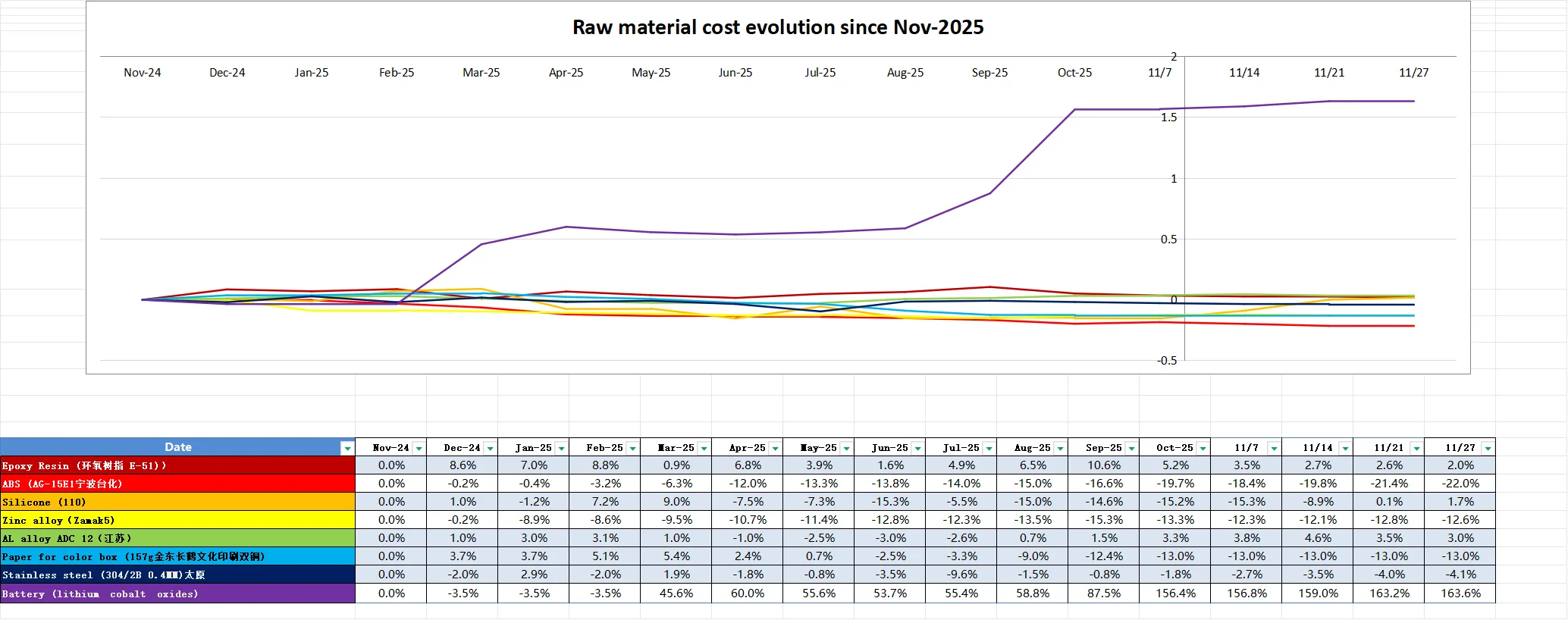
Sofeast’s team continues to monitor the cost evolution of key raw materials in China, helping importers and manufacturers stay informed. This latest update from the market analysts we work with reflects changes (RMB costs and %) over the past year, up to Nov 27, 2025. (Click the charts to expand them)

China raw material cost evolution Nov 24 to 25

china raw material costs nov 24 to 25 in rmb

Monthly China Raw Material Cost Changes – November 2025

Epoxy Resin (E-51) -3.05% monthly change

This week, the epoxy resin market was relatively quiet, with negotiations subdued and prices broadly stable.

  • Drivers
    Market sentiment remained fairly firm, but real demand from downstream users was still insufficient, limiting any upside and gently pulling the average price down over the month.
  • Outlook (next week)
    Domestic epoxy resin prices are expected to remain basically stable with only minor fluctuations, so buyers can plan on a mostly sideways market in the very short term.

ABS (AG-15E1) -2.88% monthly change

This week, ABS prices were weak and moved in a narrow band, with sluggish trading activity.

  • Drivers
    While upstream costs have actually risen, downstream demand has not followed. Buyers are not strongly accepting higher prices, making it difficult for the market to recover and keeping ABS under gentle downward pressure.
  • Outlook (next week)
    The ABS market is likely to stay range-bound and weak, with soft demand capping any short-term rebound attempts.

Silicone (110) +19.97% monthly change

This week, domestic 110 raw rubber prices rose further. The continued increase in upstream DMC earlier in the month pushed quotations and transaction levels noticeably higher.

  • Drivers
    DMC prices have moved up first and are now more likely to stabilize.
    Cost pressure on silicone rubber remains high.
    Downstream demand is still not strong enough to fully absorb these higher costs, so passing on cost increases through the chain takes time.
  • Outlook (next week)
    The silicone market is expected to remain firm and generally stable with minor fluctuations, supported by elevated costs but constrained by uneven demand.

Zinc Alloy (Zamak5) +0.84% monthly change

This week, Electrolytic zinc prices first fell and then rebounded, leaving the average price slightly lower over the period, even though spot levels recovered toward the end of the week.

  • Drivers
    Macro-level uncertainty remains considerable, which restrains bullish sentiment, but supply-side conditions still offer some support and prevent a sharp breakdown.
  • Outlook (next week)
    Few major macro events are expected, so the market tone is cautious. Zinc alloy is likely to trade in a narrow range with a defensive bias.

Aluminum Alloy (ADC 12, Jiangsu) -0.29% monthly change

This week, ADC 12 prices edged down slightly.

  • Drivers
    Spot supply has only tightened marginally.
    Demand has been relatively stable, so there is no strong driver for a sharper move in either direction.
  • Outlook (next week)
    Prices are expected to stabilize with a slight downward tilt, suggesting a gently soft market where buyers still have some negotiating leverage.

Paper for Color Box (157 g double-coated) 0.00% monthly change

This week, the double-coated art paper market remained flat and stable.

  • Drivers
    Production capacity changes were limited; most lines continued to operate normally.
    Social demand stayed sluggish, with no clear improvement in order volumes for publications or commercial print jobs.
    Dealers are still focused on working through inventory and maintaining price stability via steady ordering.
  • Outlook (next week)
    The art paper market is expected to operate steadily overall, with suppliers prioritizing stable operations while they wait for demand to improve.

Stainless Steel (304/2B 0.4 mm, Taiyuan) -2.36% monthly change

This week, stainless steel prices continued to drift lower, with clear risk-aversion and wait-and-see sentiment in the market.

  • Drivers
    Supply and demand are both on the weak side, and many merchants are offering discounts to stimulate sales, adding to the downward pressure on spot prices.
  • Outlook (next week)
    The market is likely to operate around a bottom-seeking level, looking for clearer support from the broader industry. Expect choppy but slightly soft conditions and continued competitive quoting.

Battery Material (Lithium cobalt oxides) +2.81% monthly change

This week, most cathode material prices rose, while ternary precursor prices softened slightly.

  • Drivers
    Lithium carbonate prices surged, and lithium iron phosphate (LFP) precursor supply remained stable.
    LFP prices are closely tracking lithium carbonate’s fluctuations; recently, LFP has been steady while lithium carbonate moved higher.
    Better-than-expected demand for LFP in the terminal market, especially energy storage, is supporting activity.
  • Outlook (next month’s orders)
    The order book looks optimistic, and the processing environment remains stable. Energy storage installations are expected to continue growing into November and beyond, pointing to a firm to slightly firmer pricing environment for battery materials.

How to combat rising costs?

Explore cost-reducing tips in this post: Rising Raw Material Prices: What Strategy To Follow? (6 Approaches).

What to do if your Chinese supplier suddenly tells you that material costs have risen: How To Cooperate With Your Chinese Supplier, Part 16: Bad News from China, Raw Material Prices Just Increased!

If your supplier just isn’t working out, maybe sourcing a new supplier will help you find one who can offer you better prices and more. If so, there’s no need to fear switching from your current supplier to a new one if you’re prepared: How To Switch To A Newer, Better Chinese Manufacturer? [eBook].


We hope this is helpful. Our mission at Sofeast is to provide importers with transparency in their supply chain and to give them greater control. And this information is crucial for gaining visibility into your manufacturer’s costing.

By the way, you can always contact us if you have any questions about whether a manufacturer’s quote is reasonable or not.

Plastic, Silicone, Steel, and Others: Updated China Raw Materials Costs (late Aug ’25)

Sofeast’s team continues monitoring the cost evolution of key raw materials in China to help importers and manufacturers stay informed. This latest update reflects changes over the past year up to Aug 27, 2025.

china raw material cost changes Aug 24 to 25raw material cost evolution Aug 25

Monthly China raw material cost changes

In August 2025, the raw materials market showed a mixed picture compared with July.

Here’s a rundown of how each material’s cost changed compared to the previous update, and what’s driving the shifts based on research from market analysts:

Epoxy Resin (E-51) +1.70% monthly change

This week, the market price of epoxy resin remained stable.
Drivers: Strong cost support and some wind power customers entering the market for replenishment.
Outlook: Next week, the domestic epoxy resin market is expected to remain stable with a narrow upward movement.

ABS (AG-15E1) -1.34% monthly change

The ABS market saw a slight decline in some regions, with sluggish trading.
Drivers: Limited cost support, abundant supply, and weak fundamentals.
Outlook: Prices are likely to remain weak and in a stalemate, fluctuating within a narrow range.

Silicone (110) -10.38% monthly change

Silicone rubber prices continued to decline.
Drivers: The cost of raw material DMC continued to fall, pushing the cost base lower.
Outlook: DMC is expected to decline initially, then stabilize, with silicone rubber prices following these cost fluctuations.

Zinc Alloy (Zamak5) -1.65% monthly change

Electrolytic zinc prices dropped then rebounded, but the weekly average still declined.
Drivers: Supply-demand imbalance has widened, putting pressure on prices.
Outlook: Zinc prices will likely continue to fluctuate, with less significant market news driving change.

Aluminum Alloy ADC 12 +3.22% monthly change

Aluminum prices operated within a narrow range and showed a slight correction.
Drivers: Stable macro sentiment with moderate demand recovery.
Outlook: Aluminum prices are expected to rise slightly within a narrow band next week.

Paper for Color Box (157g) -6.36% monthly change

Copperplate paper prices stabilized, though the weekly average still fell due to low base pricing.
Drivers: Inventories continue to increase slowly, and profit margins remain under pressure.
Outlook: Most mills will operate normally, supply will remain sufficient, and market prices are likely to stay stable.

Stainless Steel (304/2B 0.4MM) +0.88% monthly change

Stainless steel prices declined this week.
Drivers: The Cooling macro environment and the balance between supply and demand led to concessions and a downward adjustment.
Outlook: Prices are gradually stabilizing and expected to rebound slightly.

Battery Material (Lithium cobalt oxides) +1.81% monthly change

The price of ternary cathode materials rose slightly.
Drivers: High lithium carbonate prices and a small rise in nickel sulfate costs pushed prices upward.
Outlook: Prices are expected to remain high in the short term.

Overview: Market Remains Mixed

  • Stable: Epoxy resin shows resilience, providing predictability for users in electronics and coatings.

  • Weak: ABS and silicone continue downward trends—buyers may find opportunities to negotiate lower costs.

  • Mixed metals: Zinc remains volatile, while aluminum and stainless steel suggest a rebound may be near.

  • High pressure: Battery material costs remain elevated, impacting electronics and EV suppliers.

  • Packaging: Paper stabilized, but abundant supply means prices won’t surge soon.

Actions you could take

  • Negotiate with suppliers on ABS and silicone where weakness persists.

  • Lock in aluminum and stainless steel purchases before expected rises.

  • Monitor lithium and nickel supply closely if your products rely on battery cells.

  • Stay in touch with paper suppliers. A stable but abundant supply means room for pricing flexibility.

How to combat rising costs?

Explore cost-reducing tips in this post: Rising Raw Material Prices: What Strategy To Follow? (6 Approaches).

What to do if your Chinese supplier suddenly tells you that material costs have risen: How To Cooperate With Your Chinese Supplier, Part 16: Bad News from China, Raw Material Prices Just Increased!

If your supplier just isn’t working out, maybe sourcing a new supplier will help you find one who can offer you better prices and more. If so, there’s no need to fear switching from your current supplier to a new one if you’re prepared: How To Switch To A Newer, Better Chinese Manufacturer? [eBook].


We hope this is helpful. Our mission at Sofeast is to help importers have transparency in their supply chain and to give them more control. And this information is critical to have some visibility into your manufacturer’s costing.

By the way, you can always contact us if you have any questions about whether a manufacturer’s quote is reasonable.

Plastic, Silicone, Steel, and Others: Updated China Raw Materials Costs (late Jul ’25)

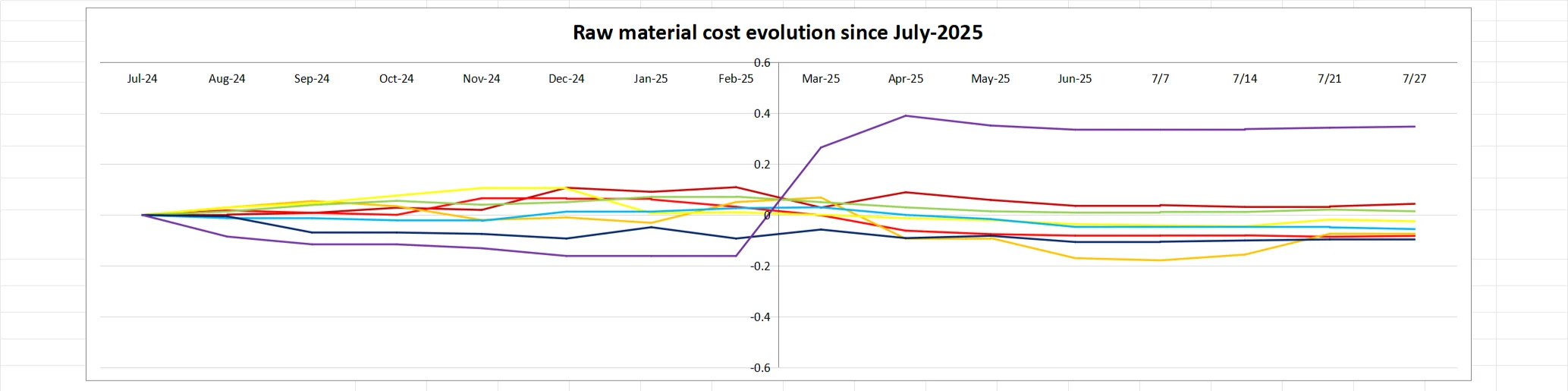
Sofeast’s team continues monitoring the cost evolution of key raw materials in China to help importers and manufacturers stay informed. This latest update reflects changes over the past year up to July 27, 2025. Prices remain volatile, with some sharp rebounds and downturns depending on the material and market dynamics.

china raw material cost changes july 25

china raw material cost evolution graph jul 25

Monthly China raw material cost changes

Here’s how each material’s cost changed compared to the previous update, and what’s driving the shifts based on research from market analysts:

Epoxy Resin (E-51) +0.77% monthly change

The epoxy resin market remained stable with a slight increase this week. Mainstream factory quotations held steady, supported by rigid demand. While upstream raw materials saw mild fluctuations, most market players are holding a wait-and-see attitude.

ABS (AG-15E1) -0.10% monthly change

ABS prices fluctuated within a narrow range. Cost-side support was modest, and demand-side performance was average. Traders remained cautious and mostly followed market signals rather than initiating bold movements.

Silicone (110) +11.59% monthly change

Silicone prices remained flat this week following a strong rebound in the previous period. The market stabilized as earlier gains in 110 synthetic rubber were absorbed. Traders are now observing downstream buying trends for direction.

Zinc Alloy (Zamak5) +1.17% monthly change

Zinc prices declined slightly as electrolytic zinc fell early in the week. Although prices recovered midweek, downstream buyers were cautious, leading to weaker-than-expected transaction volumes.

Aluminum Alloy ADC 12 +0.51% monthly change

Aluminum alloy prices dipped a bit after a slight rebound last week. End-user demand was relatively light, and the overall transaction atmosphere remained quiet, resulting in softer pricing.

Paper for Color Box (157g) -0.90% monthly change

The average price of double copper paper continued to slide. Market confidence is low, and trading activity has been lackluster. End customers are limiting procurement, driving prices down slightly.

Stainless Steel (304/2B 0.4MM) +1.37% monthly change

Spot prices for stainless steel rose again this week, mainly driven by tightening supply and growing market sentiment. Buyers were slightly more active, although long-term outlooks remain uncertain.

Battery Material (Lithium cobalt oxides) -0.91% monthly change

The lithium cobalt oxide market saw steady gains. Downstream demand from digital electronics picked up, helping push prices higher. Supply remained constrained, supporting continued upward movement.

Overview: Market Remains Mixed

  • Gainers: Epoxy resin, ABS, stainless steel, and battery materials showed moderate-to-strong increases.
  • Decliners: Zinc, aluminum, and paper weakened due to softer demand.
  • Stabilizers: Silicone flattened after a big run-up, possibly pausing before further changes.

How to combat rising costs?

Explore cost-reducing tips in this post: Rising Raw Material Prices: What Strategy To Follow? (6 Approaches).

What to do if your Chinese supplier suddenly tells you that material costs have risen: How To Cooperate With Your Chinese Supplier, Part 16: Bad News from China, Raw Material Prices Just Increased!

If your supplier just isn’t working out, maybe sourcing a new supplier will help you find one who can offer you better prices and more. If so, there’s no need to fear switching from your current supplier to a new one if you’re prepared: How To Switch To A Newer, Better Chinese Manufacturer? [eBook].


We hope this is helpful. Our mission at Sofeast is to help importers have transparency in their supply chain and to give them more control. And this information is critical to have some visibility into your manufacturer’s costing.

By the way, you can always contact us if you have any questions about whether a manufacturer’s quote is reasonable.

Plastic, Silicone, Steel, and Others: Updated China Raw Materials Costs (late Apr ’25)

It’s time for the monthly update tracking the costs of commonly used raw materials from China for the past year to help you understand the market’s current state. If you or your supplier purchase materials from China for your products, the cost changes you see here impact your bottom line!

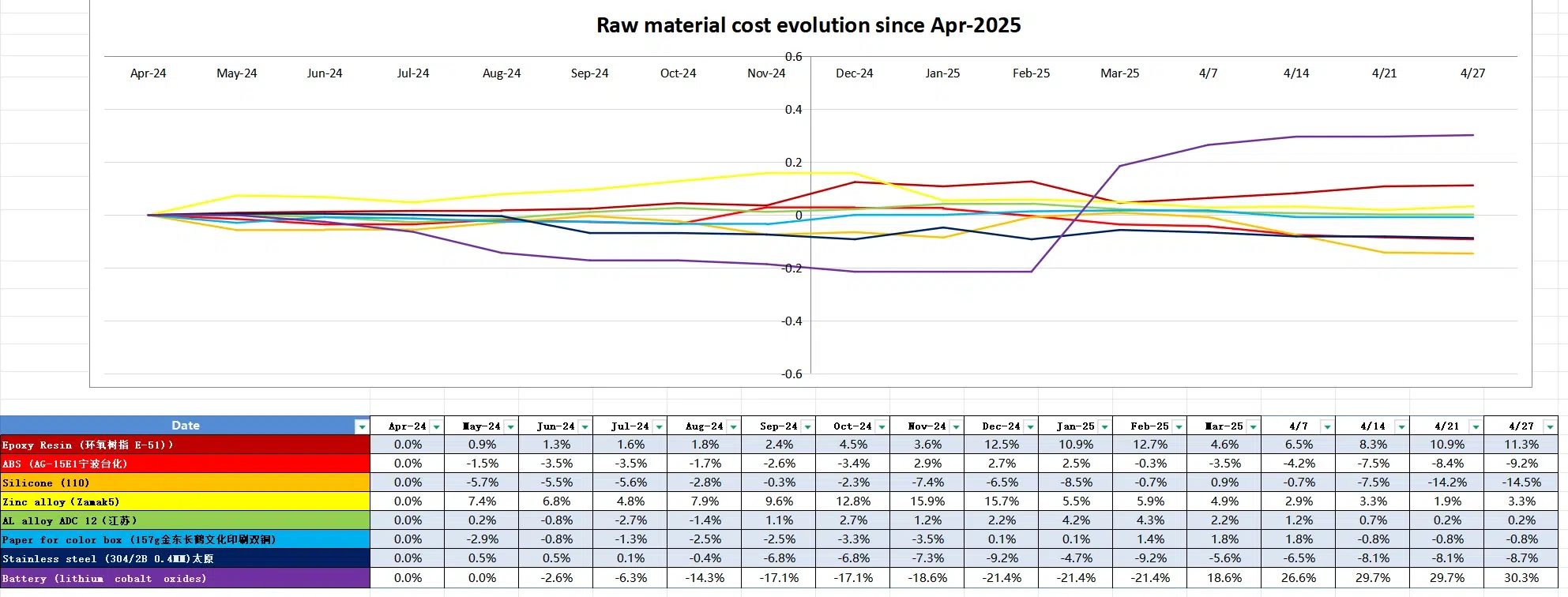
Here’s the up-to-date material cost data from China for you as of late April 2025 and the price evolution over the past twelve months – Epoxy resin and Lithium batteries had notable cost increases, while ABS and Silicone in particular declined in cost.

raw material cost evolution apr 24 to 25

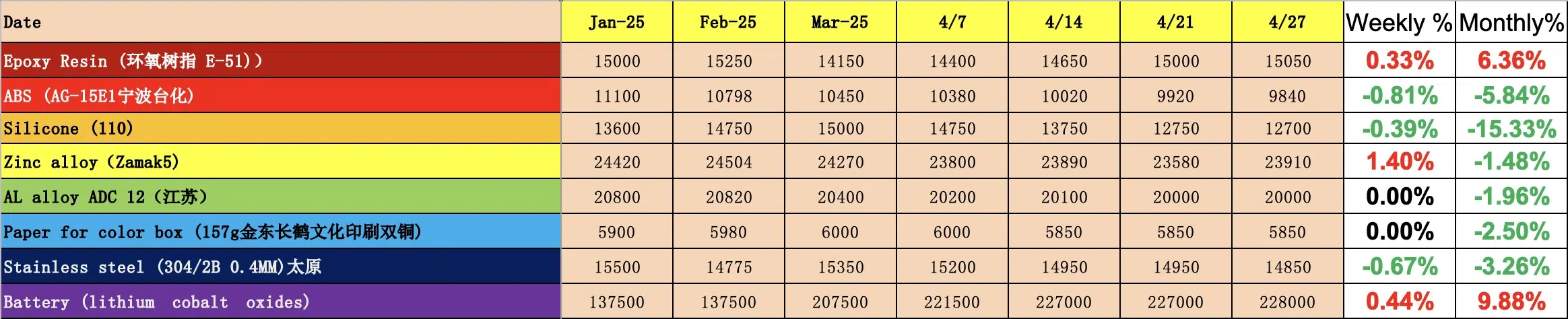
Here are this year’s cost changes in CNY, including weekly changes for April 25:

china raw material cost evolution 2025 to april

Here is what the external market analysts we work with attribute these changes to during this past month and the overall monthly cost change in the last week of April:

Epoxy Resin (+6.36%)

This week, the epoxy resin market remained in a state of high-level consolidation, with limited trading activity.
Driving factors: Strong cost support combined with cautious behavior from traders contributed to the subdued market.
Market outlook for next week: Domestic epoxy resin prices are expected to remain stable.

ABS (-5.84%)

This week, ABS market prices continued to decline.
Driving factors: Weaker-than-expected demand, falling costs, and a steady drop in market prices contributed to the downward trend.
Market outlook for next week: With costs remaining low and the supply-demand imbalance persisting, ABS prices are likely to remain weak.

Silicone Rubber 110 (-15.33%)

This week, prices for 110 raw rubber declined.
Driving factors: A reduction in orders from downstream compounding rubber enterprises led to weak demand, with limited follow-up in market activity.

Zinc Alloy (-1.48%)

This week, electrolytic zinc prices fluctuated but trended upward overall, with the average price increasing.
Driving factors: A decline in spot market supply has driven zinc prices higher.
Market outlook for next week: With inventory stocking ahead of the upcoming holiday, zinc prices are expected to continue rising.

Aluminum Alloy (-1.96%)

This week, the spot price of aluminum in China fluctuated within a narrow range, with limited upward or downward movement.
Driving factors: Spot supply remains relatively abundant, while demand has shown little change.
Market outlook for next week: Prices are expected to continue fluctuating within a narrow range.

Paper for Color Boxes (-2.50%)

This week, the double-coated paper market showed signs of stabilization after an earlier decline, with prices leveling off. However, due to the previously low base price, the weekly average still fell compared to the prior week.
Driving factors: Trading volume remained weak, and inventory pressure increased.
Market outlook for next week: Demand is expected to show limited improvement, and transaction focus is likely to continue trending downward.

Stainless Steel (-3.26%)

This week, stainless steel prices remained generally stable with minor fluctuations, while market transactions remained cautious.
Driving factors: Market dynamics were mainly influenced by supply and demand. Steel mills proactively lowered prices, contributing to overall stability.
Market outlook for next week: A weak but stable consolidation trend is expected, supported by gradually increasing cost pressure.

Lithium Batteries (+9.88%)

This week, the price of battery-grade lithium carbonate rose moderately, while prices for nickel sulfate and cobalt sulfate remained generally stable, resulting in an overall stable market environment.
Driving factors: The support from cathode materials, such as ternary, remains weak but steady. On the supply side, cathode market operating rates have stayed stable.
Demand trends: A major development came from the European Commission, which reached a key consensus with China to begin negotiations aimed at replacing tariffs on Chinese electric vehicles with a “minimum import price” mechanism. This marks a significant easing of a six-month-long trade dispute and introduces new dynamics to the global new energy vehicle market. Additionally, Chinese customs data shows that in Q1, exports of flat panel display modules, automotive parts, and lithium batteries to ASEAN countries grew by over 20%, helping boost demand.
Market feedback: Demand for power-related products remains strong and continues to rise steadily.


How to combat rising costs?

Explore cost-reducing tips in this post: Rising Raw Material Prices: What Strategy To Follow? (6 Approaches).

What to do if your Chinese supplier suddenly tells you that material costs have risen: How To Cooperate With Your Chinese Supplier, Part 16: Bad News from China, Raw Material Prices Just Increased!

If your supplier just isn’t working out, maybe sourcing a new supplier will help you find one who can offer you better prices and more. If so, there’s no need to fear switching from your current supplier to a new one if you’re prepared: How To Switch To A Newer, Better Chinese Manufacturer? [eBook].


We hope this is helpful. Our mission at Sofeast is to help importers have transparency in their supply chain and to give them more control. And this information is critical to have some visibility into your manufacturer’s costing.

By the way, you can always contact us if you have any questions about whether a manufacturer’s quote is reasonable.

Plastic, Silicone, Steel, and Others: Updated China Raw Materials Costs (late Nov ’24)

Here’s the monthly update tracking the costs of commonly used raw materials from China for the past year to help you understand where the market is right now. If you or your supplier are purchasing materials from China for your products, the cost changes you see here impact your bottom line!

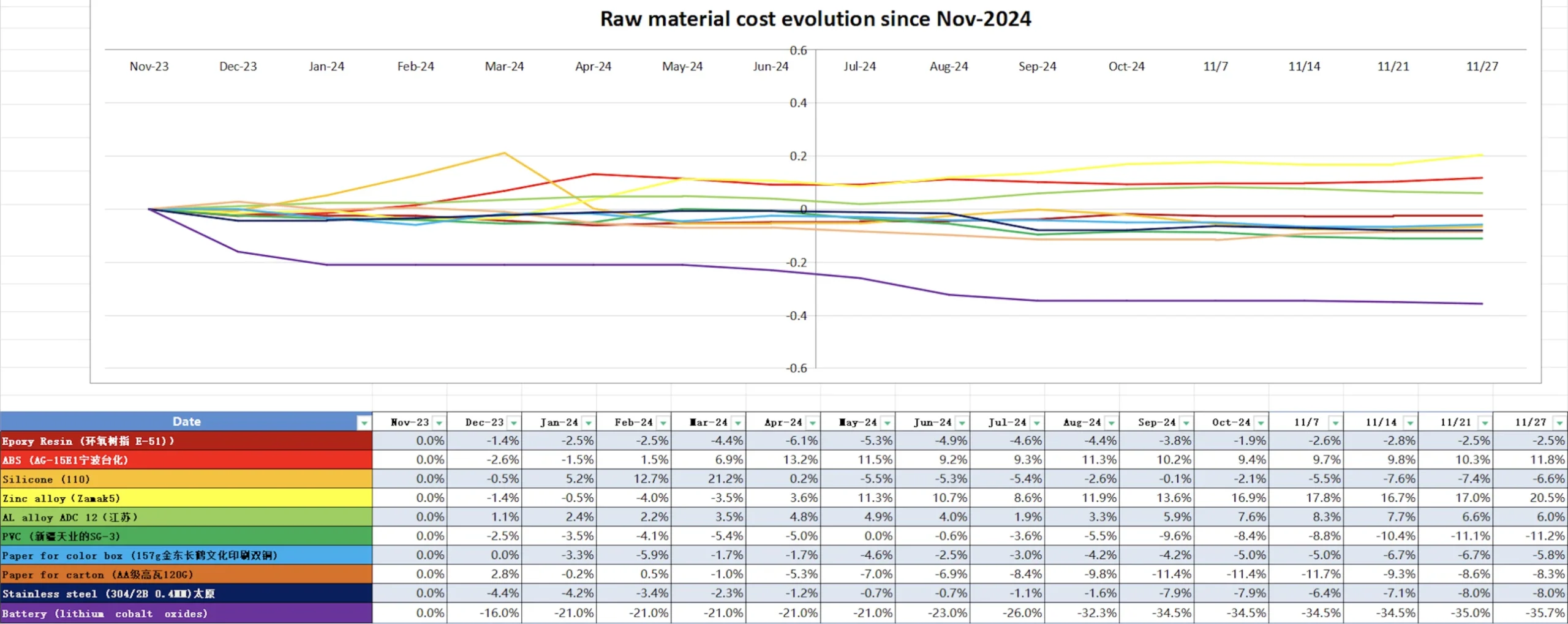
Here’s the up-to-date material cost data from China for you as of late November 2024 and the price evolution over the past twelve months – silicone had a reasonable decrease, while ABS, Zinc Alloy, and paper for cartons increased just a little.

Here you can see the individual cost evolution per material over the past year, including the weekly and monthly changes up to November 2024 with costs in CNY:

china raw materials evolution and costs nov 24

Here are the annual cost changes in CNY:

china raw materials costs nov 23 to nov 24
Here is what the external market analysts we work with attribute these changes to during this past month and the overall monthly cost change of November:


Epoxy Resin (-0.64%)

This week, the epoxy resin market has remained stable, though market activity has been subdued due to weakened cost support and limited demand. Here’s a closer look at the current dynamics:

  • Supply: Factory operations were stable.
  • Demand: Weak buyer interest kept transactions limited.
  • Cost: Bisphenol A remained steady, while epichlorohydrin prices edged higher, offering mild support.
  • Outlook: Small price fluctuations are expected in the short term.

ABS (+2.22%)

This week, ABS market prices fluctuated slightly as weak supply-demand dynamics continued to dominate. Here’s a snapshot:

  • Supply: Ample availability; agents faced inventory pressures.
  • Demand: Downstream buyers remained cautious, limiting large-volume purchases.
  • Cost: Prices rose early in the week but retreated amid raw material price volatility.
  • Outlook: Limited price changes expected as the market remains balanced.

Silicone Rubber 110 (-4.61%)

Raw rubber prices rose narrowly this week, driven by a reduction in supply pressure and firmer cost conditions. Key details:

  • Supply: Pre-sale orders increased, reducing overall inventory pressure.
  • Demand: Low-level replenishment remained the focus for downstream buyers.
  • Cost: Stabilization of costs boosted price expectations.
  • Outlook: Modest price increases are likely in the short term.

Zinc Alloy (+3%)

Zinc prices experienced slight fluctuations this week, with market stability prevailing. A closer look:

  • Supply: Spot availability remained steady, with consistent shipments.
  • Demand: Just-in-time purchases dominated, limiting major market shifts.
  • Cost: Futures price trends mid-week helped bolster market sentiment.
  • Outlook: Short-term price gains are possible but may cool later.

Aluminum Alloy (-1.46%)

The domestic aluminum market showed signs of cooling this week, as demand slowed and inventory levels rose. Highlights include:

  • Supply: Increased backlog due to reduced downstream consumption.
  • Demand: Tepid terminal demand pressured spot prices.
  • Cost: Weak macroeconomic conditions contributed to declines.
  • Outlook: Prices may continue to trend downward.

PVC (-3.05%)

This week, the PVC powder market softened, with prices edging lower due to cautious downstream buying. Key insights:

  • Supply: Availability remained sufficient.
  • Demand: Downstream buyers focused on small replenishments at low prices.
  • Cost: Low raw material prices provided limited support.
  • Outlook: Market activity is expected to remain subdued.

Paper for Color Boxes (-0.88%)

Double copper paper prices narrowed their decline this week, supported by steady mill operations and reduced supply pressures. Details include:

  • Supply: Repairs at major production lines reduced availability in some areas.
  • Demand: Stable interest from downstream buyers, but enthusiasm remained muted.
  • Cost: Upstream pulp prices stayed stable, offering limited support.
  • Outlook: Narrow price fluctuations expected in the short term.

Corrugated & Boxboard Paper (+3.53)

The corrugated and boxboard paper markets strengthened this week, with prices supported by upstream adjustments and steady orders. Breakdown:

  • Supply: Mills raised prices, with inventory levels remaining low.
  • Demand: Stable downstream orders, coupled with improved export activity.
  • Cost: Cost-side pressures were moderate.
  • Outlook: Further price increases are likely in the near term.

Stainless Steel (-0.07)

Stainless steel prices continued to weaken this week as profits declined and production slowed. Key factors:

  • Supply: Reduced production efforts eased supply pressure.
  • Demand: Low-priced inventory saw increased market absorption.
  • Cost: Weak margins weighed on prices.
  • Outlook: Continued downward price movement is expected.

Lithium Batteries (-1.72)

The positive material market saw mixed trends this week as rising lithium salt prices provided some cost support. Highlights:

  • Supply: Upstream lithium salt prices strengthened.
  • Demand: Buying slowed for some material categories under price pressure.
  • Cost: Cost support was marginal but present.
  • Outlook: Price loosening for select products may continue.


How to combat rising costs?

Explore cost-reducing tips in this post: Rising Raw Material Prices: What Strategy To Follow? (6 Approaches).

What to do if your Chinese supplier suddenly tells you that material costs have risen: How To Cooperate With Your Chinese Supplier, Part 16: Bad News from China, Raw Material Prices Just Increased!

If your supplier just isn’t working out, maybe sourcing a new supplier will help you find one who can offer you better prices and more. If so, there’s no need to fear switching from your current supplier to a new one if you’re prepared: How To Switch To A Newer, Better Chinese Manufacturer? [eBook].


We hope this is helpful. Our mission at Sofeast is to help importers have transparency in their supply chain and to give them more control. And this information is critical to have some visibility into your manufacturer’s costing.

By the way, you can always contact us if you have any questions about whether a manufacturer’s quote is reasonable.

Plastic, Silicone, Steel, and Others: Updated China Raw Materials Costs (late Oct ’24)

Here’s the monthly update tracking the costs of commonly used raw materials from China for the past year to help you understand where the market is right now. If you or your supplier are purchasing materials from China for your products, the cost changes you see here impact your bottom line!

Here’s the up-to-date material cost data from China for you as of late October 2024 and the price evolution over the past twelve months – this month epoxy resin, zinc alloy, and lithium batteries all had very modest increases.

Here you can see the individual cost evolution per material over the past year, including the weekly and monthly changes for October 2024 with costs in CNY:
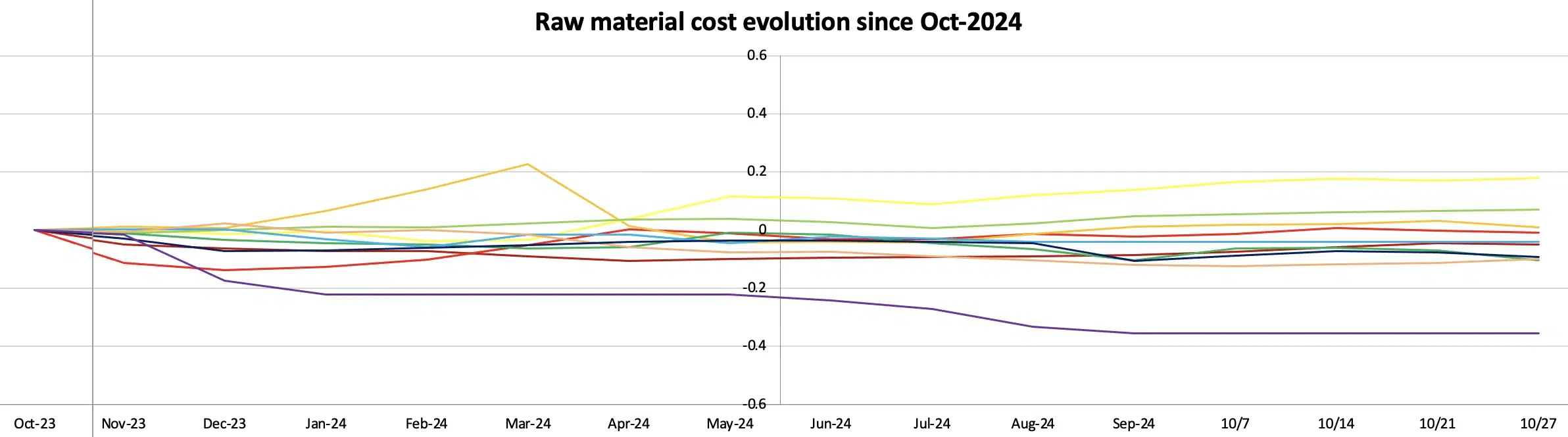

china raw material cost evolution oct 23-24

china raw material cost changes late oct 24

Here is what the external market analysts we work with attribute these changes to during this past month and the monthly cost change:


Epoxy Resin – increased by 3.93%

This week, the epoxy resin market has remained stable, though market activity has been subdued due to weakened cost support and limited demand. Here’s a closer look at the current dynamics:

Supply: Production has primarily focused on fulfilling previous orders. Spot inventory levels are manageable, with no significant supply shortages reported. New orders have faced slow processing, keeping supply relatively steady.

Demand: Terminal demand remains weak, with limited buying interest from downstream sectors. Most buyers are adopting a wait-and-see approach, with actual purchasing volumes expected to stay low unless critical needs arise.

Cost: Bisphenol A is expected to hit a bottoming trend next week, with prices anticipated to remain stable. Meanwhile, epichlorohydrin prices show signs of weakening, which could slightly reduce raw material costs.

Outlook: While profitability is stable, overall demand is projected to stay low, with the market outlook dependent on actual purchase volumes in the near term.


ABS (Acrylonitrile Butadiene Styrene) – increased by 1.42%

This week, the ABS market experienced some price fluctuations, with prices rising initially before declining. Currently, the market remains in a weak state with limited transaction volumes.

Supply: Market supply is expected to remain loose, with adequate availability across price ranges. No significant shifts in transaction volume suggest supply stability in the short term.

Demand: The upcoming demand season may not see typical procurement volumes, as some large downstream buyers are reducing their purchasing scale. Demand fundamentals remain weak, with downstream sectors adopting a conservative approach.

Cost: Domestic ABS materials are priced between 10,650–11,800 yuan/ton, with low- and high-end prices falling by around 100 yuan/ton since last Thursday. Upstream raw material prices continue to operate weakly, placing minimal upward cost pressure on ABS prices.

Outlook: Given weak fundamentals and anticipated declines in demand, the ABS market is likely to remain subdued in the short term, with no significant price upturn expected.


Silicone – decreased by 0.07%

This week, the silicone market experienced a brief price increase followed by a decline, with manufacturers displaying varied pricing strategies. Current prices reflect increased supply pressure as some production facilities resume operations.

Supply: Increased production due to resumed operations at some facilities has added supply pressure to the market. Major enterprises initially raised prices due to strong order volumes, but not all manufacturers followed suit, resulting in differences based on order levels.

Demand: Downstream rubber enterprises exhibit cautious purchasing behavior, with a limited willingness to accept higher prices. Transaction volumes tend to focus on low-end price levels, with many companies prioritizing quick sales over pricing.

Cost: As of October 24, the market price for 110-grade raw silicone rubber is 14,600–15,000 yuan/ton. Profit margins for some suppliers have improved slightly, although downstream pricing constraints limit significant cost adjustments.

Outlook: With supply pressures likely to increase and cautious demand from downstream buyers, silicone prices may remain under pressure in the short term.


Zinc Alloy – increased by 3.75%

This week, zinc alloy prices rose briefly before declining. The market remains affected by mixed macroeconomic factors, with demand outlooks showing some regional weaknesses.

Supply: Following news of northern mine activity, market sentiment is moderately positive regarding raw material availability. Supply-side conditions appear stable, though raw material trades could continue to influence price confidence.

Demand: Demand from galvanized enterprises remains low, particularly in regions like Tianjin and Hebei, where construction activity is down. Overall, the demand outlook is cautious, with weak purchasing interest in several areas.

Cost: Prices for electrolytic zinc are projected to average around 25,300 yuan/ton in the coming week, with fluctuations expected between 24,800 and 25,800 yuan/ton. Domestic interest rate adjustments and mixed global economic news have maintained a neutral macroeconomic sentiment.

Outlook: Zinc prices may face downward adjustments next week, with minor price gains expected to be temporary. Market conditions will likely remain stable but are subject to minor shocks based on further macroeconomic developments.


Aluminum Alloy (AL Alloy) – increased by 2.08%

This week, domestic alumina prices rose, driven by limited supply and increasing demand from downstream aluminum plants. Key supply-demand imbalances have contributed to price increases.

Supply: Domestic bauxite mine recovery has been slow, leading to scarce bauxite resources in the local market. Imports from Guinea are affected by the early rainy season, disrupting transportation. Maintenance work at some facilities, particularly in Henan, has further tightened alumina supply.

Demand: High operating rates at downstream electrolytic aluminum plants have increased demand, with active replenishment especially noted in the northwest. Rising price differentials between domestic and foreign alumina have heightened export expectations, adding further pressure on demand.

Cost: Supply constraints combined with heightened demand have driven alumina prices upward. As demand continues to grow while supply remains tight, cost pressures are expected to persist.

Outlook: With ongoing supply-demand imbalances, alumina prices may continue to trend upward in the short term. Export demand and supply challenges are likely to maintain upward pressure on prices.


PVC (Polyvinyl Chloride) – No change

This week, PVC prices declined slightly amid weak fundamentals and limited market activity. Persistent cost pressures and subdued demand continue to weigh on the market outlook.

Supply: Maintenance activity increased, leading to a slight decrease in production load; however, the overall impact on supply remains limited. Inventory levels are adequate, with no notable shortages affecting availability.

Demand: Demand is restricted to essential purchases, with low enthusiasm for procurement. Export orders are also limited, reflecting weak demand across both domestic and international markets.

Cost: Caustic soda prices increased this week, while calcium carbide costs saw a slight decrease, which has reduced overall cost support. Margins for chlor-alkali and PVC integration improved, although the weakened cost base continues to keep prices under pressure.

Outlook: Despite weak fundamentals, PVC prices are expected to stabilize in the short term due to policy factors that might support the market bottom. While the outlook remains cautious, macroeconomic conditions could offer some relief from further declines.


Paper for Color Boxes – no change

This week, the market for color paper remained stable, with no significant price fluctuations. Transactions are occurring smoothly, mainly supporting essential purchasing needs.

Supply: Shipments from paper factories are steady, maintaining consistent availability across the market. Prices across major brands in the Guangdong market range from 5,400 to 5,800 yuan/ton, showing stability across different suppliers.

Demand: Downstream demand is primarily driven by essential purchasing, with no major replenishment surges noted. Dealers report smooth transaction flows, with individual deals often requiring negotiation based on specific order sizes.

Cost: Current prices are stable, with brands such as Huashan Sun, Whale King, Long Crane, and Snow Rabbit all maintaining recent price levels. The Guangdong market reflects a stable price range of 5,400–5,800 yuan/ton, consistent with previous weeks.

Outlook: The color paper market is likely to remain stable in the short term, with prices steady and minimal cost or supply pressures anticipated. Transaction dynamics will continue to focus on essential demand.


Paper for Cartons – increased by 2.33%

This week, the carton paper market remained steady, with transaction volumes aligned with basic demand levels and no significant price movements noted.

Supply: Supply levels are stable, with paper mills maintaining regular shipments to meet ongoing demand. Inventory is sufficient, and there are no indications of shortages impacting availability.

Demand: Demand is driven by essential replenishment, with most transactions fulfilling routine needs. Downstream buyers are purchasing cautiously, focusing on maintaining baseline inventory levels rather than stockpiling.

Cost: Prices have shown little to no change this week, holding steady in line with recent averages. Cost stability is expected in the near term, with no major fluctuations from raw material prices affecting carton paper.

Outlook: The market is expected to remain stable in the short term, with minimal price adjustments anticipated. Demand is likely to continue at current levels, reflecting essential purchasing patterns.


Stainless Steel – increased by 1.58%

This week, the waste stainless steel market experienced a steady decline in prices, influenced by falling futures and pressures from the finished material market. The atmosphere of concern among market participants has increased.

Supply: Supply levels are stable, but market sentiment remains cautious. Inventory levels of waste stainless steel products continue to exist without significant shortages impacting availability.

Demand: Demand is currently affected by the overall market conditions, with participants purchasing cautiously. Buyers are focusing on meeting essential needs rather than engaging in stockpiling.

Cost: Prices have continued to decrease this week, shifting the price center of gravity downward. However, further adjustments are expected to be limited unless new market developments arise.

Outlook: The market is anticipated to exhibit weak finishing operations next week, with minimal price adjustments expected. Unless impacted by significant news, the overall sentiment is likely to persist, maintaining current purchasing patterns.


Lithium Batteries – increased by 3.33%

This week, the anode material market for lithium batteries experienced a downward shift, with falling raw material prices leading to weakened cost support.

Supply: Supply levels remain consistent; however, the lack of cost support has resulted in a downward movement in market pricing for anode materials.

Demand: Demand appears to be subdued as market participants adjust to the declining price environment. Buyers are likely being cautious, reflecting uncertainties in pricing and cost stability.

Cost: The price of raw materials has decreased, contributing to weak cost support for the anode material market. The spot market for positive electrode materials has also seen a downward shift, primarily due to this lack of support.

Outlook: The market for positive electrode materials is expected to remain weak next week, with a particular focus on the price trends of raw material lithium carbonate. Continued monitoring of these trends will be essential for understanding future pricing dynamics.


How to combat rising costs?

Explore cost-reducing tips in this post: Rising Raw Material Prices: What Strategy To Follow? (6 Approaches).

What to do if your Chinese supplier suddenly tells you that material costs have risen: How To Cooperate With Your Chinese Supplier, Part 16: Bad News from China, Raw Material Prices Just Increased!

If your supplier just isn’t working out, maybe sourcing a new supplier will help you find one who can offer you better prices and more. If so, there’s no need to fear switching from your current supplier to a new one if you’re prepared: How To Switch To A Newer, Better Chinese Manufacturer? [eBook].


We hope this is helpful. Our mission at Sofeast is to help importers have transparency in their supply chain and to give them more control. And this information is critical to have some visibility into your manufacturer’s costing.

By the way, you can always contact us if you have any questions about whether a manufacturer’s quote is reasonable.

Plastic, Silicone, Steel, and Others: Updated China Raw Materials Costs (late Sep ’24)

Here’s the monthly update tracking the costs of commonly used raw materials from China for the past year to help you understand where the market is right now. If you or your supplier are purchasing materials from China for your products, the cost changes you see here impact your bottom line!

Here’s the up-to-date material cost data from China for you as of late September 2024 and the price evolution over the past twelve months – this month silicone, zinc and aluminum alloys are up, while batteries and PVC are down a little.

Here you can see the individual cost evolution per material over the past year, including the weekly and monthly changes for September 2024 with costs in CNY:

china raw material cost evolution sep 23 to 24

Here is what the external market analysts we work with attribute these changes to during this past month and the monthly cost change:


Epoxy Resin – increased by 0.58%

The price of epoxy resin is expected to fluctuate slightly soon due to the following factors:

  • Supply: A tight supply of epichlorohydrin (ECH) remains, with some downstream stocking ahead of the (October) holidays in China.
  • Demand: The negotiation atmosphere remains dull, with market activity stable and narrow fluctuations in price negotiations.
  • Cost: Most products in the epoxy resin chain have seen prices rise, except for bisphenol A and PC, which fell slightly. Improved acetone market transactions contributed to a 1.40% price increase.
  • Outlook: Profitability has slightly improved, but the overall outlook for the industry chain remains pessimistic.

ABS (Acrylonitrile Butadiene Styrene) – decreased by 0.94%

The ABS market is expected to remain stable with minor fluctuations due to the following factors:

  • Supply: Production levels dropped to 61.17%, with slight decreases at Zhangzhou Chi Mei and Tianjin Dagu plants. Northern Huajin restarted production.
  • Demand: Stable but moderate, with the addition of Zhejiang Petrochemical’s new plant (300,000 tons/year) not yet reflected in the data.
  • Cost: No significant cost updates this week.
  • Outlook: Production capacity remains healthy, with minor fluctuations in demand and supply.

Silicone – increased by 2.08%

Silicone prices are expected to remain stable in the near term, driven by the following factors:

  • Supply: Supply pressure varies across enterprises, leading to differentiated prices and order volumes.
  • Demand: Limited purchasing interest due to the high cost of rubber transfer.
  • Cost: Prices for raw rubber first increased by 200 yuan/ton but then loosened due to lack of follow-up from major producers.
  • Outlook: The market remains divided, with some enterprises reducing shipment prices while others maintain higher levels.

Zinc Alloy – increased by 4.10%

Zinc alloy prices are expected to remain volatile due to the following factors:

  • Supply: Smelters announced joint production cuts in mid-September due to raw material shortages, tightening supply.
  • Demand: Demand release has been lower than expected, contributing to weaker market sentiment.
  • Cost: Zinc prices fluctuated significantly in the third quarter, driven by poor macroeconomic data and reduced market confidence.
  • Outlook: In the fourth quarter, prices are expected to fluctuate at high levels, with an initial rise followed by a decline, supported by policy measures and tightening supply.

Aluminum Alloy (AL Alloy) – increased by 3.14%

Aluminum alloy prices are expected to remain strong and volatile due to these factors:

  • Supply: Stable production at electrolytic aluminum smelting plants, with rising inventory levels being gradually reduced.
  • Demand: Marginal improvements in demand, particularly due to pre-holiday stockpiling and rising aluminum processing requirements.
  • Cost: Strong domestic aluminum prices and a rising international aluminum market due to favorable macroeconomic conditions.
  • Outlook: Prices are expected to remain strong and volatile, supported by macroeconomic factors.

PVC (Polyvinyl Chloride) – decreased by 2.84%

PVC prices are likely to remain under pressure due to the following reasons:

  • Supply: Limited improvements in supply fundamentals.
  • Demand: Weak, with only slight support from macroeconomic conditions.
  • Cost: Cost support remains at the lower end, with fundamental support insufficient.
  • Outlook: Uncertainty persists regarding the sustainability of macroeconomic support after the holidays. The market is expected to continue to face supply and demand challenges.

Paper for Color Boxes – no change

The price of double-coated paper is expected to remain stable, driven by the following factors:

  • Supply: Paper mill offers remained stable, providing slight support to market confidence.
  • Demand: Weak downstream purchasing enthusiasm, with dealers showing little incentive to cut prices due to profit pressure.
  • Cost: Mixed pulp price trends, with broadleaf pulp prices falling, negatively affecting paper prices.
  • Outlook: The market remains stable, though individual regions saw slight price drops.

Paper for Cartons – decreased by 1.84%

The carton paper market is likely to see continued price decreases due to these factors:

  • Supply: Balanced supply and demand early in the month, but consumption dropped mid-month, creating supply pressure.
  • Demand: Weak demand during the typical peak season, with reduced orders after the Mid-Autumn Festival.
  • Cost: No significant changes reported.
  • Outlook: Prices are expected to continue declining as supply pressure increases.

Stainless Steel – decreased by 0.62%

Stainless steel prices are expected to fluctuate in line with market sentiment for the following reasons:

  • Supply: Production levels remain high, but declining futures and spot prices have affected market confidence.
  • Demand: End users continue to purchase only on an as-needed basis.
  • Cost: Rising nickel prices provided some cost support, but overall trading activity remains subdued.
  • Outlook: The market is cautiously optimistic, with potential boosts from macroeconomic policy changes, but sentiment remains wait-and-see.

Lithium Batteries – decreased by 3.33%

Lithium battery prices are expected to remain stable, driven by the following factors:

  • Supply: Stable supply, with reference prices for lithium cobalt acid ranging between 130,000-150,000 yuan/ton.
  • Demand: Market transactions remain in line with normal downstream production levels.
  • Cost: Weak support on the cost side, with little variation in pricing trends.
  • Outlook: The lithium battery market remains steady, with no significant changes expected.


How to combat rising costs?

Explore cost-reducing tips in this post: Rising Raw Material Prices: What Strategy To Follow? (6 Approaches).

What to do if your Chinese supplier suddenly tells you that material costs have risen: How To Cooperate With Your Chinese Supplier, Part 16: Bad News from China, Raw Material Prices Just Increased!

If your supplier just isn’t working out, maybe sourcing a new supplier will help you find one who can offer you better prices and more. If so, there’s no need to fear switching from your current supplier to a new one if you’re prepared: How To Switch To A Newer, Better Chinese Manufacturer? [eBook].


We hope this is helpful. Our mission at Sofeast is to help importers have transparency in their supply chain and to give them more control. And this information is critical to have some visibility into your manufacturer’s costing.

By the way, you can always contact us if you have any questions about whether a manufacturer’s quote is reasonable.

Plastic, Silicone, Steel, and Others: Updated China Raw Materials Costs (late August ’24)

Here’s the monthly update from Sofeast’s sourcing team, tracking the costs of commonly used raw materials from China for the past year to help you understand where the market is right now. If you or your supplier are purchasing materials from China for your products, the cost changes you see here impact your bottom line!

Here’s the up-to-date material cost data from China for you as of late August 2024 and the price evolution over the past twelve months – this month Silicone and AL alloy had modest increases, while PVC and Lithium batteries’ costs decreased, especially the latter.

Here you can see the individual cost evolution per material over the past year, including the weekly and monthly changes for August 2024 with costs in CNY:

china raw materials cost evolution aug 24

china raw material changes aug 23 to aug 24 graph
Here is what our market analysts attribute these changes to during this past month:

Epoxy Resin – decreased by 0.31%

The price of epoxy resin is expected to fluctuate slightly soon due to the following factors:

  • Supply: Factory operations are stable and production levels are consistent, with careful attention to on-site operations.
  • Demand: Downstream demand is tepid, with buyers showing limited interest.
  • Cost: Prices of key raw materials, bisphenol A and epichlorohydrin, have risen slightly, providing modest cost support.

ABS (Acrylonitrile Butadiene Styrene) – increased by 1.35%

The ABS market is anticipated to remain stable with minor fluctuations:

  • Cost: Styrene and butadiene prices have increased slightly, while acrylonitrile remains stable, providing continued cost support.
  • Supply: Overall supply is sufficient, though some areas may experience localized shortages.
  • Demand: Downstream demand for replenishment is moderate, with average transaction levels.

Silicone – increased by 2.97%

Silicone prices are expected to remain stable due to these key factors:

  • Supply: Increased export volumes from major Shandong manufacturers, with a stronger willingness to ship.
  • Demand: Downstream demand remains weak, with limited purchasing activity.
  • Cost: The price of metal silicon 421 is consolidating at a low level, and the cost of methane chloride has decreased, providing minimal support to the DMC market.

Zinc Alloy – increased by 1.09%

Current zinc alloy market prices are influenced by:

  • Supply: Overall supply is sufficient, though attention is needed on potential production cuts by smelters.
  • Demand: Market demand remains limited, with weak overall activity.
  • Mindset: Rising futures prices have improved market sentiment.
  • Cost: Low processing fees, but cost support is present.

Aluminum Alloy (AL Alloy) – increased by 3.02%

The price of aluminum alloy is expected to remain strong and volatile:

  • Macro Factors: Chinese economic data and anticipated Federal Reserve interest rate cuts continue to support the non-ferrous metals market.
  • Supply: High production levels at aluminum plants, with abundant supply. Aluminum ingot inventories are high but are being reduced gradually.
  • Demand: Slight improvement in demand, with increased terminal orders and stable aluminum exports.

PVC (Polyvinyl Chloride) – decreased by 3.33%

Key factors influencing PVC prices include:

  • Macro Factors: A looser macroeconomic environment, with expectations of a U.S. interest rate cut in September.
  • Supply & Demand: Increased maintenance activities at production facilities have reduced supply, while downstream demand remains weak. Export support is present due to an extended BIS certification.
  • Cost: The price of calcium carbide has risen slightly, but the integrated chlor-alkali-PVC process still yields profit, offering limited cost support.

Paper for Color Boxes – decreased by 1.23%

The price of double-coated paper is expected to remain stable due to:

  • Demand: Dealer sentiment is cautious, with limited willingness to replenish stock. Downstream purchases are limited to immediate needs, providing no significant demand boost.
  • Cost: The wood pulp market has stabilized, offering moderate cost support for paper prices.

Paper for Cartons – decreased by 1.50%

The market for carton paper is generally stable:

  • Supply & Demand: Paper mills have announced price increases, boosting market confidence slightly. However, downstream orders remain stable, and demand for materials is moderate.

Stainless Steel – decreased by 0.49%

The stainless steel market is impacted by:

  • Supply: Production profits are shrinking, potentially reducing manufacturing activity, though inventory levels remain high, maintaining supply pressure.
  • Demand: End users are purchasing on an as-needed basis, resulting in flat market digestion and no significant increase in demand.
  • Cost: Nickel prices have risen in both futures and spot markets, providing continued cost support.

Lithium Batteries – decreased by 8.49%

The lithium battery market is characterized by:

  • Cost: Mixed cost factors, with weak ammonium prices but strong phosphoric acid prices, leading to no significant impact on overall costs.
  • Supply & Demand: Stable supply and demand, with normal digestion by downstream enterprises and on-demand production by suppliers.
  • Market Outlook: The upstream and downstream support for iron phosphate remains stable, with steady spot market prices and stable negotiations.

How to combat rising costs?

Explore cost-reducing tips in this post: Rising Raw Material Prices: What Strategy To Follow? (6 Approaches).

What to do if your Chinese supplier suddenly tells you that material costs have risen: How To Cooperate With Your Chinese Supplier, Part 16: Bad News from China, Raw Material Prices Just Increased!

If your supplier just isn’t working out, maybe sourcing a new supplier will help you find one who can offer you better prices and more. If so, there’s no need to fear switching from your current supplier to a new one if you’re prepared: How To Switch To A Newer, Better Chinese Manufacturer? [eBook].


We hope this is helpful. Our mission at Sofeast is to help importers have transparency in their supply chain and to give them more control. And this information is critical to have some visibility into your manufacturer’s costing.

By the way, you can always contact us if you have any questions about whether a manufacturer’s quote is reasonable.