When Big Brands Get Product Safety Wrong: 6 Lessons for Importers [Podcast]

Large global brands usually have experienced engineering teams, established quality systems, and substantial testing budgets. Yet they still release products that fail in the field, cause injuries, trigger recalls, and damage customer trust.

In episode 339 of China Manufacturing Decoded, Adrian and Renaud examine six well-known product failures involving Mattel, Philips, Samsung, hoverboards, Fitbit, and Peloton.

These cases affected very different products, but they reveal several recurring weaknesses:

  • Supplier requirements were not properly controlled throughout the supply chain.
  • Materials and products were not sufficiently tested for long-term degradation.
  • Foreseeable misuse was not fully considered.
  • Products were rushed to market before their batteries, firmware, or safety systems were mature.
  • Early customer complaints were not escalated quickly enough.
  • Serious hazards were not eliminated through the product design.

The lesson for importers and hardware companies is clear: a large budget and a well-known brand do not remove product risk. Safety and reliability still depend on disciplined engineering, supplier control, testing, and post-launch monitoring.


Listen here

Listen to the episode or watch on YouTube


Podcast sections

  • 00:00 Introduction
  • 00:30 Why major brands still suffer product failures
  • 01:25 Mattel’s lead-paint recall and supplier control
  • 07:20 Philips CPAP machines and degrading foam
  • 12:06 Samsung washing machines and foreseeable misuse
  • 15:28 Hoverboards and the risks of a product gold rush
  • 19:25 Fitbit Ionic and responding to field failures
  • 22:56 Peloton Tread+ and designing out safety hazards
  • 23:38 What smaller hardware companies can learn
  • 24:14 Risk analysis, compliance, and reliability testing


Further content

(Note: Media sources and news articles used for research can be found in the podcast show notes)


🎧 Listen, rate, & subscribe to the ‘China Manufacturing Decoded’ podcast on your favorite provider
More episodes are on the way, so remember to rate us and subscribe! You can find us on:

Why Version 1 Shouldn’t Be Perfect (And What to Do After You Launch) [Podcast]

In episode 325 of China Manufacturing Decoded, Adrian and Renaud break down a powerful idea from Tony Fadell: “Builders build, ship, then solve what breaks.”

They explore what really happens after a product hits the market, and why chasing perfection before launch can actually kill your chances of success.

You’ll learn:

  • Why over-engineering delays launches (and increases risk)
  • How Version 1 should really be defined: simple, lovable, and complete
  • What real-world users reveal that prototypes never can
  • How to collect meaningful feedback without damaging your reputation
  • Why early adopters are critical for innovative products
  • How smart teams build Version 2 while Version 1 is still launching

Developing a new product in 2026? You’ll have food for thought from this one!


Listen here

Listen to the episode or watch on YouTube

Episode Sections:

  • 00:00:13.326 — Episode overview
  • 00:00:37.886 — Tony Fadell’s quote
  • 00:01:37.906 — Why perfection is a trap
  • 00:04:28.242 — Engineering vs speed trade-off
  • 00:06:30.021 — Launch early vs over-engineering
  • 00:07:46.050 — De-risking with Version 1
  • 00:10:30.755 — “Simple, lovable, complete”
  • 00:13:43.044 — Launch isn’t the finish line
  • 00:15:04.650 — Real-world user behaviour
  • 00:17:06.894 — Nest example (unexpected insights)
  • 00:19:36.494 — Managing reviews & early releases
  • 00:21:27.921 — Choosing the right early users
  • 00:24:02.240 — Misinterpreting “ship early”
  • 00:25:47.970 — Lessons from product reliability
  • 00:26:56.210 — Why post-launch work matters
  • 00:28:28.883 — Continuous product development
  • 00:30:25.311 — Key takeaways

Further content

🎧 Listen, rate, & subscribe to the ‘China Manufacturing Decoded’ podcast on your favorite provider

More episodes are on the way, so remember to rate us and subscribe! You can find us on:

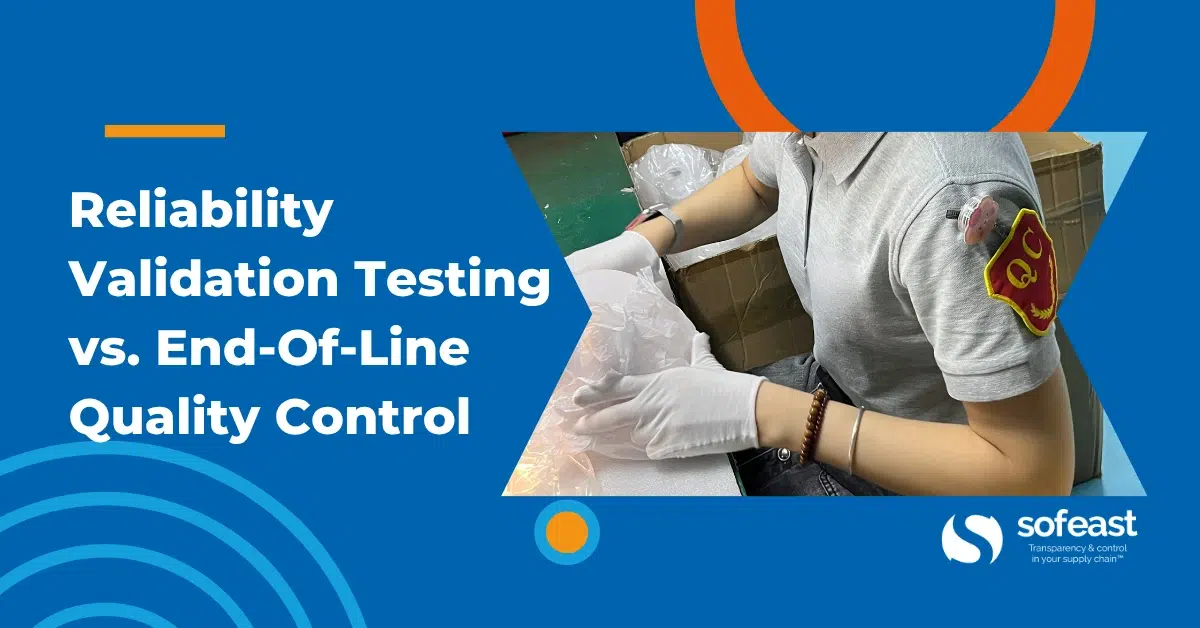
Reliability Validation Testing vs. End-Of-Line Quality Control

In this article, I will explain the difference between reliability validation testing and end-of-line quality control, because they are often mixed up when people talk about reliability testing vs quality control, yet they address very different risks.


What is reliability validation testing?

When we talk about reliability validation testing, I am talking about validating the product design, including the choice of components; in other words, product design validation from a reliability standpoint.

The idea is to expose the product to conditions that are close to, or beyond, its normal operating conditions and then observe whether it is likely to fail once it is in use. I am really asking:

“Given how this product will be used and given what environmental conditions it will have to endure, is the design likely to fail too early?”

To simplify, this is not about checking whether a batch was manufactured correctly. It is about confirming whether the reliability is adequate, or whether some aspects of the design or components make failures likely in the field (e.g. in customers’ hands, after installation, etc.).

What is end-of-line quality control?

On the other hand, end-of-line quality control (EOL QC) is about checking and confirming that the product has been manufactured properly.

Here, the question is as follows:

“Does this batch of products, which is coming out of the factory, comply with specifications?”

End-of-line quality control is a form of manufacturing quality control. It is a verification against specifications: appearance, dimensions, basic functions, and other points that have been agreed upon. It is usually not destructive, and it is not done beyond the normal operating conditions of the product.

So, when we discuss reliability testing vs quality control, End Of Line QC clearly sits on the “quality control” side. It takes a snapshot of what the products are now; it does not focus on whether the design itself will hold up over time in terms of being reliable.

Different risks: Design reliability vs manufacturing quality

These two activities target different types of risks:

  1. Reliability validation testing tackles the risk that the design itself, including the components, is likely to fail after some time once the product is in use.
  2. End-of-line quality control tackles the risk that a batch of products has been manufactured in the wrong way (for example, due to process issues, mistakes, or other production problems).

That’s really the core of design reliability vs manufacturing quality. There is a bit of overlap, but the root causes and corrective actions are quite different depending on whether the problem arises from design or manufacturing.

Ongoing reliability testing from production batches

One point that sometimes confuses people is ongoing reliability testing.

If needed, it is possible to pull some samples from production for ongoing reliability testing at the same time as the regular end-of-line quality control inspections. Just to be clear, those samples are tested with a different objective in mind: checking whether reliability performance has changed, not checking day-to-day manufacturing quality.

Why do experienced companies keep them separate?

Because the objectives and the risks are so different, every experienced company keeps reliability validation testing and end-of-line quality control separate.

They are done at different times, as the design needs to be validated before production starts. They typically involve different people, as product designers usually don’t work closely with the operations of purchasing & manufacturing.

FAQs

  • Q: Is reliability validation testing the same as normal production testing?
    No. Reliability validation testing is about challenging the design, often close to or beyond normal operating conditions. Normal production testing (end-of-line QC) is about checking that each batch is manufactured according to the specifications.
  • Q: Can strict end-of-line quality control replace reliability validation testing?
    No. Even very strict EOL quality control, including a bit of abuse and endurance testing, is not likely to tell you whether the design is likely to fail after some time in the field. It is good at confirming whether the products comply with the specifications and pass function tests.
  • Q: Why pull extra samples for ongoing reliability testing if I already do EOL QC?
    Because EOL QC confirms manufacturing quality on that batch, while ongoing reliability testing aims at noticing differences in component manufacturing and in assembly methods that are likely to impact product reliability (and often also safety).

Typical Reliability Issues in Smart Wearables: Rings, Earbuds, Watches & Smart Glasses (feat. Andrew Amirnovin) [Podcast]

In episode 297 of China Manufacturing Decoded, host Renaud is joined by Sofeast reliability specialist Andrew Amirnovin to unpack why smart wearables so often fail in the field, and how to stop it. They break down real cases across rings, earbuds, watches, and smart glasses (think swollen cells, failing mics, cracked displays, and weak straps), then map fixes to a practical workflow: early DFMEA, designing for foreseeable misuse, test-to-failure (drops, sweat ingress, torsion), and ORT after any supplier or component change. You’ll hear how to balance sleek form factors with robustness, set DVP&R with vendors, and avoid costly reliability surprises.

Listen here

Listen to the episode or watch on YouTube

Show sections

  • 00:01:04 – Wearables & why reliability matters.
  • 00:03:12 – Case 1: Samsung Galaxy Ring battery swelling & safety risk.
  • 00:07:27 – Foreseeable misuse & worst-case design thinking (rings).
  • 00:09:44 – Case 2: AirPods Pro ANC/microphone failures after 1–2 years.
  • 00:16:54 – Testing to failure: drop & sweat, isolate root causes.
  • 00:17:55 – Case 3: Smartwatches (Galaxy Watch 5) screens cracking too easily.
  • 00:24:21 – Xiaomi watch similar issues; plan for misuse; EU risk assessment.
  • 00:28:18 – New categories = unpredictable use; plan reliability up-front.
  • 00:31:13 – DFMEA discipline for wearables; consequences of failure.
  • 00:32:10 – Case 4: Fitbit Versa strap/band reliability complaints; ORT after changes.
  • 00:36:06 – Purchasing swaps, component changes & the need for ORT.
  • 00:38:00 – Case 5: Meta/Ray-Ban smart glasses user complaints, battery/performance.
  • 00:39:45 – Battery life degradation vs. performance drain discussion.
  • 00:44:52 – Closing thoughts: Be patient with cutting-edge form factors.
  • 00:45:44 – Wrap-up & outro.

Key Takeaways

  • Do DFMEA early, include foreseeable misuse (EU requires risk assessment, including misuse).
  • Qualify supplier components; audit their validation; define DVP&R for inputs like glass and seals.
  • Always test to failure: drops (random + controlled), sweat ingress, torsion/edge hits, strap retention cycles.
  • Lock changes with ECNs + ORT; any “cheaper” part must re-pass the reliability gate.

Extra resources to dive deeper

🎧 Listen, rate, & subscribe to the ‘China Manufacturing Decoded’ podcast on your favorite provider

More episodes are on the way, so remember to rate us and subscribe! You can find us on:

Using Early Field Failure Analysis (EFFA) to Prevent Product Disasters [Podcast]

In this episode, we dive into Early Field Failure Analysis (EFFA) and why it’s essential for manufacturers aiming to avoid costly recalls and reputation damage. Our guest, reliability expert Andrew Amirnovin, shares real-world examples of what happens when EFFA is neglected—including major recalls from Tesla, Volkswagen, and Firestone. Tune in to learn how to implement an effective EFFA program, reduce risk, and ensure product reliability before small issues snowball into catastrophic failures.


Listen to the episode here

Listen: to the podcast episode

Watch: on YouTube


Episode sections

  • [00:00] Introduction & Guest Welcome
  • [01:20] What is Early Field Failure Analysis (EFFA)?
  • [06:45] Why EFFA Matters in Mass Production
  • [12:30] Implementing an Effective EFFA Program
  • [22:00] Real-World Case Study: Tesla’s Power Steering Recall
  • [27:00] Firestone & Ford Tire Failure Disaster
  • [31:45] Volkswagen Dieselgate: A Different Kind of Failure
  • [36:20] The Hidden Costs of Neglecting EFFA
  • [39:00] Key Takeaways & Final Advice


Related content…


Listen, rate, & subscribe to the ‘China Manufacturing Decoded’ podcast on your favorite provider

More episodes are coming, so remember to rate us and subscribe! You can find us on:

Product Warranty and Warranty Period: What you need to know [Podcast]

Host Renaud Anjoran welcomes product reliability expert Andrew Amirnovin on the show to discuss the topic of product warranty in episode 235—frequent customer inquiries about the subject prompt this discussion.

The conversation begins with an overview of the interconnectedness between product reliability, durability, and warranty. Andrew explains the basic concept of a product warranty, highlighting its importance in building consumer trust and brand loyalty.

Several real-world examples, including warranties from Samsung, an office chair manufacturer, and Peugeot, illustrate how different products handle warranties. The discussion also touches on what a product warranty typically covers and excludes, emphasizing the importance of clear communication to avoid consumer confusion.

The episode further explores the varying legal requirements for warranties across different regions, including the USA, Canada, the EU, and the UK. This section underscores the necessity for manufacturers to be aware of local laws and adapt their warranty policies accordingly.

Renaud and Andrew also discuss the strategic considerations behind short versus long warranty periods and their impact on consumer trust. They emphasize the importance of designing products for reliability and conducting thorough testing to minimize the risk of early failures and costly warranty claims.

The episode concludes with practical advice for manufacturers on standardizing warranty policies, offering extended warranties, and continuously monitoring product returns to improve overall quality and customer satisfaction.


Listen to the episode here

Listen: to the podcast episode

Watch: on Youtube


Episode sections

  • 00:00 – Introduction and greetings.
  • 02:28 – What is a product warranty?
  • 04:23 – Real Warranty Examples and Case Studies.
  • 15:53 – Warranties for marketing and how to use them?
  • 22:11 – Warranty Legal Requirements for Consumer Products and Comparing Warranty Laws Across Regions.
  • 30:15 – Warranty Impact on Consumer Trust.
  • 32:27 – Designing Products with the Warranty in Mind.
  • 42:12 – Best Practices for Warranty Management.
  • 47:23 – Closing Thoughts.


Related content…


Listen, rate, & subscribe to the ‘China Manufacturing Decoded’ podcast on your favorite provider

More episodes are coming, so remember to rate us and subscribe! You can find us on:

If you enjoyed this episode, don’t forget to give us a 5* rating and share it with your network if you enjoy listening!


Disclaimer

We are not lawyers. What we wrote above is based only on our understanding of legal requirements. Sofeast does not present this information as a basis for you to make decisions, and we do not accept any liability if you do so.

Apple Vision Pro Cracks! Reliability Problems Already? [Bonus Podcast]

Our CEO Renaud chats with reliability and durability expert, Andrew Amirnovin, about Apple’s recent bad news about cracks appearing in their much-hyped Vision Pro headset just weeks after its release to the public. They explore the reliability and durability problems rearing their heads only a month or so into the product’s general release in early February 2024, based on information found in online news articles and videos, and make some predictions about how this can be fixed and what customers should do.


Listen to the episode here 👇

Listen: to the podcast episode

Watch: on Youtube


Episode sections

  • 00:00 – Introduction, what is the Vision Pro?
  • 02:29 – Uh-oh, cracks to the headset!
  • 04:04 – How would an engineer start diagnosing this case?
  • 06:40 – Is the return or repair policy straightforward? What should Apple customers do if they’re affected?
  • 08:48 – Is it likely Apple’s engineers missed this issue and never saw it during product testing and development?
  • 11:29 – We all know that an iPhone is likely to suffer damage when dropped from 6ft, should we be surprised that the Vision Pro seems similarly fragile?
  • 13:27 – Wrapping up.


Related content…


Listen, rate, & subscribe to the ‘China Manufacturing Decoded’ podcast on your favorite provider

More episodes are coming, so remember to rate us and subscribe! You can find us on:

If you enjoyed this episode, don’t forget to give us a 5* rating and share it with your network if you enjoy listening!

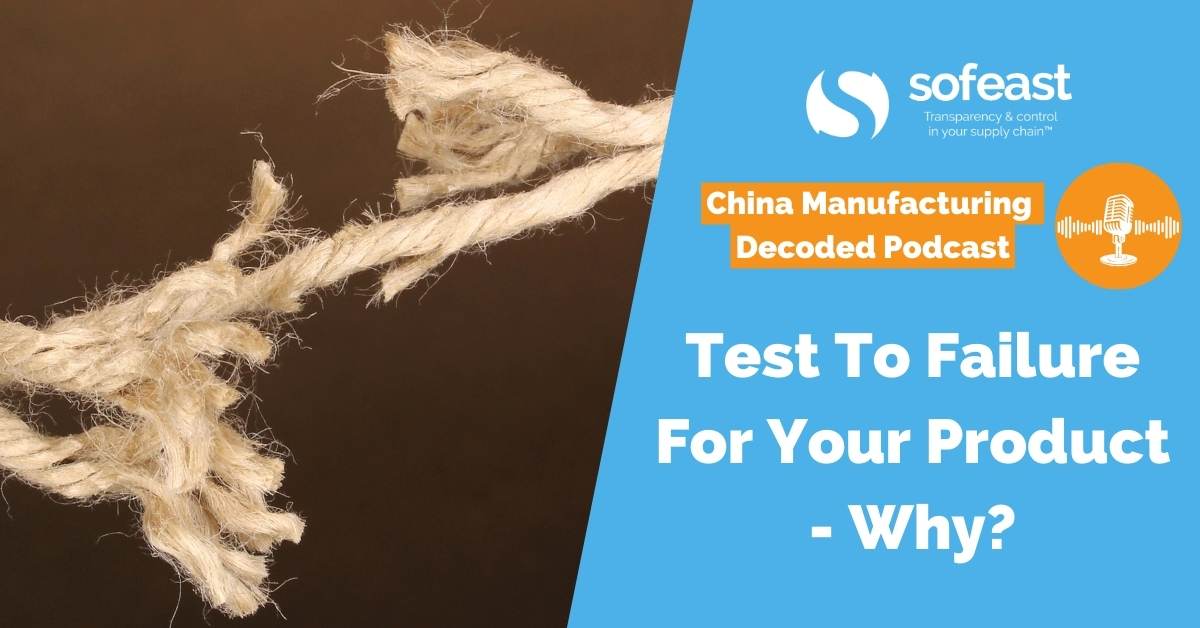
Test To Failure For Your Product – Why?

Adrian and Andrew Amirnovin, Sofeast’s reliability expert and our head of New Product Development, are back on the pod and taking you on a journey into what testing to failure is, its benefits, and why you will find it a useful tool in your product reliability testing arsenal.


Listen to the episode here 👇

Listen: to the podcast episode

Watch: on Youtube


Episode sections

  • 00:00 – Greetings and introducing today’s topic.
  • 01:28 – What is test to failure?
  • 05:33 – Why does testing to failure matter to companies who are bringing a new product to market (5 reasons)?
  • 14:30 – Some examples where weaknesses were found in products which allowed them to be fixed.
  • 19:56 – What kinds of methodologies can we follow when doing test to failure?
  • 32:31 – Products and industries where this is a very useful kind of testing to do.
  • 37:20 – Is test to failure wasteful?
  • 41:10 – Wrapping up.


Related content…


Listen, rate, & subscribe to the ‘China Manufacturing Decoded’ podcast on your favorite provider

More episodes are coming, so remember to rate us and subscribe! You can find us on:

If you enjoyed this episode, don’t forget to give us a 5* rating and share it with your network if you enjoy listening!

How to Use Reliability Data to Make Better Products & Save Money

Renaud hosts today and is joined by Andrew Amirnovin, Sofeast’s reliability expert and our head of New Product Development, to cover the topic of reliability data and how it can be used to help you make better products and reduce your costs.


Listen to the episode here 👇

Listen: to the podcast episode

Watch: on Youtube


Episode sections

  • 00:00 – Greetings and introducing today’s topic.
  • 00:43 – What kind of reliability data can we get?
  • 04:43 – Keeping a database of past issues or ‘lessons learnt.’
  • 10:29 – Where do issues that occur during manufacturing come from?
  • 12:50 – How can reliability data be used to make better products?17:16 – How user experience can influence a new testing plan.
  • 19:46 – Over-engineering and reliability: Mercedes Cars in the 1980s and NOKIA phones that seemed to be indestructible.
  • 25:11 – How can reliability data be used to cut production costs?
  • 27:56 – An example from the early automobile industry: Henry Ford’s Model-T Kingpin
  • 33:52 – Takata airbag safety scandal.
  • 38:39 – Wrapping up.


Related content…


Listen, rate, & subscribe to the ‘China Manufacturing Decoded’ podcast on your favorite provider

More episodes are coming, so remember to rate us and subscribe! You can find us on:

If you enjoyed this episode, don’t forget to give us a 5* rating and share it with your network if you enjoy listening!

5-Step Process To Fix Returned Products’ Problems

Sofeast’s resident reliability expert and head of New Product Development, Andrew Amirnovin, joins Adrian from the team to show you the 5-step process of how to fix problem products that are being returned by customers. Everyone hopes they won’t be affected by product reliability issues resulting in returns, but if it does happen this information will help you deal with the problem effectively.


Listen to the episode here 👇

Listen: to the podcast episode

Watch: on Youtube


Episode sections

  • 00:00 – Greetings and introducing today’s topic about how to find and fix the issues causing your product to be returned by customers.
  • 01:46 – 1. Identify the field issues.
  • 10:17 – Are problems exhibited by returned products that have been in the field usually reliability-related?
  • 15:59 – 2. Determine their root cause/s.
  • 19:46 – 3. Develop a solution/s.
  • 22:02 – 4. Implement the solution/s.
  • 29:35 – 5. Monitor the results.
  • 34:21 – Why this process is important and more cost-effective than doing nothing.
  • 40:17 – Wrapping up.


Related content…


Listen, rate, & subscribe to the ‘China Manufacturing Decoded’ podcast on your favorite provider

More episodes are coming, so remember to rate us and subscribe! You can find us on:

If you enjoyed this episode, don’t forget to give us a 5* rating and share it with your network if you enjoy listening!