Why Working Prototypes Fail in Production, Part 1: What Changes Before Mass Production [Podcast]

A working prototype can give a product team a lot of confidence.

The device functions. The team signs it off. The design looks ready. Everyone starts thinking about tooling, production schedules, and launch dates.

But then production starts, and unexpected failures appear.

This is a common and costly problem in hardware development. The prototype may have worked, but that does not automatically mean the production version will work in the same way, at the same quality level, or at the intended volume.

In episode 328 of China Manufacturing Decoded, Adrian is joined by Paul Adams, Head of New Product Development, to discuss why this happens. This is part one of a two-part discussion on why working prototypes can still fail when products move toward production.

The key point is simple:

A prototype proves the concept. Production proves the process.

Those are not the same thing.

In part one, we look at what can change between prototype and production, even when the product appears identical. Paul breaks the gap down into five areas where problems often appear: components, firmware, suppliers and factories, tolerances and process variation, and the validation basis.

Listen here

Listen to the episode or watch on YouTube

Episode Sections:

  • 00:00 Introduction: why working prototypes can still fail
  • 02:09 Prototypes and production units are not the same thing
  • 03:46 The gap between prototype and production
  • 04:23 Five things that change before production
  • 04:36 1 – Components: prototype parts vs production parts
  • 09:17 2 – Firmware: why prototype code is not production-ready
  • 12:03 3 – Suppliers and factories: why process knowledge gets lost
  • 16:50 4 – Tolerances and process variation
  • 19:54 5 – Validation basis: What exactly was tested?
  • 22:22 Key takeaway from part one
  • 23:17 What to expect in part two

Further content

🎧 Listen, rate, & subscribe to the ‘China Manufacturing Decoded’ podcast on your favorite provider

More episodes are on the way, so remember to rate us and subscribe! You can find us on:

Prototype to Production: 7 Sneaky Pitfalls to Avoid [Podcast]

In this episode of China Manufacturing Decoded, Adrian and Renaud unpack seven critical pitfalls that hardware startups routinely fall into during the path from working prototype to mass manufacturing. They explain why these mistakes happen, the consequences they bring, and how to sidestep them.


Listen here

Listen to the episode or watch on YouTube

Show sections

  • 01:19 – Why moving from prototype to production is more complex than expected
  • 04:26 – The analogy of the factory as “a big 3D printer” and why it’s wrong
  • 05:42 – Preview of 7 pitfalls discussed in this episode
  • 05:56 – Pitfall #1: Confirming a product design that isn’t ready for mass manufacturing
  • 10:02 – Pitfall #2: Going for tooling before the product design is frozen
  • 13:40 – Pitfall #3: Running a Kickstarter/Indiegogo campaign too early
  • 19:33 – Pitfall #4: Crowdfunding with no margin (and the debt it creates)
  • 23:30 – Pitfall #5: Not preparing a test plan for performance and reliability
  • 27:29 – Pitfall #6: Skipping pilot runs before mass production
  • 30:07 – Pitfall #7: Failing to have the manufacturer sign a development/manufacturing contract
  • 36:01 – Recap of all 7 pitfalls and final thoughts

Extra resources to dive deeper

🎧 Listen, rate, & subscribe to the ‘China Manufacturing Decoded’ podcast on your favorite provider

More episodes are on the way, so remember to rate us and subscribe! You can find us on:

Prototype, Patent, then Market: A Misguided Concept

Prototype, Patent, then Market A Misguided ConceptAnyone manufacturing their product wants it to be on time, within budget, at the right level of quality and reliability, and in compliance with market regulations, but in terms of safety, they also don’t want it to be copied! There is a certain order to bring a new product to market safely, then, which reduces your risk of your product IP being copied by China copycats who can and will beat you to market if you have an attractive idea.

A customer recently asked us about which order to do things in, so let’s discuss why prototyping, patenting, and then going to market is a misguided concept that could land you in hot water.

Continue reading “Prototype, Patent, then Market: A Misguided Concept”

We have a product concept. How long will it take to build our prototype?

A business has a product concept and an initial BOM (Bill Of Materials) and now needs to create a prototype to raise funding. Backers will want to see a working and relatively good-looking prototype first before parting with their cash.*

Building a prototype once all the design work is done and if components can be ordered is one thing, maybe just a couple of weeks, including testing. But is that the situation here?

Continue reading “We have a product concept. How long will it take to build our prototype?”

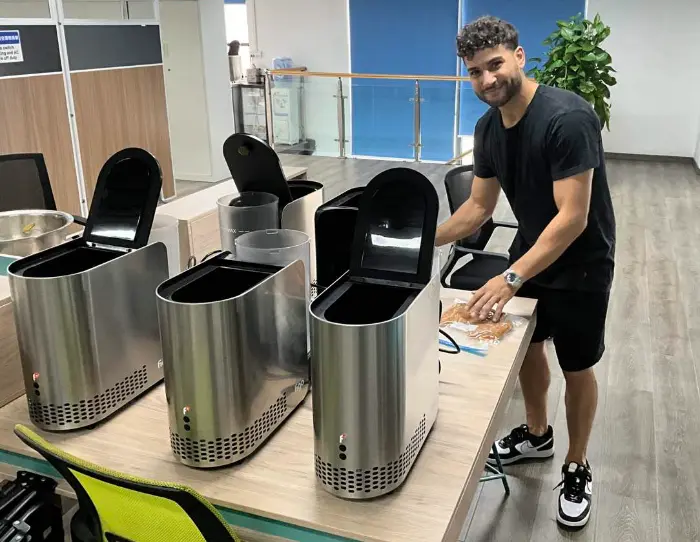
The Need For Many Prototypes [FIGO Case Study]

We caught up with Robert Nappi of FIGO to discuss the importance of prototyping and the need for many prototyping iterations during product development.

robert nappi with figo
He has been through a 6-year journey to bring a very interesting and innovative product to market, so who better to share thoughts on product development than someone who’s been there and done it?

Continue reading “The Need For Many Prototypes [FIGO Case Study]”

Mastering Prototype Accuracy: A Comprehensive Guide [Podcast]

In episode 234 of the China Manufacturing Decoded podcast, we explore ensuring that you get accurate prototypes, a crucial step in product development.

Our host, Renaud, and Agilian’s new product development head and experienced product engineer Paul Adams, discuss the importance of getting good parts for prototypes to avoid wasting time and resources during product development.

If you’re developing a new product, for example, a consumer electronic product, a mechanical device, or an electrical home appliance, this episode provides invaluable advice to ensure your prototypes are as close to production-ready as possible. Tune in to learn how to streamline your prototype process and avoid common pitfalls!


Listen to the episode here

Listen: to the podcast episode

Watch: on Youtube


Episode sections

  • 00:00 – Introduction and greetings.
  • 01:31 – What are the 3 main types of prototypes during product development?
  • 04:21 -Why is it so important to ensure you get the right parts with the right dimensions, the right surface finish, the right properties, etc, for your prototype?
  • 07:15 – What are good tips and best practices for product development teams?
  • 12:22 – Communication with Suppliers.
  • 14:35 – Supplier Capabilities.
  • 17:05 – Importance of delivery
  • 19:23 – Incoming QC.
  • 23:28 – Root cause analysis on defective parts.
  • 25: 55 – Finalizing prototype assembly and creating work instructions.
  • 30:14 – Provide feedback to the supplier.
  • 32:50 – A caveat for mass production.
  • 33:43 – Wrapping up.


Related content…


Listen, rate, & subscribe to the ‘China Manufacturing Decoded’ podcast on your favorite provider

More episodes are coming, so remember to rate us and subscribe! You can find us on:

If you enjoyed this episode, don’t forget to give us a 5* rating and share it with your network if you enjoy listening!

Prototyping and Testing FAQs: How many Iterations needed and what Tests to be Safe & Compliant? [Podcast]

Join Renaud and Adrian as they talk about the intricacies of prototyping and testing during new product development. They discuss 2 common FAQs from customers:

  1. How many prototype iterations will be needed?
  2. What are the essential tests for ensuring product safety and compliance?

Renaud explains how different product complexities affect the prototyping cycle and highlights the importance of simulations in advanced industries like aerospace. He also emphasizes the need for thorough documentation and clear communication with manufacturers to streamline the development process.

Furthermore, the episode explores the various types of tests required to validate a product’s safety and compliance, distinguishing between simple consumer products and highly regulated industries like medical devices and automotive parts. Listeners will gain valuable insights into best practices for preparing to work with manufacturers and ensuring their products meet regulatory standards.


Listen to the episode here 👇

Listen: to the podcast episode

Watch: on Youtube


Episode sections

  • 00:00 – Introduction and greetings.
  • 00:40 – Exploring Prototyping and Testing.
  • 05:59 – Considerations for Product Development.
  • 15:36 – Factors Influencing Number of Iterations.
  • 18:30 – Preparing for Working with Manufacturers.
  • 22:58 – Importance of Documentation and Clarity.
  • 25:52 – Ensuring Safety and Compliance.
  • 37:46 – Awareness of Industry Regulations.
  • 42:31 – Conclusion and Next Steps.


Related content…


Listen, rate, & subscribe to the ‘China Manufacturing Decoded’ podcast on your favorite provider

More episodes are coming, so remember to rate us and subscribe! You can find us on:

If you enjoyed this episode, don’t forget to give us a 5* rating and share it with your network if you enjoy listening!

Prototyping Essentials: The 5 Key Uses of Prototyping Equipment [Podcast]

Join us as we delve into the five main uses of prototyping equipment, including 3D printers, CNC milling, and more. Our host, Renaud, is joined by Paul Adams, head of the new product development team, to explore why prototyping is crucial for design houses, manufacturing companies, and product developers alike.

In this episode, we break down the distinctions between prototyping and production equipment and discuss the importance of having in-house prototyping tools.

We cover five key uses of prototyping equipment, including:

  • Creating functional prototypes to validate concepts and improve design.
  • Developing visually appealing prototypes to enhance user experience and aesthetics.
  • Combining look-like and work-like prototypes for comprehensive testing.
  • Conducting stress testing to ensure reliability and compliance.
  • Utilizing bridge production runs to meet early demand and maintain trust.

We also touch on how prototyping equipment can be used to create production tooling, such as jigs and fixtures, to streamline the manufacturing process. Tune in to gain valuable insights into the world of prototyping and how it can benefit your product development journey.

Don’t miss out on this informative discussion that will help you understand the nuances of prototyping and its vital role in bringing new products to market efficiently and effectively.


Listen to the episode here 👇

Listen: to the podcast episode

Watch: on Youtube


Episode sections

  • 00:00 – Greetings and introduction.
  • 13:26 – The Importance of Functional Prototypes.
  • 18:29 – Designing Look-Like Prototypes.
  • 32:02 – Stress Testing Prototypes.
  • 43:45 – Bridge Production Run Overview.
  • 44:43 – Utilizing Prototyping Equipment for Production Tooling.
  • 52:00 – Wrapping up.


Related content…


Listen, rate, & subscribe to the ‘China Manufacturing Decoded’ podcast on your favorite provider

More episodes are coming, so remember to rate us and subscribe! You can find us on:

If you enjoyed this episode, don’t forget to give us a 5* rating and share it with your network if you enjoy listening!

Plastic & Metal Development Prototypes: Uses & Limitations [Podcast]

Adrian hosts and is joined by Sofeast Group senior engineer, Paul Adams, and they talk about the uses and limitations of the metal and plastic ‘development prototypes,’ that is to say, product prototypes made during the development process and before mass production. Remember, these are not production-standard prototypes, but that doesn’t mean that they aren’t important as you will find out…it’s all about controlling expectations.


Listen to the episode here 👇

Listen: to the podcast episode

Watch: on Youtube


Episode sections

  • 00:00 – Greetings and introduction
  • 02:06 – Why are we producing prototypes to start with?
  • 04:09 – Plastic prototyping processes.
  • 07:02 – 3D-Printed plastic development prototype limitations.
  • 12:10 – The trade-off between quality and cost when it comes to prototypes.
  • 15:34 – Metal prototyping processes.
  • 18:18 – Metal development prototype limitations.
  • 22:48 – Key limitations of development prototypes.
  • 29:35 – Considerations for you regarding prototypes.
  • 32:56 – Wrapping up.


Related content…


Listen, rate, & subscribe to the ‘China Manufacturing Decoded’ podcast on your favorite provider

More episodes are coming, so remember to rate us and subscribe! You can find us on:

If you enjoyed this episode, don’t forget to give us a 5* rating and share it with your network if you enjoy listening!

PCB Prototyping Methods: 5 Favorites

Introduction

Printed circuit boards need to go through a design and development process, part of which is generating a prototype for testing and debugging which will allow for any issues to be fed back into the design loop to improve the PCB until it becomes production ready.

There are 5 popular PCB prototyping methods that we will explore here, looking at the methodology, why it would be used along with the benefits and any drawbacks of each method.

Continue reading “PCB Prototyping Methods: 5 Favorites”