Why “China Plus One” Isn’t What You Think For Electronics

For decades, global supply chains have been built around one priority: efficiency.
If you could reduce costs, increase speed, and, when needed, scale production, you’d win. And for many companies, especially in electronics, there was one clear answer to that equation: China.
But that model is now under pressure.
Geopolitics, tariffs, and supply chain disruptions have exposed a weakness that was easy to ignore when things were stable: efficiency doesn’t equal resilience.


Why China became dominant in electronics

China didn’t become the world’s manufacturing hub by accident.

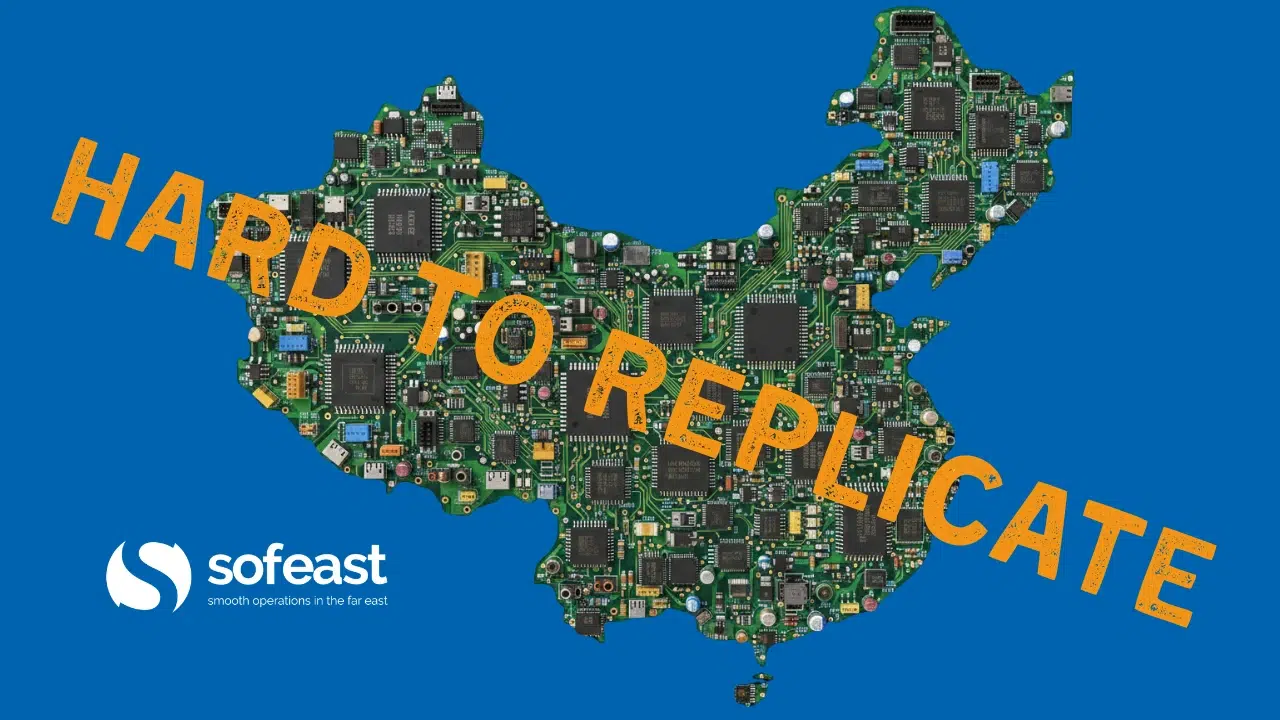
Over 20+ years, it has built something very difficult to replicate: a complete manufacturing ecosystem.

  • Dense supplier networks (from MCUs to displays, and from plastic enclosures to advanced coatings)
  • Massive manufacturing capacity
  • Skilled labour at scale
  • Fast prototyping iterations, industrialization, and ramp-up

As the hosts of the PRG podcast put it in a recent episode:

“China has built the largest electronics manufacturing ecosystem in the world.”

That ecosystem is the key point. It’s not just about lower labor costs anymore. It’s about having everything, components, tooling, assembly, and testing, within a tight geographic cluster.

That’s why, for years, there was no question for many businesses about whether they’d manufacture in China; of course, they planned to do so.

What changed: from efficiency to risk management

Several events forced companies to rethink that approach:

  • US–China trade tensions and tariffs
  • Export controls on critical technologies
  • COVID-era supply chain disruptions
  • Rising logistics costs and delays

Many businesses discovered they were overly dependent on a single region. When that region was disrupted, production stalled.

As highlighted in the PRG podcast discussion:

“Single-region supply chains are really fragile.”

This shift is fundamental. Companies are no longer optimising only for cost; they are now balancing cost with risk, continuity, and flexibility.

China Plus One: misunderstood but essential

One of the most talked-about strategies today is China Plus One.

But it’s often misunderstood.

It does not mean leaving China.

In most cases, China plus one means:

  • Keeping existing production in China
  • Adding a second manufacturing location (e.g. Vietnam, India, Malaysia, Mexico)
  • Gradually shifting a certain proportion of volumes (typically starting with new products, not existing ones) outside China

The goal is simple: reduce dependency without breaking what already works.

This matters because for many products, China remains the most practical option. Moving everything out is often unrealistic, especially for complex or high-volume electronics.

You might enjoy listening to: Manufacturing in China for the U.S. in 2026: Tariffs, China+1, and the Real Cost of Moving Production [Podcast]

The reality: diversification is harder than it sounds

While the strategy sounds straightforward, execution is not.

Large companies can diversify more easily. They already have:

  • Global supplier networks, including some suppliers who can manage the relocation of production
  • Procurement teams
  • Volume leverage

Look at Apple’s rapidly expanding operations in India and Vietnam, for example.

However, startups and SMEs face a very different reality.

Limited budgets, lower volumes, and fewer resources make it difficult to build parallel supply chains. In some cases, attempting to diversify too early can increase cost and complexity without reducing overall risk.

There’s also a broader structural challenge.

Rebuilding manufacturing in regions like the US or Europe takes time, often decades. Skills, supplier networks, and infrastructure don’t appear overnight. Despite bringing manufacturing back to the USA being one of President Trump’s key wishes for his second term, the manufacturing jobs simply haven’t materialized yet (and analysts have doubts if they ever will, despite the political will).

What should companies do now?

There’s no universal solution, but a few principles are becoming clear:

  1. Avoid having all of your eggs in one basket
    If one country, supplier, or component can stop your production, that becomes a risk worth addressing at some point.
  2. Be selective about diversification
    Don’t move everything. Start with one product, see how things work out.
  3. Think in regions, not countries
    Instead of replacing China with Vietnam, build a more regionalised model (Asia, Americas, Europe).
  4. Align strategy with your scale
    What works for Apple won’t work for a startup. Your supply chain strategy must match your resources.

The supply chain shift

We are entering a different era of manufacturing.

For years, companies asked us three questions: How do we reduce costs? How do we cut lead times? How do we ensure there are no widespread quality issues?

Now they’re also asking a fourth question: How do we keep producing when things go wrong?

That’s a harder problem. And it requires a different mindset, where the more desirable supply chain is the durable one, not just the cheapest or most convenient.

Thinking about moving some production out of China? If it’s for electronics, we can help you do so to India or Malaysia.

Exploring Apple’s Chinese supply chain and manufacturing success, but are they too reliant on China? [Podcast]

Apple's recipe for Chinese supply chain and manufacturing success, but are they too reliant on China [Podcast]

Renaud and Adrian explore how Apple built a successful Chinese supply chain, how they control bringing new products to market, and whether its ‘reliance’ on China might be a double-edged sword. Their ‘best practices’ could benefit SMEs who are also developing and manufacturing new products in China and Asia, so let’s see how Apple gets it right.


Listen here!

Listen: to the podcast episode

Watch: on Youtube


Episode sections

  • 00:00 – Greetings.
  • 01:20 – The topic: A focus on Apple. How they built a successful supply chain in China, and whether are they too reliant on China now.
  • 04:00 – “I want to make a product with Apple’s quality and design.” Realistic?
  • 08:06 – Finding new suppliers to keep the pressure on their supply chain and get the best deal possible.
  • 11:26 – Apple has 15k of their own staff in China. What does this mean?
  • 17:47 – Apple may not own the factories, but they do own a lot of the equipment. Why?
  • 23:32 – They get sub-suppliers to commit to building custom parts just for Apple in large quantities.
  • 27:27 – The benefits of using CMs like Foxconn.
  • 29:29 – Giving away too much control and technical know-how is not the Apple way.
  • 35:27 – Apple’s attempts to diversify supply chains into Vietnam and India.
  • 40:07 – Will/should they leave China entirely?
  • 49:48 – Wrapping up.


Related content…


Listen, rate, & subscribe to the ‘China Manufacturing Decoded’ podcast on your favorite provider

More episodes are coming, so remember to rate us and subscribe! You can find us on:

If you enjoyed this episode, don’t forget to give us a 5* rating and share it with your network if you enjoy listening!

Latest Asia Manufacturing Trends and Upcoming Regulations Overview (Dec ’22)

Latest Asia Manufacturing Trends and Upcoming Regulations Overview (Dec ’22)

On December 13th 2022, our CEO Renaud joined Global Sources‘ Tom McGrenery for a fireside chat about some of the broad Asian manufacturing trends we’ve seen recently, as well as the new regulatory frameworks for manufacturing, new technologies or services. They also cover some of the new American and European regulations that are coming up and are likely to impact importers, and what steps you should take right now in your business to tackle them.

The discussion went out live, but in case you missed it here’s the video that you can now play at your convenience and enjoy:


In summary, they discuss these three key trends:

  • Concerns over manufacturing in China given what many importers perceive as a more unstable and risky environment there now.
  • Where to move manufacturing to outside of China if diversifying one’s supply chain. Vietnam’s capacity is quite full and they lack export-ready manufacturing units. India is picking up the slack and developing its capacity now and is a good option for many product types.
  • Upcoming regulations affecting manufacturers in the EU and USA – in particular the drive for more transparency over one’s supply chain including the American UFLPA (Uyghur Forced Labor Protection Act), EU MDR (Medical Devices Regulation) 2021, EU EPR Extended Producer Responsibility 2022 (a company must be paid to recycle the products at end of life), and Recycled Plastic Food Contact Materials 2022 (documenting the manufacturing process of these materials). They also talk about the EU ban on modern slavery, ESG reporting for investor-driven improvement requirements, and the EU Ecodesign regulation and which product types it targets soon.

They also share these tips on steps you can take now to deal with the above:

  • Gather supply chain information (key materials and components and where they’re from, etc) for a future lifecycle assessment
  • Include checkpoints in your supplier qualification process that penalise suppliers who won’t provide supply chain/product/material information so you can weed them out
  • Gain an understanding of the environmental impact of your products (energy usage, materials used, recyclability, where they are made so modern slavery is avoided, etc)

*****

Let us know if this video has made you think of any questions about manufacturing in China or elsewhere in Asia or something more specific about getting your product made.

Can We Remove China From Our Supply Chains? [Podcast]

Can We Remove China From Our Supply Chains?

Following China’s 20th Communist Party Congress in October ’22, the West has been left with questions about China’s future intentions and how this affects manufacturers with a Chinese supply chain. We all remember how the Covid lockdown in China around March 2020 severely disrupted supply chains, so what if this occurs again (as is a risk with the continuing zero-covid strategy they’re following)? What if China’s political relations with Western countries break down? What if there’s a war involving China? One solution to reduce supply chain risks involving China is to remove China from your supply chain completely, but how realistic or possible is this? Renaud and Adrian investigate here.


Listen here!

Listen: Pursuing A ’Zero China’ Supply Chain.

Watch: On YouTube


Episode sections

  • 00:00 – Greetings and introducing the topic: Zero China.
  • 01:52 – What is Zero China?
  • 03:14 – Looking back in history at the origins of the ‘China + 1’ approach.
  • 04:57 – Garment companies: early adopters of a diversified supply chain.
  • 07:34 – After 2015 politics started changing in China…spurring businesses to adopt China+1/many policies.
  • 18:29 – Looking at Apple as an example.
  • 27:46 – How about SMEs with manufacturing in China? What options do they have now?
  • 35:32 – How about pursuing Zero-China?
  • 43:51 – Should Western companies with Chinese supply chains right now be panicking?
  • 48:02 – Wrapping up.


Related content…


Listen, rate, & subscribe to the ‘China Manufacturing Decoded’ podcast on your favorite provider

More episodes are coming, so remember to rate us and subscribe! You can find us on:

If you enjoyed this episode, don’t forget to give us a 5* rating and share it with your network if you enjoy listening!

How Sourcing From India Has Changed In 2022 (Part 2: Chennai & Hubli-Dharwad)

How Sourcing From India Has Changed In 2022 (Part 2 Chennai & Hubli-Dharwad)Following my recent trip to India to tour a lot of component manufacturers and get to grips with what it’s like as a supply chain base for today’s importers who’re interested in alternatives to China in June 2022, I wrote part 1 of this post about sourcing from India where I focused on key manufacturing trends and what I learnt from visiting suppliers that you can benefit from knowing, too.

On this occasion, I concentrated on two key manufacturing areas in South India, Chennai and Hubli-Dharwad. Our employees local to those cities helped set up the meetings. Here’s what I learnt…

Continue reading “How Sourcing From India Has Changed In 2022 (Part 2: Chennai & Hubli-Dharwad)”

How Sourcing From India Has Changed In 2022 (Part 1: Trends & Manufacturing Landscape)

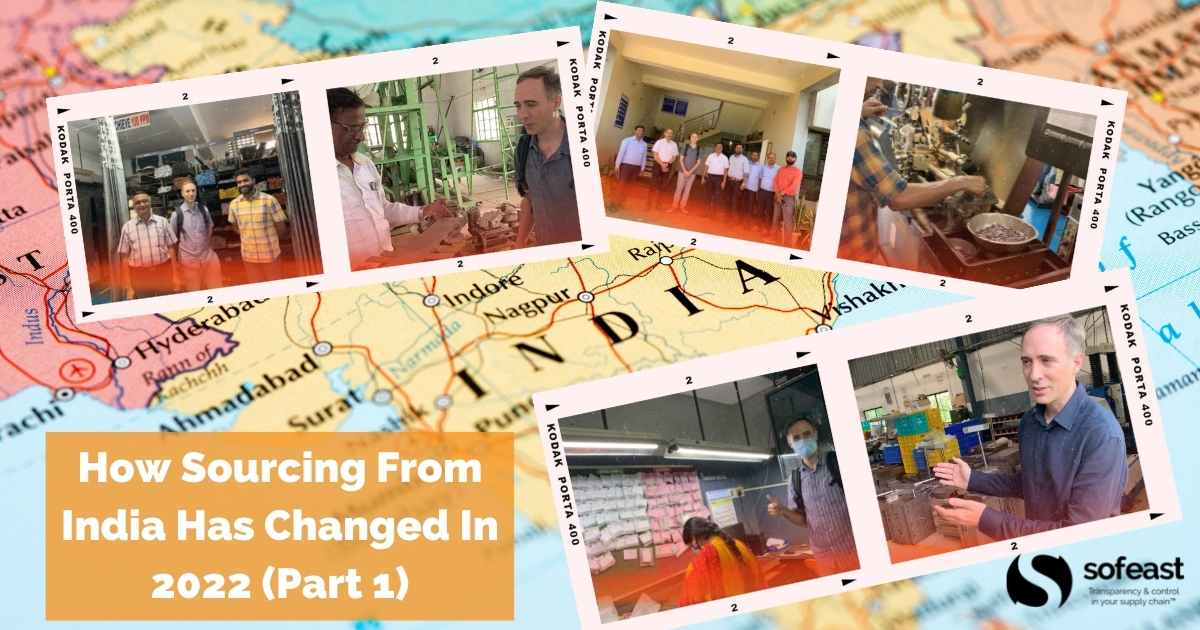
How Sourcing From India Has Changed In 2022 (Part 1)For the past 2 weeks in June 2022, I’ve been travelling around India on a mission to discover how sourcing from India has changed since my last visit around a decade ago.

I’ve seen a number of different component factories, spoken to a lot of their owners and managers, and observed the sourcing and manufacturing landscape in some of India’s key manufacturing areas.

Today a lot of importers with supply chains in China, including some of our clients, are starting to question whether moving some of their sourcing and manufacturing out of China is a good idea given geopolitical tensions occurring between China and the West. So, is India a potential destination? Let’s take a look…

Continue reading “How Sourcing From India Has Changed In 2022 (Part 1: Trends & Manufacturing Landscape)”

The War In Ukraine’s Effect On Global & China Supply Chains [Podcast]

The War In Ukraine's Effect On Global & China Supply Chains [Podcast]In this episode, our CEO Renaud tackles the difficult topic of the war in Ukraine with Adrian from the team.

Aside from the terrible and upsetting toll that this war is taking on the people of Ukraine, could its effects be even wider? Will the war negatively affect supply chains around the world? How about in China, specifically?

We’ve seen how quickly sanctions have levelled Russia’s economy. Renaud also wonders if this could be a portent of what might occur in a future decoupling from China, too.

If you’re concerned about the disruption of supply, diversifying supply chains could help mitigate the effects of events like wars. The episode closes with some guidance on reducing supply chain risks and diversifying.


Listen here!

Listen: Could War In Ukraine Affect Chinese Supply Chains? 

Watch on Youtube


Episode sections

  • 00:00 – Greetings & introduction.
  • 01:15 – Some thoughts about the war in Ukraine.
  • 04:26 – The speed of Western sanctions against Russia and their effects.
  • 07:57 – Will sanctions on Russia affect China?
  • 10:34 – Logistics costs.
  • 12:28 – Could the decoupling happening to Russia happen to China, too?
  • 17:24 – Is the risk of a sudden decoupling from China higher or lower now?
  • 20:29 – What can be done to reduce supply chain risks in this time of instability?
  • 25:06 – Wrapping up. 


Related content…


Listen, rate, & subscribe to the ‘China Manufacturing Decoded’ podcast on your favorite provider

There are more episodes to come, so remember to rate us and subscribe! You can find us on:

If you enjoyed this episode, don’t forget to give us a 5* rating and share it with your network if you enjoy listening!

Manufacture in China, Vietnam, India, or Elsewhere in 2021? [Podcast]

Manufacturers continue to plan the move of some or all of their supply chains out of China? But where next?

Perhaps the word ‘exodus’ is a little over-dramatic, but there has certainly been a marked rise in companies trying to diversify their manufacturing operations away from China alone since around 2018. One reason is the US/China trade war and the punitive tariffs imposed by the US government on some ‘Made-In-China’ goods, but we can’t discount the coronavirus pandemic, as the manufacturing shutdown in Spring 2020 sent shockwaves through the industry and really hurt many companies who were unable to get their products or components from China.

Manufacture in China, Vietnam, India, or Elsewhere in 2021So how about your business? If you’re manufacturing in China right now, is moving some operations to another country, perhaps in SE Asia, or India, part of your plan for 2021 and beyond?

This is what Renaud explores in this episode, the final episode of 2020! So listen and learn about the situation in China, other local countries, and why ‘leaving China’ may not be as easy or realistic as the media seem to make it appear.


Just hit the play button to start listening..!

Listen to the episode right here 👇👇👇

🎧 Manufacture in China, Vietnam, India, or Elsewhere in 2021? 🎧

Here’s a summary of key sections of this episode:

What has caused some companies to move operations away from China in recent years.

Is the trend of moving supply chains out of China still realistic and ongoing? 

✅ What challenges do smaller companies face when trying to make the switch? 

✅ Why companies who have designed and developed their own products are at an advantage. 

✅ Is it possible to do assembly AND get components in Vietnam? 

✅ Foxconn’s new Apple plant in Northern Vietnam. 

✅ Is assembly and packing done in SE Asia a way to circumvent US tariffs? 

✅ Has India benefited from companies moving out of China yet? 

✅ What does a Biden presidency mean for American companies? 

✅ How have Chinese exports to the US and other countries started booming in 2020 due to the pandemic?

✅ How are logistics coping in late 2020 due to the boom in China?

✅ Are non-American companies also trying to move away from China? If so, why?

✅ If your business sells in the China market, is it wise to move operations out of China?


Keep reading about how to maintain and improve results from Chinese manufacturers here:

Take a look at these blog posts and news articles which accompany this topic:

*******

Have you already moved some manufacturing out of China? Is it in your plan for 2021 or beyond?

Let us know your experiences by leaving a comment, please.


Listen, rate, & subscribe to the ‘China Manufacturing Decoded’ podcast on your favorite provider 👍

There are more episodes to come, so remember to rate us and subscribe! You can find us on:

Don’t forget to give us a ⭐️⭐️⭐️⭐️⭐️ rating and share with your network if you enjoy listening! 😊