Sofeast’s CEO Renaud and Adrian from the team get together to discuss how and why to improve your visibility over your supply chain.
NOT knowing who produces your components, materials, or even assembles your products can land you in hot water if they’re found to be non-compliant and unsafe. You also risk upsetting your valuable customers if the quality isn’t right. But how will you know if you don’t know who is in your supply chain or where they are? Not all suppliers in China especially want to give this information out as it helps them control the project, but that’s not good for you.
In this episode, you’ll discover why new regulations in the West are making transparent supply chains more important than ever, the risks you face if you don’t know what’s happening, and some actionable tips you can implement to improve transparency and control.
This article explores the key factors that contribute to attracting and retaining strategic suppliers (outlined in the Kraljic matrix) while highlighting the importance of humanized supplier relationship management. By understanding the needs and aspirations of suppliers, cultivating trust, and avoiding unfavorable practices, companies can build sustainable and mutually beneficial partnerships with the best suppliers in the market.
Our CEO Renaud was recently interviewed on Proboxx‘s YouTube channel about sourcing and manufacturing in China. They’re a company that helps sellers manage logistics. We’re grateful for the invite! 😉
Specifically, he shares some advice for Amazon resellers and new product developers who are working with Chinese manufacturers.
Selecting a poorly-designed and tested product that will not be reliable and fail when in use by customers.
Choosing a manufacturer who isn’t a good fit, such as one who struggles to work to your quality standard!
You rely excessively on the supplier to design and develop your own new product, but without questioning them in detail you risk losing control of the project and not getting the desired outcome.
Pre-production samples
Pre-production samples may look great, but they’re a sales tool and not made using the same processes, staff, equipment, and tooling as in mass production. Don’t give the manufacturer the go-ahead based on this alone without planning for what happens next in the factory and going into detail on tooling and your expectations from products made using mass-production processes.
Going to suppliers with a thorough NPI plan shows that you’re a professional buyer and have the potential to be a better long-term customer, therefore they will likely allocate better resources (such as experienced staff) to your project.
Top tip for sourcing in China for Amazon and e-commerce sellers
Follow the ‘staircase approach.’ Don’t jump from ground level to the first floor, take the stairs one at a time. Giving the manufacturer a very complex and unique product with lots of custom parts increases your risks a lot. A better idea is to consider a several-year roadmap leading up to this point, where you start with a simpler V1.0 product (maybe white-labelling an existing design) to test the market. Once you have market traction and know you can trust the manufacturer, you start to iterate the product to include more unique and complicated features.
How to understand cultural differences and build relationships with Chinese suppliers?
Face-to-face meetings are very effective in China and now that it’s possible to visit, buyers should consider flying to China.
It’s important to send them the right signals so they see you as a professional buyer, take you seriously, and will be willing to devote the right resources to your project. That lays the groundwork for building a relationship.
Part of being ‘professional’ is setting up regular calls rather than just sending emails so they see your face and get regular feedback and you taking responsibility to send information, such as quality standard, etc, to the supplier in a structured document.
Partnering too closely with a supplier, even if they’re very responsive and you have a good relationship, could be dangerous, because if they work on product design and development, they may assume some ownership over the IP which can be trouble for buyers later on. By all means, build a good rapport, but make the relationship clear.
Navigating the tooling fabrication process in China
Assess whether you need to work directly with a plastic supplier or not.
Work with an industrial designer and mechanical engineer to create a manufacturable design and go to the tooling fabricator with precise drawings and information about how the product works, will be used, stored, etc.
Do your homework on what you need from tooling and be prepared to specify the key details, such as hard steel for durability.
Research the fabricator, for example, do they outsource the fabrication of the tooling to a different workshop who are not technically proficient?
Get quotes for the tooling that includes how long it takes, steel type used, number of shots it can provide, cost of the plastic part once produced, etc. If the tooling is cheaper but the unit cost is more, they could be over-invoicing, so be wary of that.
Once agreed, sign a tooling agreement outlining the project details, who owns the tooling, how the tooling can be removed by you, and steps to be taken for non-performance.
Common tricks Chinese manufacturers pull if they see that a buyer is not doing due diligence
If Chinese manufacturers see a buyer who seems inexperienced and/or isn’t doing thorough due diligence (which may include doing a legal records check, an on-site factory audit, etc), they may play some of these tricks because they feel that you’re too trusting, or even gullible.
If you only have one point of contact, that person may leave the company and transfer your order/s to another factory without telling you meaning that an unknown factory is producing your goods.
5 things to do for a successful outcome when working with Chinese suppliers.
Find a supplier that has good systems in place for quality, management, processes, etc. This will ensure you have the best chance of getting good quality, on-time shipments, reliability, safety, and more.
Source a supplier who pays attention to your needs and wants to do a good job.
The supplier you find gives you relatively stable pricing.
You’re given transparency into your supply chain, so you are able to comply with environmental and slave labor regulations, for example.
Your IP is respected and the supplier doesn’t misuse it or treat it carelessly.
Changes to sourcing and manufacturing in China in 2023
Zero-Covid is over, so access to China has normalized and buyers can visit fairly easily now.
The relationship between China and the USA has continued to degrade, causing mainly American companies to explore moving manufacturing out of China. A positive here is that this does free up capacity in good Chinese suppliers for buyers from other countries, however, it also means that some suppliers will go out of business if they lose major customers in this way. Visiting China to check on the ‘health’ of our supplier’s business is important for that reason.
More automation is being implemented to compensate for increasing staff wages.
China has been affected by economic disruption post-Covid the same as in the West, so there is a slowdown there.
By the way…Proboxx would also like to extend the opportunity for a $100 shipping discount to Sofeast readers or viewers of the video interview. You simply just need to mention “Sofeast” when reaching out to Proboxx.
Renaud and Adrian explore how Apple built a successful Chinese supply chain, how they control bringing new products to market, and whether its ‘reliance’ on China might be a double-edged sword. Their ‘best practices’ could benefit SMEs who are also developing and manufacturing new products in China and Asia, so let’s see how Apple gets it right.
Renaud and Adrian cover a topic that most importers, regardless of where they are manufacturing in the world, will value: cost-cutting!
There are 9 measures you could use to reduce your business costs here ranging from fairly low-hanging fruit, such as adjusting which product inspections and laboratory tests you perform (maybe you can actually get away with fewer or by focussing on a different kind at a different stage of production) to larger projects such as near-shoring your production in order to escape higher manufacturing costs, tariffs, and lead times due to distance.
There’s something for everyone here, so get started by listening below, and we hope you find a way to trim your own costs!
00:41 – Pre-chat: Our team member’s story when she ended up in a quarantine hospital in China. This episode can be heard here and real photos of the conditions are included: Travel To China In 2022 – Don’t Test Positive!
02:48 – Today’s topic: 9 Ways for importers to save money.
03:29 – 1. Avoid big problems on the manufacturing & transportation side.
08:18 – 2. Avoid big problems on the distribution side.
14:04 – 3. Re-engineer your products.
21:42 – 4. Place larger orders with fewer key suppliers to benefit from lower pricing.
23:17 – 5. Use competition among your suppliers to drive down prices.
26:08 – 6. Avoid buying via a trading company if they don’t add value that warrants the extra cost (in most cases).
29:49 – 7. Relocate manufacturing.
31:51 – 8. Internalize manufacturing (DIY).
36:21 – 9. Spend money more wisely on inspections, testing, etc.
Around 10 to 20% of the time suppliers demand payment from our clients before they allow an auditor, or even just a visitor, to visit the factory. As you can imagine, this makes factory audits and quality inspections difficult! Let’s unpack 7 reasons why this situation occurs and some tips for importers to get around the issue…
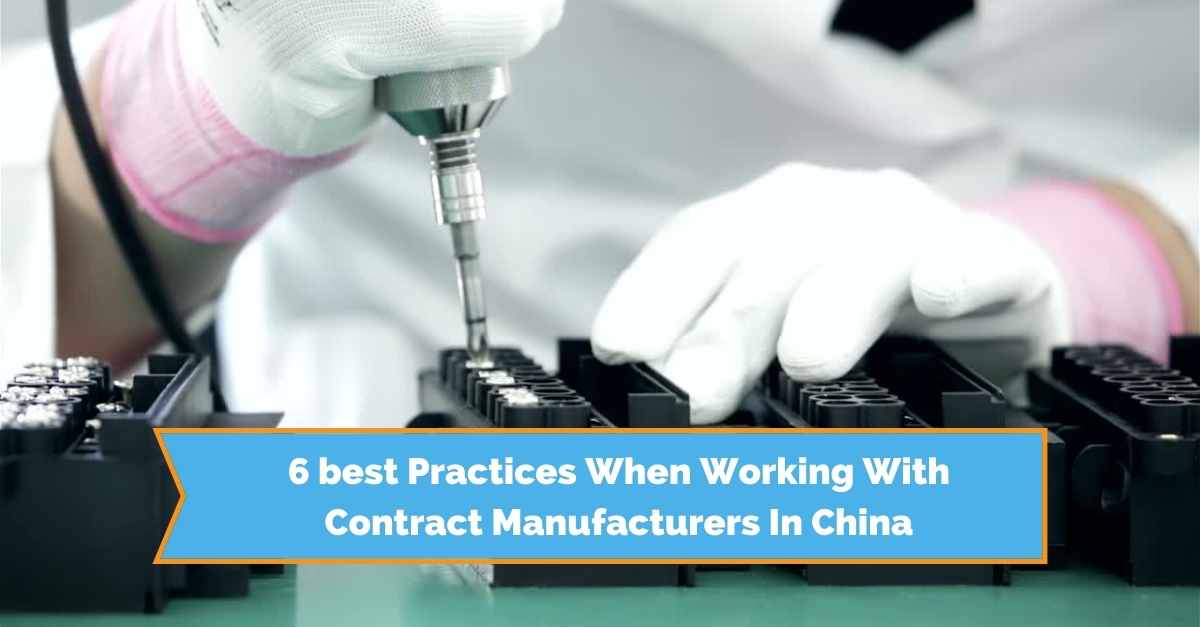
As we’ve written before, importers have a choice of supplier types when sourcing a manufacturer to outsource production to in China. Let’s assume that you’ve discounted working with an OEM or ODM, and your focus is on findingcontract manufacturers in Chinato work with.
What are the best practices you should be following to have a productive relationship?
2021 has been an eventful year, to say the least! Here at Sofeast, we have continued to publish regular blog posts in order to provide advice for everyone who has outsourced manufacturing, supply chains in Asia, new products in development, and more.
With the pandemic still raging, access to many Asian countries has been difficult for importers, so we’ve tried to keep lines of communication open in the blog, as well as professionally acting as your ‘boots on the ground’ here for many clients requiring inspections, audits, sourcing, product testing, R&D, etc.
In case you’ve missed some of our top posts this year, here are the top 10 in ascending order of engagement…
It can be very frustrating when a Chinese supplier isn’t responding to your messages when you have an order that you’ve already paid for in production, have urgent issues to discuss, or simply want to place an additional order.
Unfortunately, this isn’t unusual and in this post, you’ll see an example of this scenario and some guidance on the next steps you could take to improve the situation.
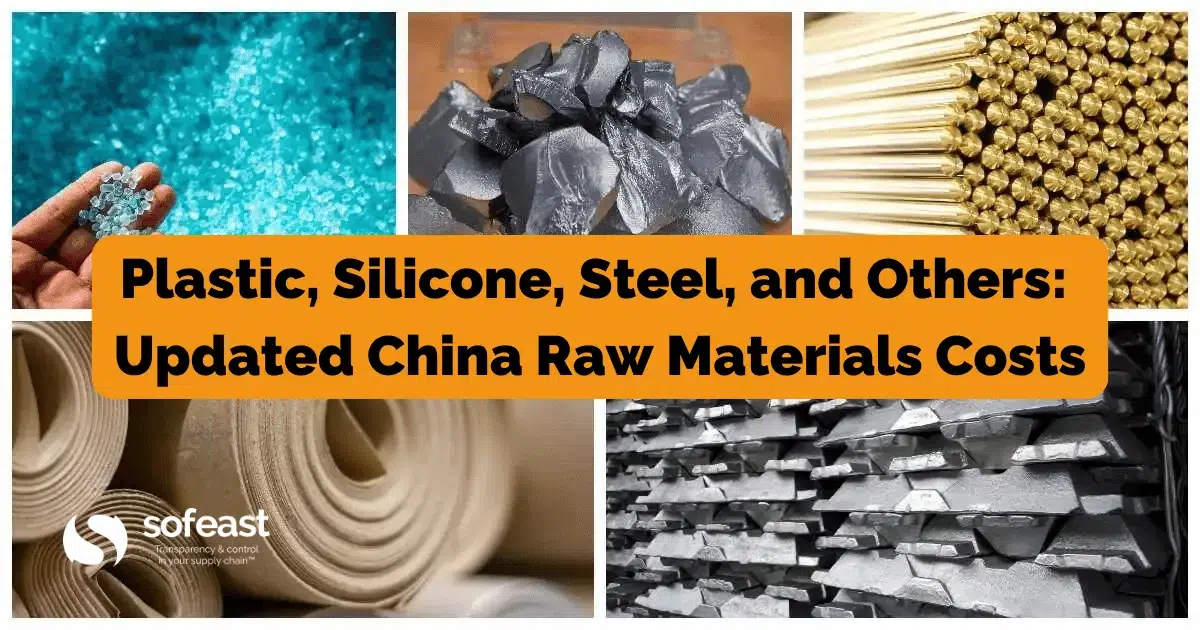
Here’s an August update to add to our posts on the costs of China raw materials this year (2021) when many importers have been dismayed by rising raw material prices. For this reason, we’re trying to give you some visibility over the costs every couple of months or so, so you’re able to understand the landscape here and plan ahead.
We’re tracking the raw material costs for some key materials and here’s the up-to-date data for you:
As you can see, if you examine the tail end of the graph, prices have somewhat stabilised although at a higher cost than a year ago (in some cases like silicone and ABS, much higher).
Some key observations this month:
Brass (Φ8-20T2): lower demand (it’s the traditional off-season).
Paper for color boxes: costs continue to derease and this trend might continue for now.
Epoxy Resin: cost has increased because some of the raw materials (epoxy chloropropane & bisphenol A) got pricier.
If your supplier just isn’t working out, maybe sourcing a new supplier will help you find one who can offer you better prices and more? If so, there’s no need to fear switching from your current supplier to a new one if you’re prepared: How To Switch To A Newer, Better Chinese Manufacturer? [eBook].
We hope this is helpful. Our mission at Sofeast is to help importers have transparency in their supply chain and to give them more control. And this information is critical to have some visibility into your manufacturer’s costing.
By the way, you can always contact us if you have any questions about whether a manufacturer’s quote is reasonable.



 Sofeast’s CEO Renaud and Adrian from the team get together to discuss how and why to improve your visibility over your supply chain.
![Sourcing & Manufacturing In China For E-Commerce Sellers [Interview By Proboxx]](https://artbyraksha.sofeast.com/wp-content/uploads/2023/04/Sourcing-Manufacturing-In-China-For-E-Commerce-Sellers-Interview-By-Proboxx-certification.jpeg)
![Exploring Apple’s Chinese supply chain and manufacturing success, but are they too reliant on China? [Podcast]](https://artbyraksha.sofeast.com/wp-content/uploads/2023/01/Apples-recipe-for-Chinese-supply-chain-and-manufacturing-success-but-are-they-too-reliant-on-China-Podcast.jpg)
![9 Cost-Cutting Measures Importers Will Love! [Podcast]](https://artbyraksha.sofeast.com/wp-content/uploads/2022/10/9-Cost-Cutting-Measures-Importers-Will-Love.jpeg)