China & India IN. The USA OUT? Tariffs, Alliances & Supply Chains [Podcast]

Global manufacturing is entering a more volatile era. Tariffs are changing with little warning, political alliances are becoming less predictable, and supply chains that once felt stable now carry real strategic risk. In this episode of China Manufacturing Decoded, Adrian and Renaud discuss what these shifts mean in practice for companies that actually make physical products. Using the latest U.S.–India tariff deal as a case study, they explain why China still matters, why India is becoming increasingly important, and how smart manufacturers should think about “China + 1,” not as a political statement, but as a practical way to reduce risk, control costs, and keep products flowing to market.

Listen here

Listen to the episode or watch on YouTube

Episode Sections:

  • 01:07 – The big question: are U.S. allies turning toward China, or simply hedging?
  • 07:29 – Evidence that many countries are deepening economic ties with China — and why China’s export machine keeps getting stronger.
  • 15:21 – Economics vs. defense: why Europe can engage China commercially while still relying heavily on the U.S. and NATO for security.
  • 19:07 – Why India is the most interesting case after its border clash with China and its earlier “de-risking” push.
  • 24:27 – How the U.S.–India negotiation unfolded and what led to the flat 18% tariff deal.
  • 26:10 – What the deal means for electronics and why India becomes a serious “China + 1” assembly option.
  • 30:08 – India’s new trade win with the EU — zero tariffs for many goods, and why opening will stay gradual.
  • 32:04 – Signs of an India–China thaw: faster customs, pressure to buy Chinese machinery, and the looming EV debate.
  • 34:42 – Practical takeaway for manufacturers: keep China for depth, add India for resilience (and Sofeast’s India capability)

Further reading

Image credit

“Prime Minister Keir Starmer visits China” by Simon Dawson / No 10 Downing Street on Flickr (https://flickr.com/photos/49707497@N06/55065624892), licensed under CC BY 4.0 (https://creativecommons.org/licenses/by/4.0/)

US–China Trade Truce (Oct 30, 2025): What Changed & What US Importers Should Do Next [Podcast]

US–China trade just took a small step toward de-escalation. Following the October 30, 2025, Trump–Xi meeting, several practical changes are currently relevant to importers: a modest tariff easing on certain lines, a one-year pause on rare-earth/magnet export controls, and continued Section 301 exclusions for selected categories. None of this constitutes a full reset, but it does provide a clearer 6–12 month planning window.
In this episode, we translate headlines into actions: how to re-cost your top SKUs, where HS code discipline pays off, when DDP quotes should come down, and how to build resilience, whether that’s buffer stock on critical magnets, design tweaks to reduce rare-earth dependence, or parallel routes via India/Malaysia/Mexico where substantial transformation truly applies. We also scan Beijing’s signals so you know what might snap back and what’s likely to stick.

Listen here

Listen to the episode or watch on YouTube

Episode Sections:

  • 00:32 – Setting the scene: Trump–Xi met in South Korea (Oct 30). Expectations vs reality.
  • 01:16 – Renaud’s first take: anticipation vs limited outcomes
  • 04:47 – Rare earths & magnets: one-year pause on export controls and why it matters
  • 07:22 – Tariffs: tone softens; specific cuts hit “fentanyl punishment” lines (20%→10%)
  • 09:43 – What that means to landed cost (example: 54%→44%)
  • 11:06 – Planning stability: from 90-day chaos to ~12 months of predictability
  • 11:47 – Fentanyl precursors: enforcement complexity & policy trade-offs
  • 14:00 – Section 301 exclusions extended (medical, electronics, HVAC, solar examples)
  • 16:59 – What importers should do: horizons, HS discipline, alternatives, and risk
  • 19:20 – Substantial transformation & multi-country routing: when it makes sense
  • 22:00 – DDP renegotiations & compliance exposure
  • 22:59 – Buffer stock & design tweaks to reduce magnet dependence
  • 26:33 – Long-term trajectory: conflict risk and diversification logic
  • 28:03 – China reactions round-up & closing thoughts
  • 30:42 – Outro

Key takeaways

  • A short-term easing, not a reset: tariff pressure drops ~10 percentage points on certain lines; 301 exclusions continue; rare-earth export controls paused ~1 year. Plan, but don’t relax.
  • Cash margin matters: 10 pts off tariffs can be life-or-death for tight-margin SKUs; revisit pricing, promos, and purchase cadence now.
  • License regimes can snap back: magnets/rare-earths remain a geopolitical lever; hold some buffer stock and consider design alternatives.
  • Diversify smartly: alternate assembly locations only pencil out if the transformation is substantial and the lead-time/logistics hit is acceptable.

Extra resources to dive deeper

🎧 Listen, rate, & subscribe to the ‘China Manufacturing Decoded’ podcast on your favorite provider

More episodes are on the way, so remember to rate us and subscribe! You can find us on:

Tariffs, Trade War, and the Factory Floor: Buyer Risks in 2025 [Podcast]

Tariffs, shifting trade policies, and unpredictable order patterns are creating a “stop–go” manufacturing environment in China. For buyers, this means unexpected quality issues, capacity crunches, and supply chain instability.

In this episode of China Manufacturing Decoded, Renaud Anjoran and Adrian from the Sofeast team break down the real-world impact of the US–China trade war as of August 2025. Drawing from first-hand observations in Chinese factories, they explain how rapid swings in orders, staffing changes, and material substitutions can put your product quality and timelines at risk, even if you’re not selling to the US.

Listen here

Listen to the episode or watch on YouTube

Show sections

  • 00:00 – Introduction and why China’s manufacturing sector is unstable right now
  • 01:01 – How US–China tariffs create a “seesaw” effect: front-loading orders, sudden slowdowns, and ripple effects through the supply chain
  • 05:02 – Inside the factory: whiplash in capacity, fixed costs, and the risks of unplanned subcontracting
  • 11:16 – Factory cost-cutting responses: wage cuts, temporary workers, and seasonal hiring challenges
  • 18:39 – Order bunching, Chinese New Year parallels, and the quality risks of untrained staff and inspectors
  • 25:00 – Material substitutions without buyer approval, visibility in the supply chain, and controlling quality under instability
  • 32:45 – Building stronger relationships, smoothing production, and financing suppliers to maintain stability
  • 37:45 – Wrap-up and buyer takeaways

Extra resources

🎧 Listen, rate, & subscribe to the ‘China Manufacturing Decoded’ podcast on your favorite provider

More episodes are on the way, so remember to rate us and subscribe! You can find us on:

Vietnam-US Trade Deal: Trump’s Tariff Tactics & Transshipment Troubles [Podcast]

Episode 281 of the China Manufacturing Decoded podcast* explores the recently announced trade agreement between the U.S. and Vietnam, what it includes, and the ripple effects for global supply chains, especially for American importers seeking to pivot from China to Vietnam.

On July 2, 2025, the U.S. and Vietnam announced a new trade framework. While it avoids the most extreme tariffs previously floated (up to 46%), it still introduces major changes:

  • A 20% blanket tariff on most Vietnamese exports to the U.S.

  • A 40% tariff on goods deemed to be “transshipped”—those originating elsewhere (often China) but routed through Vietnam

  • Zero tariffs on U.S. exports to Vietnam, including American-made SUVs and industrial products

  • New Vietnamese commitments on intellectual property, labor standards, and purchasing more U.S. goods

It’s not a formal treaty…yet. But it sets the tone for enforcement and future negotiations across Asia.

*Hosted by Adrian from the Sofeast Group and joined by our CEO, Renaud Anjoran.

Listen here

Listen to the episode or watch on YouTube

Show sections

  • 00:00 – Intro: What’s in the New US–Vietnam Trade Deal?
  • 00:48 – Liberation Day Tariffs and the Road to Negotiation
  • 03:04 – What’s in the Deal: 20%, 40%, and Zero Tariffs
  • 05:09 – Understanding Transshipment and Its Penalties
  • 08:09 – Can Enforcement Work? Customs and Certification Challenges
  • 10:14 – Regional Repercussions: Will Other Countries Face Pressure?
  • 13:12 – What Importers Should Do Now to Stay Compliant
  • 15:03 – U.S. Strategy: Vietnam as a Geopolitical Ally
  • 18:18 – Could This Model Expand to India and ASEAN?
  • 22:46 – Final Takeaways and Next Steps for Importers

What importers need to do next

If you’re sourcing from Vietnam, this episode is a must-listen. Here are some of the hosts’ top tips:

  • Double-check your product origin: U.S. Customs will expect proof of transformation, not just an invoice from Vietnam.

  • Plan for enforcement: The 40% tariff will hit hard if the origin can’t be substantiated.

  • Watch for policy spillover: Countries like Malaysia and Thailand may face similar pressure.

  • Don’t assume Vietnam = low risk: The U.S. now considers Vietnam’s trade balance and supply chain role strategically.

Related content

🎧 Listen, rate, & subscribe to the ‘China Manufacturing Decoded’ podcast on your favorite provider

More episodes are on the way, so remember to rate us and subscribe! You can find us on:

Tariffs, Trade Shifts & Tactics: A U.S. Importer’s Guide (Feat. Owen Haacke of Supply Chain Shark) [Podcast]

How are U.S. businesses reacting to tariffs on Chinese goods? Trade expert Owen Haacke joins us to unpack what’s happening with Section 301 tariffs, how enforcement is evolving, and what importers need to know if they’re pivoting to countries like India or Vietnam.


Listen to the episode here

Listen: to the podcast episode

Watch: on YouTube


Episode sections

  • 00:00: Meet the Guest: Owen Haacke on Trade Law and Tariffs
  • 03:08: Recent Changes in Tariff Regulations
  • 08:30: The End of De Minimis Exemption
  • 13:20: Urgency in Relocating Production
  • 17:07: Understanding Country of Origin
  • 22:57: Real-World Examples and Legal Gray Areas
  • 27:36: India, Vietnam, and the Shift Away from China
  • 32:07: Importance of Due Diligence


Related content…


Listen, rate, & subscribe to the ‘China Manufacturing Decoded’ podcast on your favorite provider

More episodes are coming, so remember to rate us and subscribe! You can find us on:

The India Shift: Exploring PCBA Sourcing and Trade Dynamics in a Changing World [Podcast]

With tariffs rising and China becoming a trickier manufacturing partner, many American importers are looking to India. In this episode, we explore the manufacturing landscape in South India, especially when it comes to sourcing PCB assemblies. You’ll gain first-hand insights from a recent trip and learn what makes India both promising and challenging.

In addition, we discuss U.S.-India Trade Relations in the context of the hot tariff war between the USA and China. Could India be a beneficiary and a good option for American businesses to pivot to?


Listen to the episode here

Listen: to the podcast episode

Watch: on YouTube


Episode sections

  • [00:00] — Intro: Why India Is on the Radar for U.S. Importers
  • [01:10] — Trade Show Trends and Shifting Attention
  • [03:52] — A Visit to Bangalore: Local Insights
  • [05:27] — PCBA Landscape: Smaller, Manual, but Growing
  • [09:27] — Government Clients Dominate, but Consumer Work Emerging
  • [12:35] — Lead vs. Lead-Free Soldering: Exporters Take Lead-Free Route
  • [14:41] — Indian Customs Challenges: Real or Overblown?
  • [16:32] — Overall Impressions of Bangalore/Southern India as a Manufacturing Base
  • [18:04] — U.S.-India Trade Relations: Opportunity Rising
  • [23:41] — The Tariff Game: Geopolitical Leverage
  • [27:54] — Challenges India Must Overcome to Scale Up
  • [35:36] — The Rise of the Indian Wider Ecosystem
  • [37:59] — Wrapping up


Related content…


Listen, rate, & subscribe to the ‘China Manufacturing Decoded’ podcast on your favorite provider

More episodes are coming, so remember to rate us and subscribe! You can find us on:

Bangalore PCBA Suppliers (Ground Level Insights – April 2025)

A few weeks ago, with a colleague from our Indian office, I spent two full days visiting a range of PCB assembly (PCBA) suppliers across Bangalore, South India. I spent time primarily in facilities in the South and West parts of the city, including the well-known Electronic City hub.

The goal? To assess the capabilities of suppliers firsthand on the ground and identify those best suited to support our electronic product builds. Here are my insights…

Continue reading “Bangalore PCBA Suppliers (Ground Level Insights – April 2025)”

Tariffs, Tactics, and Trade Shocks: Breaking Down Trump’s ‘Liberation Day’ Policy Blitz [Podcast]

In this emergency bonus episode, Renaud reacts to the significant trade policy shift announced by President Donald Trump on April 2, 2025, dubbed “Liberation Day.” This move introduced sweeping tariffs affecting numerous countries and has profound implications for global trade dynamics, as we shall see.

One thing is clear: the global sourcing game just changed dramatically. Importers and manufacturers alike must prepare for more unpredictability, faster pivots, and potentially, more tariffs. Stay vigilant—and start thinking a few moves ahead.


Listen to the episode here

Listen: to the podcast episode

Watch: on YouTube


Episode sections

  • [00:00] Introduction & Overview
  • [01:00] The April 2nd Announcement Breakdown
  • [04:10] China’s Tariff Reset and Its Uncertain Future
  • [06:00] Emerging Asian Hubs Under Pressure
  • [08:00] Legal and WTO Considerations
  • [10:00] Importers’ Reactions and Strategic Planning
  • [13:00] Impact on Chinese Manufacturers
  • [17:00] Nearshoring and the Mexico Loophole
  • [21:00] India’s Position in Global Sourcing
  • [25:00] Strategic Takeaways and Future Outlook

Related content…


Listen, rate, & subscribe to the ‘China Manufacturing Decoded’ podcast on your favorite provider

More episodes are coming, so remember to rate us and subscribe! You can find us on:

Trump Adds ANOTHER 10% Tariff To Chinese Products [BONUS Podcast]

In this bonus episode of China Manufacturing Decoded, Renaud discusses President Trump’s controversial new announcement that’s stirring up economic tensions with China as he has decided to double existing tariffs on Chinese goods to 20%, marking a significant escalation in the ongoing trade conflict between the world’s two largest economies.

Let’s look into why he has taken this action, how American importers may be affected, and also about how the trading relationship between the USA and China may evolve moving forward.

Continue reading “Trump Adds ANOTHER 10% Tariff To Chinese Products [BONUS Podcast]”

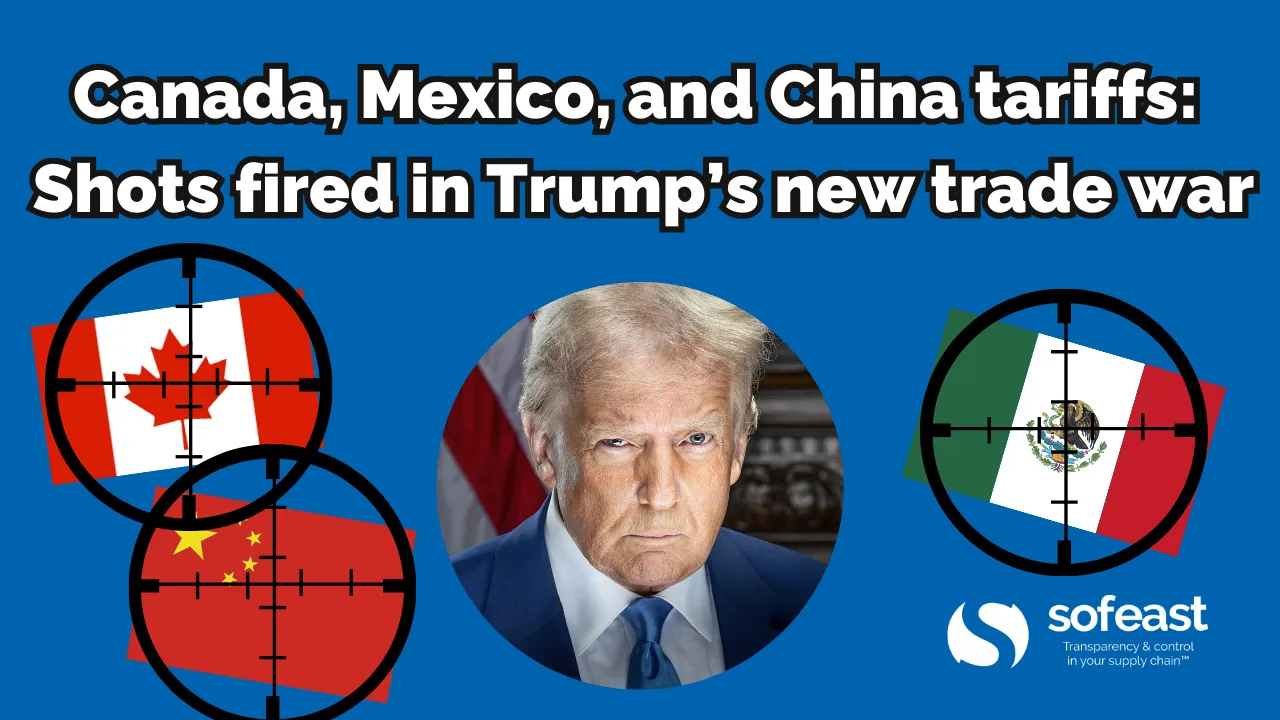
Canada, Mexico, and China tariffs: Shots fired in Trump’s new trade war

As of Jan 31 2025, President Trump declared a national emergency and invoked the International Emergency Economic Powers Act (IEEPA)* to impose additional tariffs on imports from China, Canada, and Mexico (although Mexico and Canada’s tariffs have now been paused as mentioned later). He has placed a 10% tariff on Chinese goods (in addition to existing tariffs where relevant), and a 25% tariff on Canadian and Mexican goods, with Canadian energy products subjected to a lower 10% rate. The tariffs are claimed to be necessary to reduce the risks posed to the USA by illegal immigration and fentanyl, with all three countries blamed for these issues.

Shots have well and truly been fired now, so now what?

*This Trump administration communique represents their points of view, so feel free to read additional resources on the topic.

Continue reading “Canada, Mexico, and China tariffs: Shots fired in Trump’s new trade war”