Should Hardware Startups Manufacture in China, Mexico, or Vietnam to Reduce Tariffs?

American startups preparing to launch a Kickstarter campaign are often worried about US tariffs on China-made products. Do you still manufacture in China, or try to do so in Mexico, or Vietnam, in order to reduce potential tariffs?


Do we manufacture in China, Mexico, or Vietnam?

Let’s consider a hardware project which includes electronic components, injection-molded parts, PCB assembly (PCBA) work, and final assembly. There are several possible hardware product launch supply chain options that could work:

  1. Manufacture everything in China and accept the tariff risk.
  2. Make most components in China, then do PCBA in Mexico and final assembly there, hoping Mexico would become the country of origin.
  3. Do PCBA in Mexico, ship the boards back to China, and complete final assembly there.
  4. Do PCBA in Vietnam, then final assembly in China, hoping Vietnam might provide a better country of origin ruling than China.

On paper, these options can look attractive. A lower tariff rate can seem like a direct improvement to COGS for hardware products. If the tariff difference is 20%, 25%, or more, it is natural to ask whether the China manufacturing supply chain should be redesigned before launch.

But for a new hardware product, as we’ll explain, that is often the wrong place to optimize first.

China Still Often Has the Best Cost, Quality, and Speed Balance

When all is said and done, from what a variety of companies have found, electronic products made in volume are made at the best combination of cost, quality, and speed in China.

This is still true in many cases, especially for custom electronic product manufacturing that needs plastic parts, electronic components, tooling, fixtures, process setup, testing, and fast engineering feedback.

China is not always the cheapest option for every product. But for the first few production batches, electronics assembly in China often offers the best practical balance. The supplier base is deep. Component sourcing is easier. Tooling, molding, machining, PCB assembly, final assembly, packaging, and rework can usually be coordinated faster.

When something goes wrong, the people who need to solve the problem are often closer to each other.

That matters a lot during the NPI process for new hardware products.

NPI Outside China Adds Lead Time

In our experience, trying to do NPI outside of China will usually result in much longer lead times.

This is easy to underestimate. A spreadsheet can compare tariff percentages. It cannot easily show the impact of slower communication, longer transit times, more handoffs, less mature suppliers, or delays caused by moving semi-finished goods between countries.

A first production run is already risky. The product is new. The process is new. The inspection criteria may still need refinement. The supplier may find issues that were not visible at the prototype stage. Packaging might need changes. Test fixtures may not work as expected.

Adding several countries into that situation usually increases the number of failure points as well as the time to remedy the issues.

Supply Chain Complexity Is Dangerous in the First Batches

Making the supply chain more complex than it should, involving several countries for custom-designed parts, is a no-no for the first few batches.

That is probably the key lesson.

A tariff mitigation strategy may look good on paper, but it can create serious supply chain complexity. A China vs Mexico manufacturing comparison, or a Vietnam manufacturing alternative, should not only look at import duties. It should also look at engineering support, process control, quality follow-up, transport delays, and the maturity of the suppliers involved.

For established products, a multi-country strategy can make sense. Once a product has gone through several mass production batches, the design is more stable. The production process is better understood. Quality risks are lower. Volumes are more predictable.

At that point, moving some work to another country to reduce tariff exposure, lower cost, or improve resilience may be worth exploring. That is a very different decision from trying to engineer a tariff-optimized supply chain for the first production run.

What if that first run comes out 6 months later and at a lower quality level – will you be glad it came out 10% cheaper overall?

The Practical Advice: Keep the First Production Run Simple

For the first production batch, keep the supply chain as simple as possible.

If most of the components, tooling, and assembly know-how are in China, it may be better to manufacture in China and manage the tariff risk, rather than creating a complex China-Mexico-Vietnam-China flow before the product and process are mature.

Then, once the product is proven, the process is stable, and order volumes justify the extra work, revisit the supply chain design.

Tariff optimization is important. But in early-stage hardware manufacturing, reducing complexity is often more valuable than chasing the lowest theoretical duty rate.

Manufacturing in China for the U.S. in 2026: Tariffs, China+1, and the Real Cost of Moving Production [Podcast]

Recently, Fabien Gaussorgues, CEO of Agilian Technology (part of the Sofeast Group), gave a presentation titled:

“Made in China for the USA Market: Risks & Opportunities – 2026 Reality Check.”

Instead of political commentary, the focus was on operational reality:

  • What tariffs actually mean today

  • How they affect landed cost

  • Whether China+1 works in practice

  • And when it truly makes sense to move production

Listen here

Listen to the episode or watch on YouTube

Episode Sections:

  • 02:42 – Manufacturing Risks and Opportunities
  • 08:25 – Navigating Tariff Challenges
  • 11:23 – China Plus One Strategy
  • 13:20 – Substantial Transformation Explained
  • 15:06 – Final Assembly Considerations
  • 21:13 – Moving Production Out of China
  • 22:32 – Risks of Full Decoupling
  • 25:19 – Key Takeaways for Businesses
  • 28:07 – Audience Questions and Insights
  • 53:52 – Closing Remarks and Future Insights

Further content

🎧 Listen, rate, & subscribe to the ‘China Manufacturing Decoded’ podcast on your favorite provider

More episodes are on the way, so remember to rate us and subscribe! You can find us on:

China & India IN. The USA OUT? Tariffs, Alliances & Supply Chains [Podcast]

Global manufacturing is entering a more volatile era. Tariffs are changing with little warning, political alliances are becoming less predictable, and supply chains that once felt stable now carry real strategic risk. In this episode of China Manufacturing Decoded, Adrian and Renaud discuss what these shifts mean in practice for companies that actually make physical products. Using the latest U.S.–India tariff deal as a case study, they explain why China still matters, why India is becoming increasingly important, and how smart manufacturers should think about “China + 1,” not as a political statement, but as a practical way to reduce risk, control costs, and keep products flowing to market.

Listen here

Listen to the episode or watch on YouTube

Episode Sections:

  • 01:07 – The big question: are U.S. allies turning toward China, or simply hedging?
  • 07:29 – Evidence that many countries are deepening economic ties with China — and why China’s export machine keeps getting stronger.
  • 15:21 – Economics vs. defense: why Europe can engage China commercially while still relying heavily on the U.S. and NATO for security.
  • 19:07 – Why India is the most interesting case after its border clash with China and its earlier “de-risking” push.
  • 24:27 – How the U.S.–India negotiation unfolded and what led to the flat 18% tariff deal.
  • 26:10 – What the deal means for electronics and why India becomes a serious “China + 1” assembly option.
  • 30:08 – India’s new trade win with the EU — zero tariffs for many goods, and why opening will stay gradual.
  • 32:04 – Signs of an India–China thaw: faster customs, pressure to buy Chinese machinery, and the looming EV debate.
  • 34:42 – Practical takeaway for manufacturers: keep China for depth, add India for resilience (and Sofeast’s India capability)

Further reading

Image credit

“Prime Minister Keir Starmer visits China” by Simon Dawson / No 10 Downing Street on Flickr (https://flickr.com/photos/49707497@N06/55065624892), licensed under CC BY 4.0 (https://creativecommons.org/licenses/by/4.0/)

Sofeast’s Top 5 Podcast Episodes of 2025

As we close out 2025, join us as we review which China Manufacturing Decoded episodes delivered the most value to our audience, measured simply by listener numbers.
The episodes below stood out and tackled some of the real decisions importers and product teams face: quality risk, sourcing strategy, tariffs, IP protection, and how to work effectively with manufacturers.

Here are the Top 5 podcasts of the year, ranked by downloads. Just click each image to listen!


1) Quality Inspections Guide: Minimize Risk, Maximize Quality

Quality Inspections Guide Minimize Risk, Maximize QualityA clear, practical guide to the main types of quality inspections, when to use each, and how inspection strategy should change depending on risk. Especially useful for teams trying to avoid last-minute shipment surprises.


2) The India Shift: Exploring PCBA Sourcing and Trade Dynamics in a Changing World

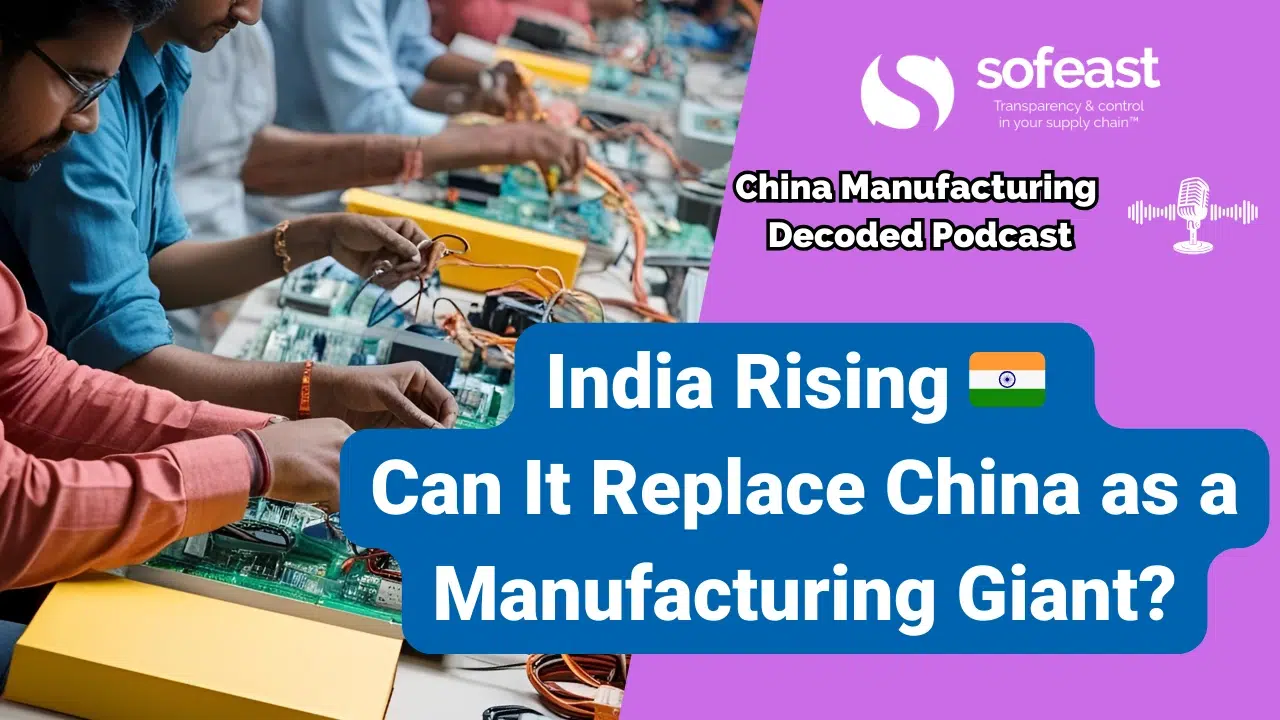
India Rising Can It Replace China as a Manufacturing GiantAn honest look at PCBA sourcing in India—what’s improving, what still needs work, and how geopolitical and tariff pressures are reshaping sourcing decisions for US-bound products.


3) Getting It Right from the Start: Essential Guide to Working with Manufacturers

Getting It Right from the Start Essential Guide to Working with Manufacturers [Podcast]This episode focuses on what to prepare before engaging a manufacturer: defining requirements, aligning expectations, and avoiding early-stage mistakes that often snowball into delays and cost overruns later.


4) Importing to the USA, HTS Codes, and Tariff Tips

Importing to the USA, HTS Codes, and Tariff Tips (Feat. Owen Haacke of Supply Chain Shark) [Podcast]A tactical deep dive into HTS codes, tariff exposure, and classification strategy, with real examples showing how small decisions can have a big impact on landed cost.


5) Protect Your IP: Strategies for Safely Sourcing Components

Protect Your IP Strategies for Safely Sourcing ComponentsA practical discussion on IP risk during component sourcing, including how information leaks happen in the real world and concrete ways to reduce exposure without stopping sourcing progress.


Want even more podcast episodes?

We’ve got you! Listen to them all here weekly.


A common thread across all 5 episodes

Despite covering different topics, these episodes share a theme: risk compounds when decisions are made too late or without structure, whether that’s inspections, sourcing locations, tariffs, or IP protection.

At Sofeast, our Quality Assurance (QA), Supply Chain Management (SCM), and New Product Introduction (NPI) support are designed to address these risks early, before they turn into costly problems.

If these episodes resonated with you, you’ll likely find value in working with a team that helps you plan, validate, and execute manufacturing decisions with fewer surprises and more control. Get in touch and let us know about your project!

2026 Manufacturing Trends: Tariffs, China+1, Repairability, AI & ‘Smart’ Factories [Podcast]

As we wrap up 2025 and head into a new year, a lot of importers are asking the same questions:

  • Are tariffs finally calming down—or could we be blindsided again?
  • Is “China + 1” still the right strategy?
  • Is repairability really becoming a serious design constraint?
  • Will the AI boom hit my component supply?
  • And where are all those “lights-out smart factories” we keep seeing in the press?

In this episode, Renaud and Adrian discuss these trends as we look ahead to 2026. Merry Christmas and a Happy New Year from the Sofeast team!

Listen here

Listen to the episode or watch on YouTube

Episode Sections:

  • 00:00 – Introduction
  • 03:16 – Trend #1: Tariff volatility in the Trump era
  • 12:14 – Trend #2: Where is ‘China+1’ really going?
  • 19:36 – Trend #3: Sustainability, repairability & modular design
  • 24:10 – Trend #4: AI/data centers and component price shocks
  • 27:49 – Trend #5: Smart manufacturing: hype vs. factory floor reality
  • 31:40 – Wrap-up, Merry Christmas & call for questions

Further reading

🎧 Listen, rate, & subscribe to the ‘China Manufacturing Decoded’ podcast on your favorite provider

More episodes are on the way, so remember to rate us and subscribe! You can find us on:

US–China Trade Truce (Oct 30, 2025): What Changed & What US Importers Should Do Next [Podcast]

US–China trade just took a small step toward de-escalation. Following the October 30, 2025, Trump–Xi meeting, several practical changes are currently relevant to importers: a modest tariff easing on certain lines, a one-year pause on rare-earth/magnet export controls, and continued Section 301 exclusions for selected categories. None of this constitutes a full reset, but it does provide a clearer 6–12 month planning window.
In this episode, we translate headlines into actions: how to re-cost your top SKUs, where HS code discipline pays off, when DDP quotes should come down, and how to build resilience, whether that’s buffer stock on critical magnets, design tweaks to reduce rare-earth dependence, or parallel routes via India/Malaysia/Mexico where substantial transformation truly applies. We also scan Beijing’s signals so you know what might snap back and what’s likely to stick.

Listen here

Listen to the episode or watch on YouTube

Episode Sections:

  • 00:32 – Setting the scene: Trump–Xi met in South Korea (Oct 30). Expectations vs reality.
  • 01:16 – Renaud’s first take: anticipation vs limited outcomes
  • 04:47 – Rare earths & magnets: one-year pause on export controls and why it matters
  • 07:22 – Tariffs: tone softens; specific cuts hit “fentanyl punishment” lines (20%→10%)
  • 09:43 – What that means to landed cost (example: 54%→44%)
  • 11:06 – Planning stability: from 90-day chaos to ~12 months of predictability
  • 11:47 – Fentanyl precursors: enforcement complexity & policy trade-offs
  • 14:00 – Section 301 exclusions extended (medical, electronics, HVAC, solar examples)
  • 16:59 – What importers should do: horizons, HS discipline, alternatives, and risk
  • 19:20 – Substantial transformation & multi-country routing: when it makes sense
  • 22:00 – DDP renegotiations & compliance exposure
  • 22:59 – Buffer stock & design tweaks to reduce magnet dependence
  • 26:33 – Long-term trajectory: conflict risk and diversification logic
  • 28:03 – China reactions round-up & closing thoughts
  • 30:42 – Outro

Key takeaways

  • A short-term easing, not a reset: tariff pressure drops ~10 percentage points on certain lines; 301 exclusions continue; rare-earth export controls paused ~1 year. Plan, but don’t relax.
  • Cash margin matters: 10 pts off tariffs can be life-or-death for tight-margin SKUs; revisit pricing, promos, and purchase cadence now.
  • License regimes can snap back: magnets/rare-earths remain a geopolitical lever; hold some buffer stock and consider design alternatives.
  • Diversify smartly: alternate assembly locations only pencil out if the transformation is substantial and the lead-time/logistics hit is acceptable.

Extra resources to dive deeper

🎧 Listen, rate, & subscribe to the ‘China Manufacturing Decoded’ podcast on your favorite provider

More episodes are on the way, so remember to rate us and subscribe! You can find us on:

Tariffs, Trade War, and the Factory Floor: Buyer Risks in 2025 [Podcast]

Tariffs, shifting trade policies, and unpredictable order patterns are creating a “stop–go” manufacturing environment in China. For buyers, this means unexpected quality issues, capacity crunches, and supply chain instability.

In this episode of China Manufacturing Decoded, Renaud Anjoran and Adrian from the Sofeast team break down the real-world impact of the US–China trade war as of August 2025. Drawing from first-hand observations in Chinese factories, they explain how rapid swings in orders, staffing changes, and material substitutions can put your product quality and timelines at risk, even if you’re not selling to the US.

Listen here

Listen to the episode or watch on YouTube

Show sections

  • 00:00 – Introduction and why China’s manufacturing sector is unstable right now
  • 01:01 – How US–China tariffs create a “seesaw” effect: front-loading orders, sudden slowdowns, and ripple effects through the supply chain
  • 05:02 – Inside the factory: whiplash in capacity, fixed costs, and the risks of unplanned subcontracting
  • 11:16 – Factory cost-cutting responses: wage cuts, temporary workers, and seasonal hiring challenges
  • 18:39 – Order bunching, Chinese New Year parallels, and the quality risks of untrained staff and inspectors
  • 25:00 – Material substitutions without buyer approval, visibility in the supply chain, and controlling quality under instability
  • 32:45 – Building stronger relationships, smoothing production, and financing suppliers to maintain stability
  • 37:45 – Wrap-up and buyer takeaways

Extra resources

🎧 Listen, rate, & subscribe to the ‘China Manufacturing Decoded’ podcast on your favorite provider

More episodes are on the way, so remember to rate us and subscribe! You can find us on:

Vietnam-US Trade Deal: Trump’s Tariff Tactics & Transshipment Troubles [Podcast]

Episode 281 of the China Manufacturing Decoded podcast* explores the recently announced trade agreement between the U.S. and Vietnam, what it includes, and the ripple effects for global supply chains, especially for American importers seeking to pivot from China to Vietnam.

On July 2, 2025, the U.S. and Vietnam announced a new trade framework. While it avoids the most extreme tariffs previously floated (up to 46%), it still introduces major changes:

  • A 20% blanket tariff on most Vietnamese exports to the U.S.

  • A 40% tariff on goods deemed to be “transshipped”—those originating elsewhere (often China) but routed through Vietnam

  • Zero tariffs on U.S. exports to Vietnam, including American-made SUVs and industrial products

  • New Vietnamese commitments on intellectual property, labor standards, and purchasing more U.S. goods

It’s not a formal treaty…yet. But it sets the tone for enforcement and future negotiations across Asia.

*Hosted by Adrian from the Sofeast Group and joined by our CEO, Renaud Anjoran.

Listen here

Listen to the episode or watch on YouTube

Show sections

  • 00:00 – Intro: What’s in the New US–Vietnam Trade Deal?
  • 00:48 – Liberation Day Tariffs and the Road to Negotiation
  • 03:04 – What’s in the Deal: 20%, 40%, and Zero Tariffs
  • 05:09 – Understanding Transshipment and Its Penalties
  • 08:09 – Can Enforcement Work? Customs and Certification Challenges
  • 10:14 – Regional Repercussions: Will Other Countries Face Pressure?
  • 13:12 – What Importers Should Do Now to Stay Compliant
  • 15:03 – U.S. Strategy: Vietnam as a Geopolitical Ally
  • 18:18 – Could This Model Expand to India and ASEAN?
  • 22:46 – Final Takeaways and Next Steps for Importers

What importers need to do next

If you’re sourcing from Vietnam, this episode is a must-listen. Here are some of the hosts’ top tips:

  • Double-check your product origin: U.S. Customs will expect proof of transformation, not just an invoice from Vietnam.

  • Plan for enforcement: The 40% tariff will hit hard if the origin can’t be substantiated.

  • Watch for policy spillover: Countries like Malaysia and Thailand may face similar pressure.

  • Don’t assume Vietnam = low risk: The U.S. now considers Vietnam’s trade balance and supply chain role strategically.

Related content

🎧 Listen, rate, & subscribe to the ‘China Manufacturing Decoded’ podcast on your favorite provider

More episodes are on the way, so remember to rate us and subscribe! You can find us on:

Tariffs, Trade Shifts & Tactics: A U.S. Importer’s Guide (Feat. Owen Haacke of Supply Chain Shark) [Podcast]

How are U.S. businesses reacting to tariffs on Chinese goods? Trade expert Owen Haacke joins us to unpack what’s happening with Section 301 tariffs, how enforcement is evolving, and what importers need to know if they’re pivoting to countries like India or Vietnam.


Listen to the episode here

Listen: to the podcast episode

Watch: on YouTube


Episode sections

  • 00:00: Meet the Guest: Owen Haacke on Trade Law and Tariffs
  • 03:08: Recent Changes in Tariff Regulations
  • 08:30: The End of De Minimis Exemption
  • 13:20: Urgency in Relocating Production
  • 17:07: Understanding Country of Origin
  • 22:57: Real-World Examples and Legal Gray Areas
  • 27:36: India, Vietnam, and the Shift Away from China
  • 32:07: Importance of Due Diligence


Related content…


Listen, rate, & subscribe to the ‘China Manufacturing Decoded’ podcast on your favorite provider

More episodes are coming, so remember to rate us and subscribe! You can find us on:

The India Shift: Exploring PCBA Sourcing and Trade Dynamics in a Changing World [Podcast]

With tariffs rising and China becoming a trickier manufacturing partner, many American importers are looking to India. In this episode, we explore the manufacturing landscape in South India, especially when it comes to sourcing PCB assemblies. You’ll gain first-hand insights from a recent trip and learn what makes India both promising and challenging.

In addition, we discuss U.S.-India Trade Relations in the context of the hot tariff war between the USA and China. Could India be a beneficiary and a good option for American businesses to pivot to?


Listen to the episode here

Listen: to the podcast episode

Watch: on YouTube


Episode sections

  • [00:00] — Intro: Why India Is on the Radar for U.S. Importers
  • [01:10] — Trade Show Trends and Shifting Attention
  • [03:52] — A Visit to Bangalore: Local Insights
  • [05:27] — PCBA Landscape: Smaller, Manual, but Growing
  • [09:27] — Government Clients Dominate, but Consumer Work Emerging
  • [12:35] — Lead vs. Lead-Free Soldering: Exporters Take Lead-Free Route
  • [14:41] — Indian Customs Challenges: Real or Overblown?
  • [16:32] — Overall Impressions of Bangalore/Southern India as a Manufacturing Base
  • [18:04] — U.S.-India Trade Relations: Opportunity Rising
  • [23:41] — The Tariff Game: Geopolitical Leverage
  • [27:54] — Challenges India Must Overcome to Scale Up
  • [35:36] — The Rise of the Indian Wider Ecosystem
  • [37:59] — Wrapping up


Related content…


Listen, rate, & subscribe to the ‘China Manufacturing Decoded’ podcast on your favorite provider

More episodes are coming, so remember to rate us and subscribe! You can find us on: